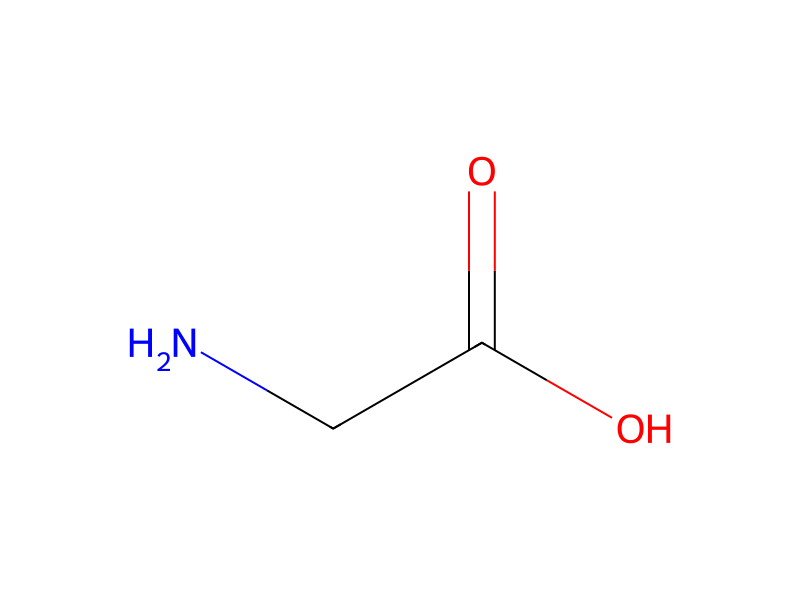
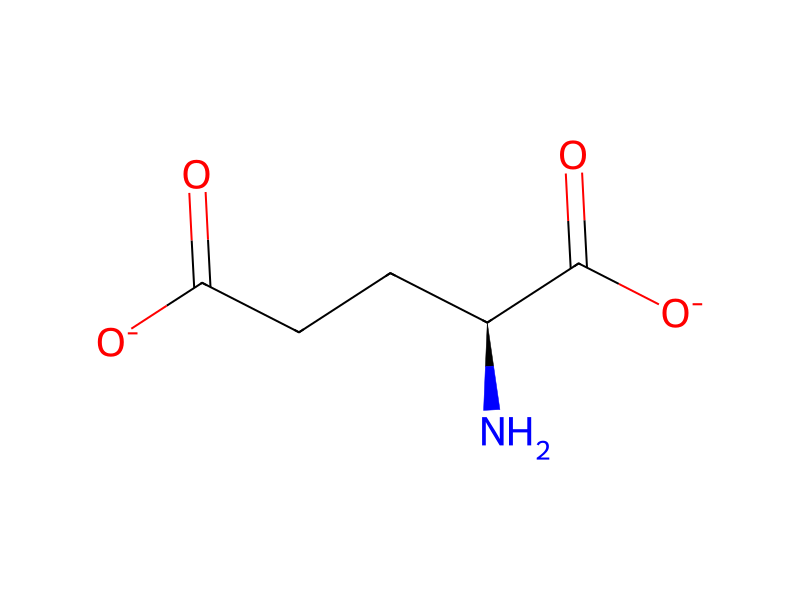
Glycine → Glycine
Reaction equation

[NH2:1][CH2:2][C:3]([OH:5])=[O:4].C1C(=O)NOC=1CN.[NH2:14][C@H:15]([C:21]([OH:23])=[O:22])[CH2:16][CH2:17][C:18]([OH:20])=[O:19]>>[NH2:14][C@H:15]([C:21]([O-:23])=[O:22])[CH2:16][CH2:17][C:18]([O-:20])=[O:19].[NH2:1][CH2:2][C:3]([OH:5])=[O:4]Participants


Procedure
Dose-response displacement assays were conducted using 2-methyl carboxylate-5,7-dichloro-4-[[(diphenylamino)-carbonyl]amino]-quinoline and [3H]-TCP (both with and without added glycine), and [3 H]-muscimol. Displacement of [3H]-TCP binding was assayed in the presence of 10 uM L-glutamic acid and 3 uM glycine. This assay was conducted twice with triplicate samples and concentrations of test compound ranging from 1 uM to 5 nM. No significant effect on [3 H]-TCP binding was observed in this assay. Repetition of the TCP displacement experiment with L-glutamate but no added glycine gave similar results over a dose range of 5 uM to 10 nM. A synaptosomal competition binding assay was also conducted using 2-methyl carboxylate-5,7-dichloro-4-[[(diphenylamino)-carbonyl]amino]-quinoline and the ligand [3H]-muscimol. The purpose of this experiment was to check for activity at the GABA-A receptor complex. No significant effects were observed. The compound 2-methyl carboxylate-5,7-dichloro4-[[(diphenylamino)-carbonyl]amino]-quinoline also tested negative for PCP activity at the NMDA receptor, and for GABA-A effects.
Sources & evidence
- ORD record
- ord-d1c66ed188584c409a2b3213fb4d6931
- Source dataset
- uspto-grants-1998_07
- Patent number
- US05783700
Reaction notes
Loading…