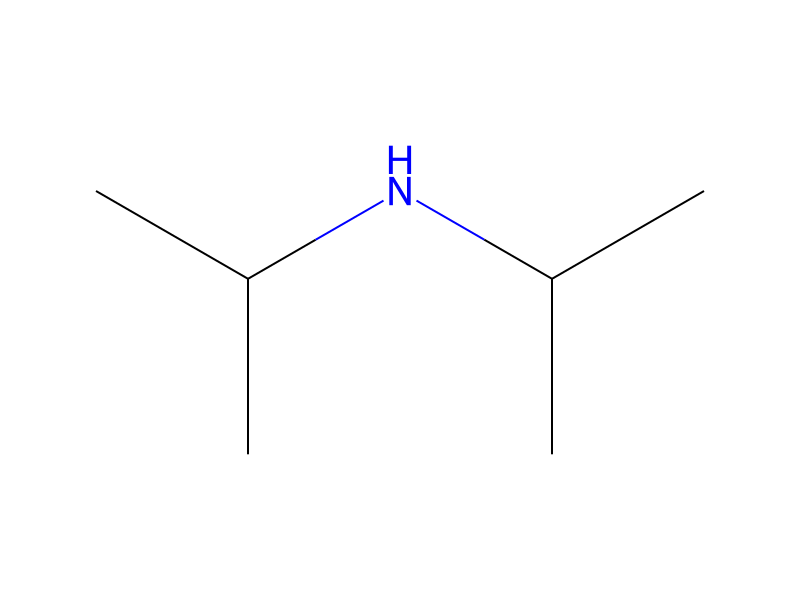
Diisopropylamine → (2,5-Difluoropyridin-4-yl)boronic acid
Reaction equation

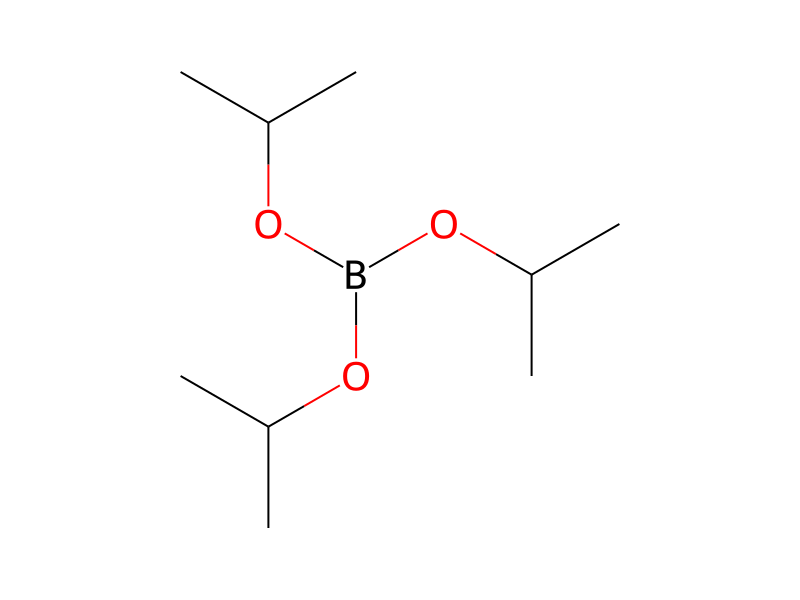
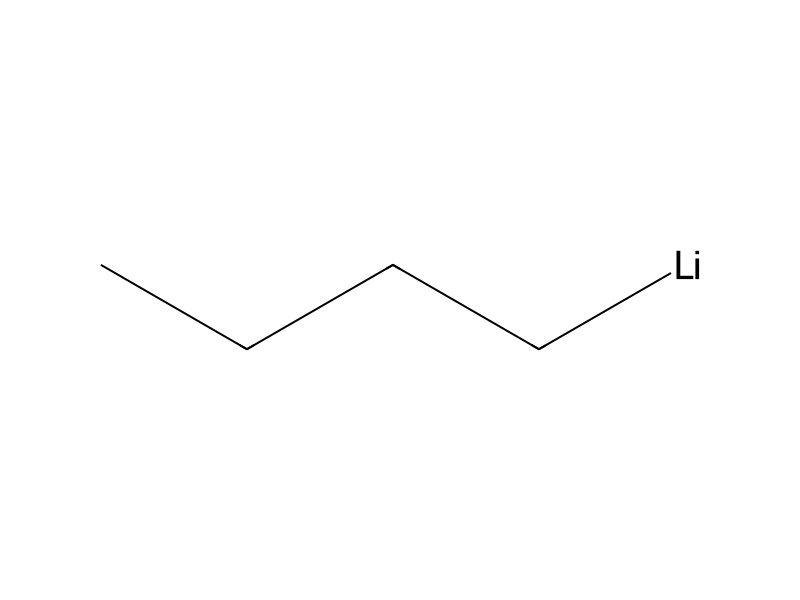
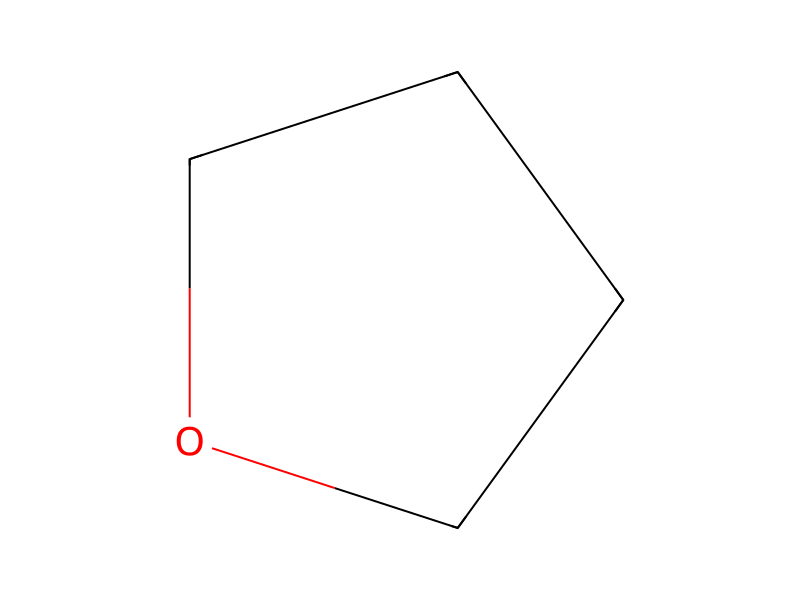
C(NC(C)C)(C)C.C([Li])CCC.[Li+].CC([N-]C(C)C)C.[F:21][C:22]1[CH:27]=[CH:26][C:25]([F:28])=[CH:24][N:23]=1.[B:29](OC(C)C)([O:34]C(C)C)[O:30]C(C)C>C1COCC1>[F:21][C:22]1[CH:27]=[C:26]([B:29]([OH:34])[OH:30])[C:25]([F:28])=[CH:24][N:23]=1Participants



Conditions
- Temperature
- -20 °C
Procedure
Diisopropylamine (1.74 ml, 1.24 g, 12.20 mmol) was dissolved in anhydrous THF (22 ml) and placed under argon. The solution was cooled to −20° C. and then treated with n-butyllithium (7.66 ml, 12.25 mmol, 1.6 M in hexanes) by slow addition over 10 min. The newly formed LDA (LDA= lithium diisopropylamide, this acronyl should be listed in the general session) was then cooled to −78° C. and treated with a solution of 2,5-difluoropyridine (1.05 ml, 1.33 g, 11.56 mmol) dissolved in anhydrous THF (3 ml) by slow addition over 30 min. Once the addition was complete the reaction mixture was allowed to stir at −78° C. for 4 hr. At this time the reaction mixture was treated with a solution of triisopropyl borate (5.90 ml, 4.78 g, 25.4 mmol) dissolved in anhydrous THF (8.6 ml) by dropwise addition. Once the addition was complete the reaction mixture was allowed to warm to ambient temperature then stirred at ambient temperature for an additional hour. The reaction mixture was then quenched by adding 4% aq NaOH (34 ml). The layers were separated and the aqueous layer was cooled in an ice bath. It was then acidified to pH= 4 with 6N HCl (˜10 ml) not letting the temperature go above 10° C. This was then extracted with EtOAc (3×50 ml). The extracts were then washed with brine (1×50 ml), dried (Na2SO4), filtered, and the solvent removed in vacuo. The resulting residue was triturated with Et2O to give 0.8084 g (44%) of 2,5-difluoropyridin-4-ylboronic acid.
Workup
- temperaturewas then cooled to −78° C.
- additionOnce the addition
- additionOnce the addition
- temperatureto warm to ambient temperature
- stirringthen stirred at ambient temperature for an additional hour
- customThe reaction mixture was then quenched
- additionby adding 4% aq NaOH (34 ml)
- customThe layers were separated
- temperaturethe aqueous layer was cooled in an ice bath
- customgo above 10° C
- extractionThis was then extracted with EtOAc (3×50 ml)
- washThe extracts were then washed with brine (1×50 ml)
- dry with materialdried (Na2SO4)
- filtrationfiltered
- customthe solvent removed in vacuo
- customThe resulting residue was triturated with Et2O
Sources & evidence
- ORD record
- ord-a37b1b25ce1d448c9c2265991cddaacb
- Source dataset
- uspto-grants-2013_04
- Patent number
- US08415381B2
Reaction notes
Loading…