Ammonium Chloride → HCID 68599379, compound
Reaction equation

[O:1]1[CH2:6][CH2:5][O:4][C:3]2[CH:7]=[C:8]([OH:11])[CH:9]=[CH:10][C:2]1=2.C([Mg]Cl)(C)C.[Br:17][C:18]1[CH:19]=[C:20]2[C:24](=[CH:25][CH:26]=1)[N:23]([CH2:27][C:28]1[CH:33]=[CH:32][CH:31]=[CH:30][N:29]=1)[C:22](=[O:34])[C:21]2=[O:35].[Cl-].[NH4+]>ClCCl>[Br:17][C:18]1[CH:19]=[C:20]2[C:24](=[CH:25][CH:26]=1)[N:23]([CH2:27][C:28]1[CH:33]=[CH:32][CH:31]=[CH:30][N:29]=1)[C:22](=[O:34])[C:21]2([OH:35])[C:9]1[C:8]([OH:11])=[CH:7][C:3]2[O:4][CH2:5][CH2:6][O:1][C:2]=2[CH:10]=1Participants



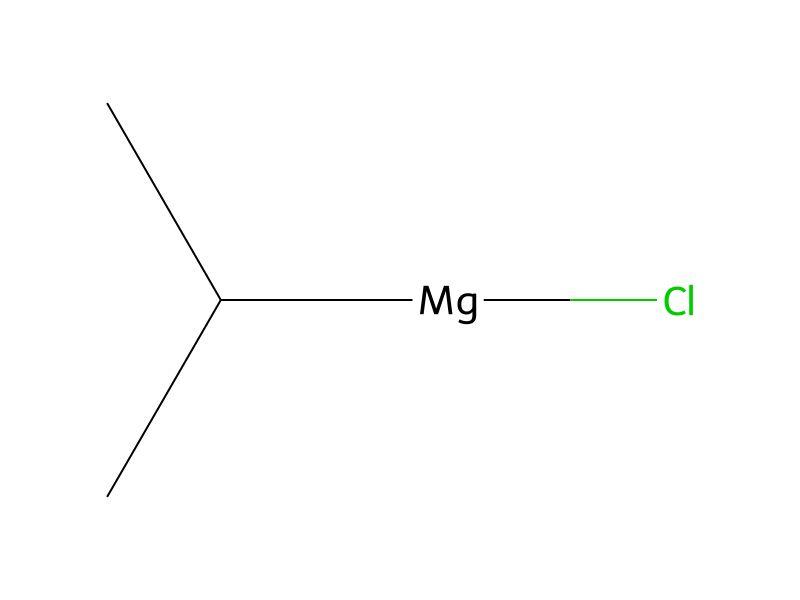


Conditions
- Temperature
- 0 °C
Procedure
To a solution of 2,3-dihydrobenzo[b][1,4]dioxin-6-ol (2.55 g, 16.8 mmol) in anhydrous dichloromethane (100 mL) at 0° C. added isopropylmagnesium chloride (2 M solution in tetrahydrofuran, 10.0 mL, 19.9 mmol). The solution was stirred at 0° C. for 20 min and 5-bromo-1-(pyridin-2-ylmethyl)-1H-indole-2,3-dione (4.85 g, 15.3 mmol) was added. The reaction mixture was stirred at ambient temperature for 16 h, saturated aqueous ammonium chloride (25 mL) was added and the mixture was concentrated in vacuo. The residue was triturated with ethyl acetate (250 mL) and the solid collected by filtration to afford 5-bromo-3-hydroxy-3-(7-hydroxy-2,3-dihydro-1,4-benzodioxin-6-yl)-1-(pyridin-2-ylmethyl)-1,3-dihydro-2H-indol-2-one (7.26 g, 98%) as a beige solid: 1H NMR (300 MHz, DMSO-d6) δ 9.20 (s, 1H), 8.71 (d, J=4.9 Hz, 1H), 8.06 (dd, J=7.80 Hz, 1H), 7.63-7.55 (m, 2H), 7.52 (d, J=8.0 Hz, 1H), 7.35 (dd, J=8.3, 2.0 Hz, 1H), 7.20 (s, 1H), 6.99 (d, J=2.0 Hz, 1H), 6.82 (d, J=8.3 Hz, 1H), 6.16 (s, 2H), 5.09 (ABq, 2H), 4.20-4.10 (m, 4H).
Workup
- stirringThe reaction mixture was stirred at ambient temperature for 16 h
- concentrationthe mixture was concentrated in vacuo
- customThe residue was triturated with ethyl acetate (250 mL)
- filtrationthe solid collected by filtration
Sources & evidence
- ORD record
- ord-a0b2e821dedc4b87a1471866f58a1ea5
- Source dataset
- uspto-grants-2013_04
- Patent number
- US08415370B2
Reaction notes
Loading…