HCID 18672661, compound → HCID 178519239, compound
Reaction equation

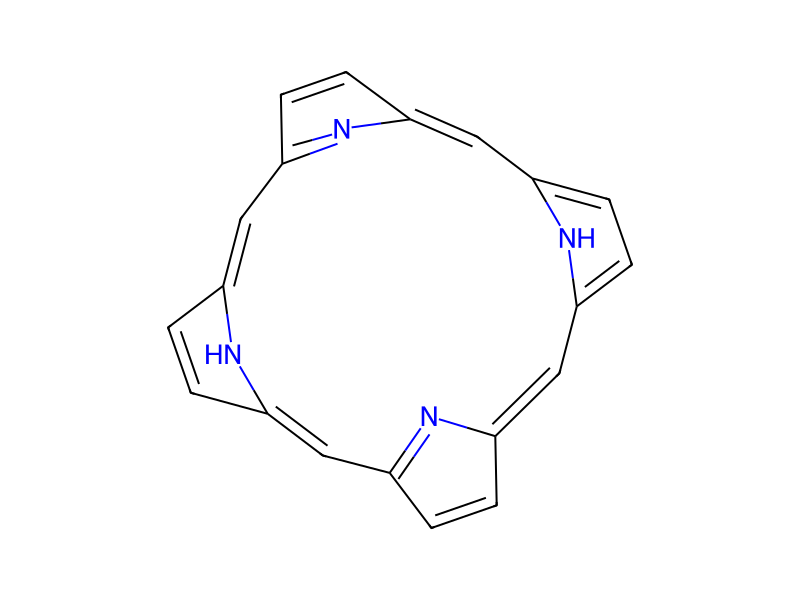
[CH2:1](Cl)Cl.[C:4](O)([C:6](F)(F)F)=[O:5].[OH2:11].[C:12]12[CH:35]=[C:33]3[N:34]=[C:30]([CH:31]=[CH:32]3)[CH:29]=[C:27]3[NH:28][C:24]([CH:25]=[CH:26]3)=C[C:21]3=[N:22][C:18]([CH:19]=[CH:20]3)=[CH:17][C:15]([NH:16]1)=[CH:14][CH:13]=2>>[CH:1]([C:35]1[C:12]2[NH:16][C:15]([CH:17]=[C:18]3[N:22]=[C:21]([C:6]([CH:4]=[O:5])=[C:24]4[NH:28][C:27](=[CH:29][C:30]5[CH:31]=[CH:32][C:33]=1[N:34]=5)[CH:26]=[CH:25]4)[CH:20]=[CH:19]3)=[CH:14][CH:13]=2)=[O:11]Participants
3


Procedure
The route that employs a dipyrromethane-monocarbinol bearing the acetal at the 5-position begins with dipyrromethane 2. Treatment of 2 under the standard conditions for 1-acylation16 with pyridyl thioester 6 afforded the 1-acyldipyrromethane 7 in 72% yield. Reduction of 7 with NaBH4 and self-condensation16,21 of the resulting dipyrromethane-monocarbinol 7-OH in the presence of InCl3 followed by oxidation with DDQ gave porphyrin 8 in 14% yield. Hydrolysis of the two acetal groups in porphyrin 8 with CH2Cl2/TFA/H2O (10:1:1) gave 5,15-diformylporphyrin 9 in 90% yield (Scheme 2).
Sources & evidence
- ORD record
- ord-336d163fff004cd4a584cc8e7aaacf4e
- Source dataset
- uspto-grants-2013_04
- Patent number
- US08420804B2
Reaction notes
Loading…