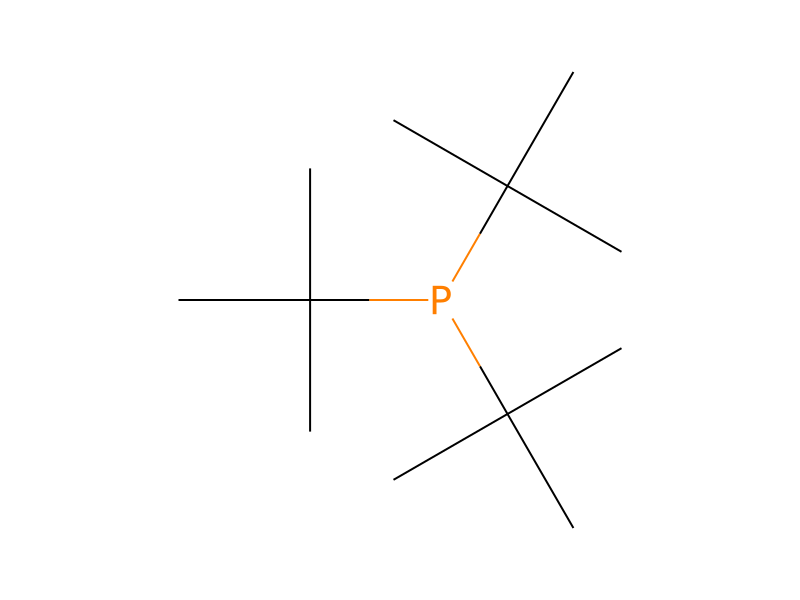
Tris(1,1-dimethylethyl)phosphine → 2-[N-(1-naphthyl)-N-(9-phenylcarbazol-3-yl)-amino]-9,10-diphenylanthracene
Reaction equation

Br[C:2]1[CH:15]=[CH:14][C:13]2[C:4](=[C:5]([C:22]3[CH:27]=[CH:26][CH:25]=[CH:24][CH:23]=3)[C:6]3[C:11]([C:12]=2[C:16]2[CH:21]=[CH:20][CH:19]=[CH:18][CH:17]=2)=[CH:10][CH:9]=[CH:8][CH:7]=3)[CH:3]=1.[C:28]1([NH:38][C:39]2[CH:40]=[CH:41][C:42]3[N:43]([C:52]4[CH:57]=[CH:56][CH:55]=[CH:54][CH:53]=4)[C:44]4[C:49]([C:50]=3[CH:51]=2)=[CH:48][CH:47]=[CH:46][CH:45]=4)[C:37]2[C:32](=[CH:33][CH:34]=[CH:35][CH:36]=2)[CH:31]=[CH:30][CH:29]=1.CC(C)([O-])C.[Na+].C(P(C(C)(C)C)C(C)(C)C)(C)(C)C>C1(C)C=CC=CC=1>[C:28]1([N:38]([C:2]2[CH:15]=[CH:14][C:13]3[C:4](=[C:5]([C:22]4[CH:27]=[CH:26][CH:25]=[CH:24][CH:23]=4)[C:6]4[C:11]([C:12]=3[C:16]3[CH:21]=[CH:20][CH:19]=[CH:18][CH:17]=3)=[CH:10][CH:9]=[CH:8][CH:7]=4)[CH:3]=2)[C:39]2[CH:40]=[CH:41][C:42]3[N:43]([C:52]4[CH:53]=[CH:54][CH:55]=[CH:56][CH:57]=4)[C:44]4[C:49]([C:50]=3[CH:51]=2)=[CH:48][CH:47]=[CH:46][CH:45]=4)[C:37]2[C:32](=[CH:33][CH:34]=[CH:35][CH:36]=2)[CH:31]=[CH:30][CH:29]=1Participants
Reactant 4



Product 1

Reagents, catalysts & solvents 1

Conditions
- Temperature
- 80 °C
Procedure
3.5 g (8.6 mmol) of 2-bromo-9,10-diphenylanthracene synthesized in Step 1 of Embodiment 1, 3.2 g (9.4 mmol) of N-(1-naphthyl)-N-(9-phenylcarbazol-3-yl)amine (abbreviation: PCN), 0.25 g (0.43 mmol) of bis(benzylideneacetone)palladium (0), and 2.1 g (21 mmol) of sodium tert-butoxide were put in a 200 mL three-neck flask, and the atmosphere of the flask was substituted with nitrogen. Thereafter, 50 mL of toluene and 0.86 g (0.43 mmol) of tri(tert-butyl)phosphine (10% hexane solution) were added to the mixture, and this reaction mixture was stirred for 5 hours at 80° C. After the reaction was completed, the reaction solution was washed with water, and the aqueous layer was extracted with ethyl acetate. The extracted solution was combined with the organic layer, and then dried with magnesium sulfate. After drying, this mixture was subjected to suction filtration, and the filtrate was concentrated. The obtained residue was purified by silica gel column chromatography (eluent: toluene). The obtained solid was recrystallized with a mixed solvent of chloroform and hexane, giving 2.6 g of 2[N-(1-naphthyl)-N-(9-phenylcarbazol-3-yl)-amino]-9,10-diphenylanthracene (abbreviation: 2PCNPA) as yellow powder in 42% yield. It was confirmed by a nuclear magnetic resonance measurement (NMR) that this compound was 2-[N-(1-naphthyl)-N-(9-phenylcarbazol-3-yl)-amino]-9,10-diphenylanthracene (abbreviation: 2PCNPA).
Workup
- washthe reaction solution was washed with water
- extractionthe aqueous layer was extracted with ethyl acetate
- dry with materialdried with magnesium sulfate
- customAfter drying
- filtrationthis mixture was subjected to suction filtration
- concentrationthe filtrate was concentrated
- customThe obtained residue was purified by silica gel column chromatography (eluent: toluene)
- customThe obtained solid was recrystallized with a mixed solvent of chloroform and hexane
Sources & evidence
- ORD record
- ord-6f3a1e140ea54099a87d4cb8f0e4f6dd
- Source dataset
- uspto-grants-2013_04
- Patent number
- US08431252B2
Reaction notes
Loading…