7,11-Hexadecadiyn-1-ol, 1-acetate → Gossyplure
Reaction equation

[Al].[C:2]([O:5][CH2:6][CH2:7][CH2:8][CH2:9][CH2:10][CH2:11][C:12]#[C:13][CH2:14][CH2:15][C:16]#[C:17][CH2:18][CH2:19][CH2:20][CH3:21])(=[O:4])[CH3:3].[H][H]>N1C2C(=CC=CC=2)C=CC=1.[Cu].[Pd].CCCCCC>[C:2]([O:5][CH2:6][CH2:7][CH2:8][CH2:9][CH2:10][CH2:11]/[CH:12]=[CH:13]\[CH2:14][CH2:15]/[CH:16]=[CH:17]\[CH2:18][CH2:19][CH2:20][CH3:21])(=[O:4])[CH3:3]Participants




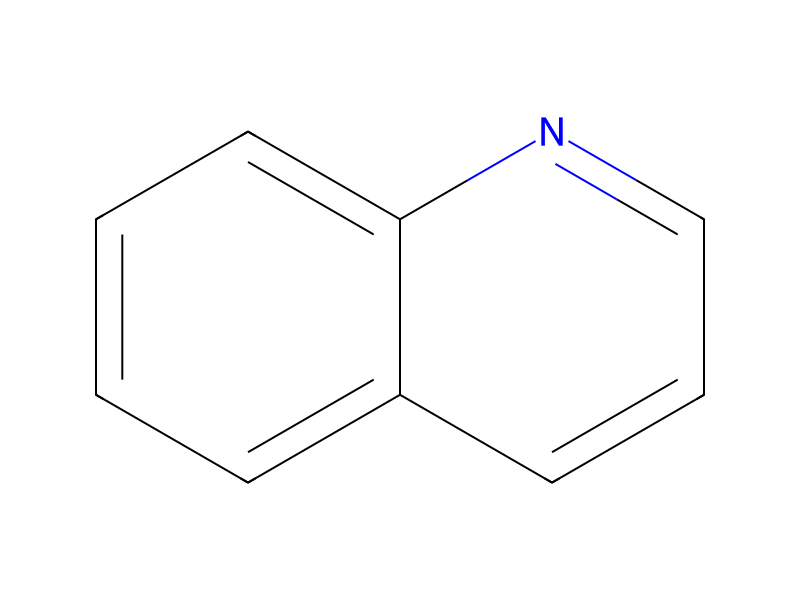



Procedure
Into a 500 ml Parr hydrogenation flask fitted with an aluminum or copper cooling coil is placed 100 g of 7,11-hexadecadiynyl acetate, 100 ml hexane (olefin free), 1 g palladium on calcium carbonate (Lindlar catalyst) and 10 drops of synthetic quinoline. Hydrogenation is effected at 10- 20 psi and is complete when the theoretical amount of hydrogen for the partial reduction of two triple bonds is absorbed. During the hydrogenation the reaction temperature is maintained between 15°-25° to minimize cis-trans isomeration. The catalyst is then removed by filtration and the product isolated by distillation of the filtrate. bp 130°-132°/1 torr nD21 1.4592. Yield essentially quantitative. Based on IR analysis it is estimated that there is less than 5% of E isomers present.
Workup
- customis absorbed
- temperatureDuring the hydrogenation the reaction temperature is maintained between 15°-25°
- customThe catalyst is then removed by filtration
- customthe product isolated by distillation of the filtrate
- customYield essentially quantitative
Sources & evidence
- ORD record
- ord-02f7cbafa4304d789184a99e5ec43f03
- Source dataset
- uspto-grants-1976_12
- Patent number
- US03996270
Reaction notes
Loading…