Nitric Acid → Silver laurate
Reaction equation

[C:1]([OH:14])(=[O:13])[CH2:2][CH2:3][CH2:4][CH2:5][CH2:6][CH2:7][CH2:8][CH2:9][CH2:10][CH2:11][CH3:12].[N+]([O-])(O)=O.[N+]([O-])([O-])=O.[Ag+:23]>C(OCCCC)(=O)C>[C:1]([O-:14])(=[O:13])[CH2:2][CH2:3][CH2:4][CH2:5][CH2:6][CH2:7][CH2:8][CH2:9][CH2:10][CH2:11][CH3:12].[Ag+:23]Participants
Reactant 3

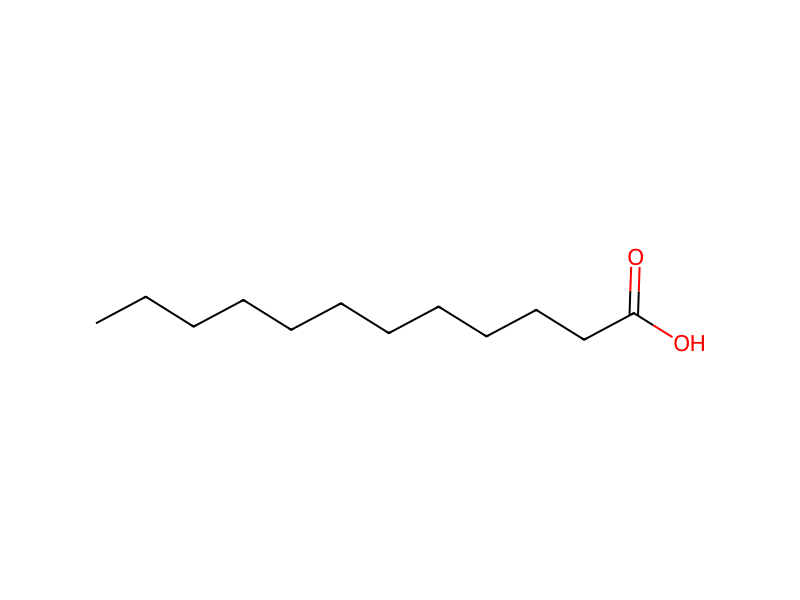

Product 1

Reagents, catalysts & solvents 1

Procedure
11 g of lauric acid was dissolved in 100 ml of butyl acetate and the resulting solution was kept at 10° C. To the solution were added with stirring by means of a stirrer 100 ml of a dilute aqueous solution of nitric acid (25° C, pH = 2.0) and 50 ml of an aqueous solution of silver ammonium complex salt containing 8.5 g of silver nitrate (cooled to 0° C) for 1 minute, thus reacting the lauric acid and the silver ion and obtaining spindle-shaped silver laurate crystals having a length of about 1 micron and width of about 0.05 micron. After washing this silver salt with water and further with methanol, 3.0 g of polyvinyl butyral and 20 ml of isopropyl alcohol were added to 2.7 g of the silver laurate and dispersed in a ball mill to prepare a silver salt polymer dispersion.
Workup
- customwas kept at 10° C
- additionTo the solution were added
Sources & evidence
- ORD record
- ord-86020057cfa94a06b4b78a815fb900f0
- Source dataset
- uspto-grants-1976_12
- Patent number
- US03997346
Reaction notes
Loading…