2-Aminopyridine → 3,5-Dinitropyridine
Reaction equation

Cl[C:2]1[C:7]([N+:8]([O-:10])=[O:9])=[CH:6][C:5]([N+:11]([O-:13])=[O:12])=[CH:4][N:3]=1.C(=O)(O)[O-].[K+].NC1C=CC=CN=1>>[N+:11]([C:5]1[CH:4]=[N:3][CH:2]=[C:7]([N+:8]([O-:10])=[O:9])[CH:6]=1)([O-:13])=[O:12]Participants
4
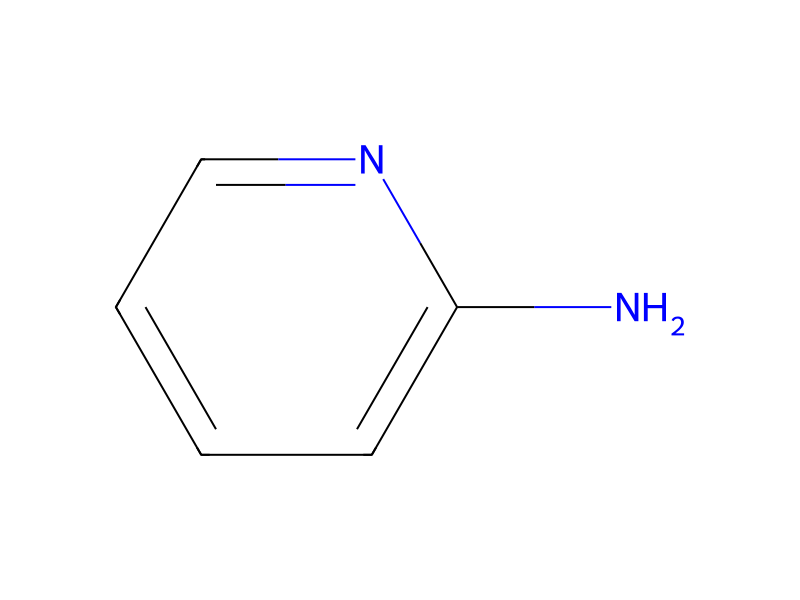


Procedure
A mixture of 2-chloro-3,5-dinitropyridine (20.4 g, 0.10 mole) 15 ml absolute ethanol, potassium bicarbonate (11.0 g, 0.11 mole), and 2-aminopyridine (28.2 g, 0.30 mole) was refluxed for 24 hours. The mixture was concentrated to one-half of its volume and diluted with several volumes of water to precipitate solid. After further washing and drying 2-α-pyridylamino)-3,5-dinitropyridine (81% yield) was obtained as a golden, yellow solid. Anal. Calcd. for C10H7N5O4 : C, 46.0; H, 2.7; N, 26.8 Found: C, 46.1; H, 2.9; N, 27.0.
Workup
- temperaturewas refluxed for 24 hours
- concentrationThe mixture was concentrated to one-half of its volume
- additiondiluted with several volumes of water
- customto precipitate solid
- washAfter further washing
Sources & evidence
- ORD record
- ord-399cfc1d2f6541cca592e415ecba7bb0
- Source dataset
- uspto-grants-1976_12
- Patent number
- US04000146
Reaction notes
Loading…