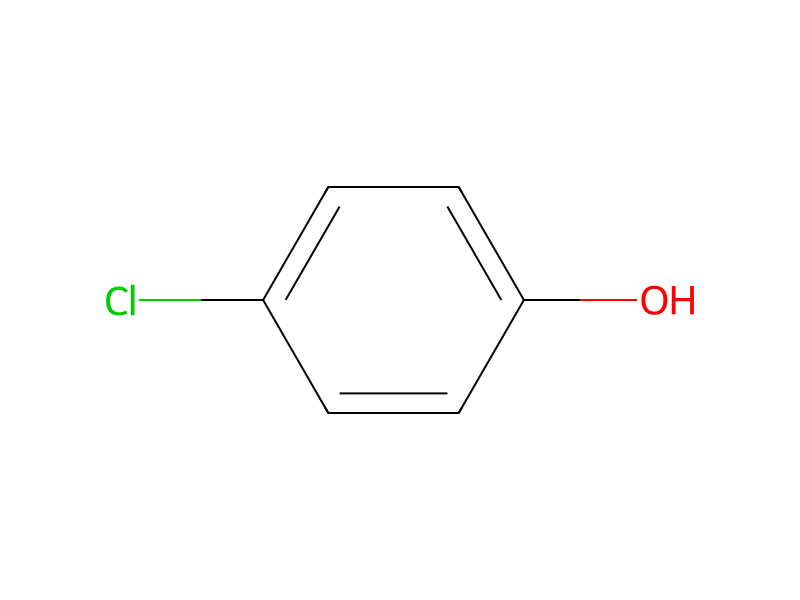
4-Chlorophenol → 7-[1-(4-Chlorophenoxy)ethyl]-[1,2,4]triazolo[1,5-a]pyrimidine
Reaction equation

N(C(OC(C)C)=O)=NC(OC(C)C)=O.[N:15]1[N:19]2[C:20]([CH:24]([OH:26])[CH3:25])=[CH:21][CH:22]=[N:23][C:18]2=[N:17][CH:16]=1.[Cl:27][C:28]1[CH:33]=[CH:32][C:31](O)=[CH:30][CH:29]=1.C1(P(C2C=CC=CC=2)C2C=CC=CC=2)C=CC=CC=1.[Cl-].[Mg+2].[Cl-]>C1(C)C=CC=CC=1>[Cl:27][C:28]1[CH:33]=[CH:32][C:31]([O:26][CH:24]([C:20]2[N:19]3[N:15]=[CH:16][N:17]=[C:18]3[N:23]=[CH:22][CH:21]=2)[CH3:25])=[CH:30][CH:29]=1Participants
Reactant 5


Product 1

Reagents, catalysts & solvents 1
Procedure
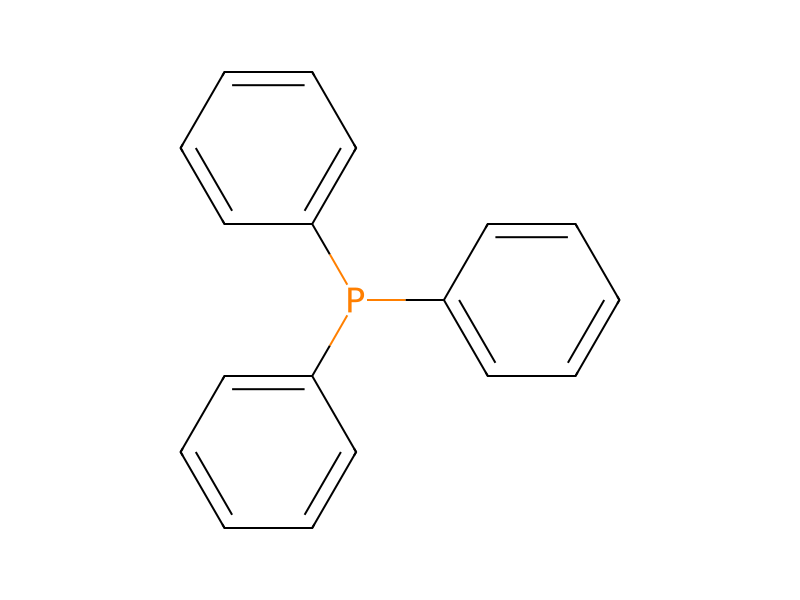
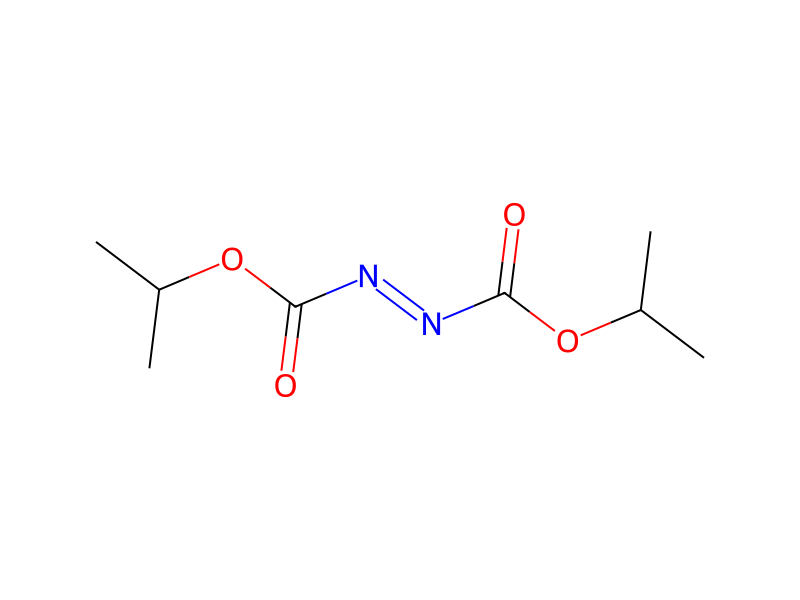
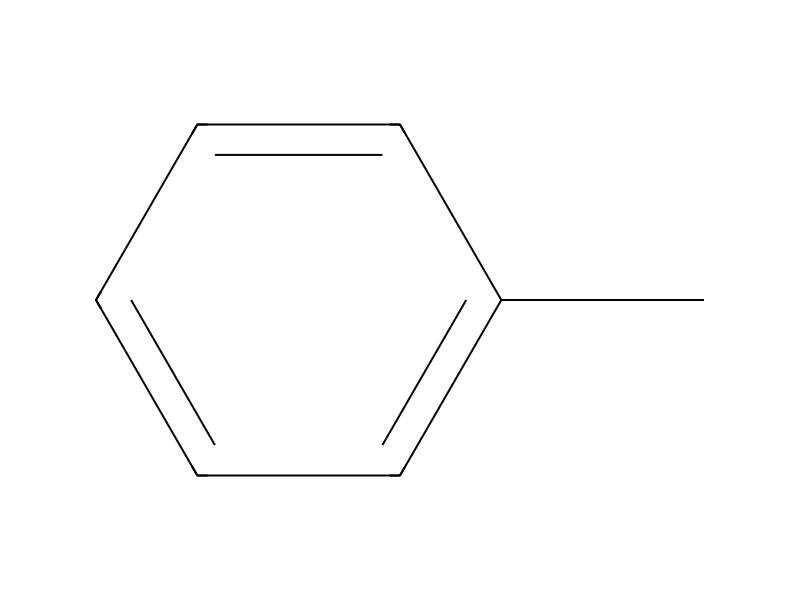
A solution of diisopropyl azodicarboxylate (11 g, 1.1 eq) in toluene (20 ml) was added dropwise to a stirred mixture of 1-(1,2,4-triazolo[1,5-a]pyrimidin-7-yl)ethanol (8.1 g, recrystallised from tetrahydrofuran, 49 mmol), 4-chlorophenol (6.35 g, 1 eg), triphenylphosphine (12.95 g, 1 eq) and toluene (200 ml) under nitrogen at 0-5° C. and the mixture then stirred at ambient temperature overnight. Magnesium chloride (9.5 g, -˜2 eq) was added and the stirred mixture heated under reflux for 1.5 hours, cooled to −5° C. and filtered, washing the filter pad with further toluene (2×50 ml). ml). The combined filtrate was washed with water (2×200 ml), sodium hydroxide solution (1M, 2×50 ml), and then water (2×50 ml) and then the solvent evaporated. Propan-2-ol (50 ml) was added to the residue and the solvent evaporated; this was repeated. The residue was dissolved in propan-2-ol (50 ml), seeded with a crystal of product, and left to stand at 0-5° C. for 72 hours. The product was collected by filtration, washed with cold propan-2-ol (2×20 ml) and dried in vacuo to yield 7-[1-(4-chlorophenoxy)ethyl]1,2,4-triazolo[1,5-a]pyrimidine (7.1 g, 53%), which was analysed for triphenylphosphine oxide content.
Workup
- temperaturethe stirred mixture heated
- temperatureunder reflux for 1.5 hours
- temperaturecooled to −5° C.
- filtrationfiltered
- washwashing the filter pad with further toluene (2×50 ml)
- washThe combined filtrate was washed with water (2×200 ml), sodium hydroxide solution (1M, 2×50 ml)
- customwater (2×50 ml) and then the solvent evaporated
- additionPropan-2-ol (50 ml) was added to the residue
- customthe solvent evaporated
- dissolutionThe residue was dissolved in propan-2-ol (50 ml)
- waitleft
- waitto stand at 0-5° C. for 72 hours
- filtrationThe product was collected by filtration
- washwashed with cold propan-2-ol (2×20 ml)
- customdried in vacuo
Sources & evidence
- ORD record
- ord-22c178c692dc45ad87136cbbd3a2d337
- Source dataset
- uspto-grants-2001_05
- Patent number
- US06225469B1
Reaction notes
Loading…