Acetyl chloride → 1-(6-Bromonaphthalen-2-yl)ethanone
Reaction equation

[Br:1][C:2]1[CH:11]=[CH:10][C:9]2[C:4](=[CH:5][CH:6]=[CH:7][CH:8]=2)[CH:3]=1.[Cl-].[Al+3].[Cl-].[Cl-].[C:16](Cl)(=[O:18])[CH3:17]>[N+](C1C=CC=CC=1)([O-])=O>[C:16]([C:7]1[CH:6]=[CH:5][C:4]2[C:9](=[CH:10][CH:11]=[C:2]([Br:1])[CH:3]=2)[CH:8]=1)(=[O:18])[CH3:17]Participants
Reactant 3



Product 1

Reagents, catalysts & solvents 1
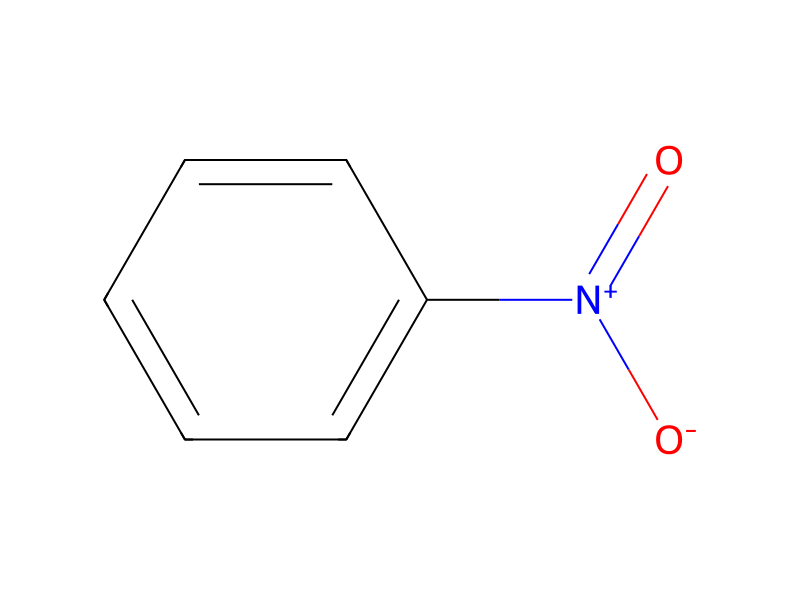
Procedure
To a cold (10° C.) mixture of 44.0 g (0.212 mol) of 2-bromonaphthalene and 34.0 g (0.255 mol) of aluminum chloride in 400 ml of nitrobenzene was added 21.0 g (267 mmol) of acetyl chloride. The mechanically stirred reaction mixture was warmed to room temperature, and heated to 40° C. for 18 hours. After cooling to 0° C. in an ice bath, the reaction was quenched by the addition of 12M HCl (70 ml). The layers were separated and the organic phase was washed with water and dilute aqueous Na2CO3. Kugelrohr distillation, followed by recrystallization from 10% EtOAc-hexane yielded 23 g of the title compound as a tan solid. 1H NMR (CDCl3): δ 8.44 (1H, br s), 8.04-8.10 (2H, m), 7.85 (1H, d, J=8.5 Hz), 7.82 (1H, d, J=8.8 Hz), 7.64 (1H, d, J=8.8 Hz), 2.73 (3H, s).
Workup
- customThe mechanically stirred reaction mixture
- temperatureheated to 40° C. for 18 hours
- temperatureAfter cooling to 0° C. in an ice bath
- customthe reaction was quenched by the addition of 12M HCl (70 ml)
- customThe layers were separated
- washthe organic phase was washed with water and dilute aqueous Na2CO3
- distillationKugelrohr distillation
- customfollowed by recrystallization from 10% EtOAc-hexane
Sources & evidence
- ORD record
- ord-d09b8f9c25f04e529bf9282b4f9c7c6a
- Source dataset
- uspto-grants-2001_05
- Patent number
- US06228848B1
Reaction notes
Loading…