3,7-Dimethyl-1-octyn-3-ol → 1-Octen-3-ol, 3,7-dimethyl-
Reaction equation

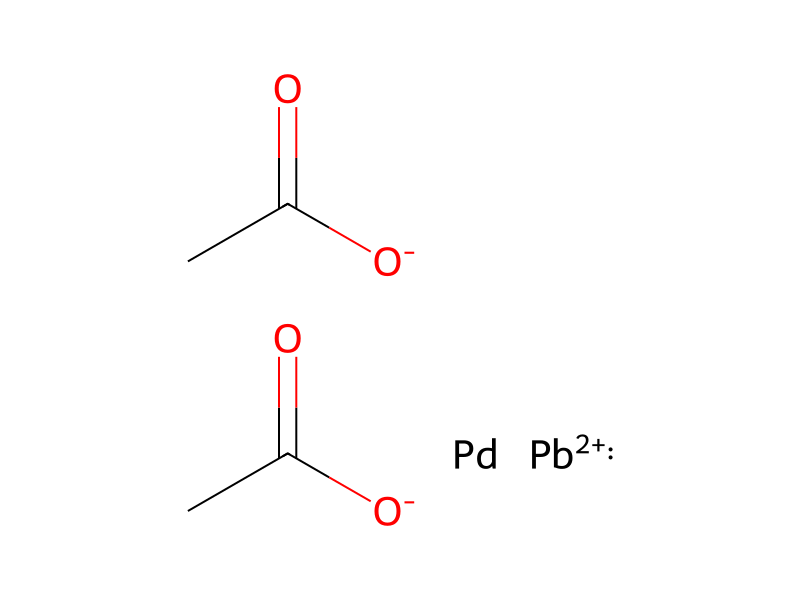
[CH3:1][C:2]([OH:11])([CH2:5][CH2:6][CH2:7][CH:8]([CH3:10])[CH3:9])[C:3]#[CH:4]>[Pd].CC([O-])=O.CC([O-])=O.[Pb+2].CCCCCC>[CH3:1][C:2]([OH:11])([CH2:5][CH2:6][CH2:7][CH:8]([CH3:9])[CH3:10])[CH:3]=[CH2:4]Participants
Reactant 1

Product 1

Reagents, catalysts & solvents 2

Procedure
An autoclave having an internal volume of 3 liters was charged with 1,140 g of the hexane solution containing 3,7-dimethyl-1-octyn-3-ol thus obtained and 0.27 g of a Lindlar catalyst (supported on calcium carbonate) to carry out the hydrogenation for 4 hours under hydrogen pressure of 5 to 8 kg/cm2 (gauge pressure) at a temperature of 25 to 43° C. Thereafter, the catalyst was filtered off, and the resultant filtrate was concentrated with a rotary evaporator to give crude 3,7-dimethyl-1-octen-3-ol. Above the procedures for the hydrogenation of 3,7-dimethyl-1-octyn-3-ol were repeated once more to obtain, in total, 1,590 g of crude 3,7-dimethyl-1-octen-3-ol. Analysis by gas chromatography (column: DC-550, available from Gasukuro Kogyo Inc.; column length: 3 m; column temperature: 100° C.; and column: PEG-HT, available from Gasukuro Kogyo Inc.; column length: 3 m; column temperature: 130° C.) revealed that the conversions of 3,7-dimethyl-1-octyn-3-ol were 99.7% and 97.3% for the respective runsof the hydrogenation, and the selectivities to 3,7-dimethyl-1-octen-3-ol were 95.0% and 95.8%, respectively.
Workup
- customthus obtained
- customfor 4 hours
- customat a temperature of 25 to 43° C
- filtrationThereafter, the catalyst was filtered off
- concentrationthe resultant filtrate was concentrated with a rotary evaporator
Sources & evidence
- ORD record
- ord-bb1a119cabe6495a88441aca97652bad
- Source dataset
- uspto-grants-2001_05
- Patent number
- US06232506B1
Reaction notes
Loading…