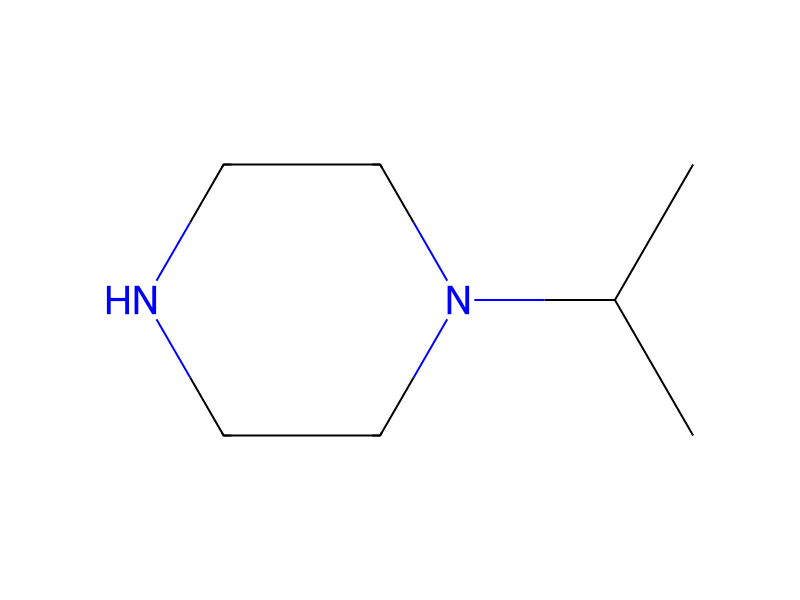
1-Isopropylpiperazine → HCID 11362283, compound
Reaction equation

[N:1]1[C:10]2[C:5](=[CH:6][CH:7]=[C:8]([NH:11][C:12]([C:14]3[CH:23]=[CH:22][C:21]4[C:16](=[CH:17][CH:18]=[C:19](Br)[CH:20]=4)[CH:15]=3)=[O:13])[CH:9]=2)[CH:4]=[CH:3][CH:2]=1.[CH:25]([N:28]1[CH2:33][CH2:32][NH:31][CH2:30][CH2:29]1)([CH3:27])[CH3:26]>>[N:1]1[C:10]2[C:5](=[CH:6][CH:7]=[C:8]([NH:11][C:12]([C:14]3[CH:23]=[CH:22][C:21]4[C:16](=[CH:17][CH:18]=[C:19]([N:31]5[CH2:32][CH2:33][N:28]([CH:25]([CH3:27])[CH3:26])[CH2:29][CH2:30]5)[CH:20]=4)[CH:15]=3)=[O:13])[CH:9]=2)[CH:4]=[CH:3][CH:2]=1Participants
3


Procedure
This material was prepared analogous to the procedure described for Example 33. 6-Bromo-naphthalene-2-carboxylic acid quinolin-7-ylamide, Example 32(b), (116 mg, 0.31 mmol) reacted with 1-isopropylpiperazine (315 mg, 2.46 mmol, Aldrich) to give the title compound as a yellow amorphous solid. MS (ESI, pos. ion) m/z: 426 (M+1).
Workup
- customThis material was prepared analogous to the procedure
Sources & evidence
- ORD record
- ord-b85f23d2fc124bfaab131904fcc1ac85
- Source dataset
- uspto-grants-2009_06
- Patent number
- US07544803B2
Reaction notes
Loading…