Sodium Carbonate → 2-(Furan-3-yl)benzaldehyde
Reaction equation

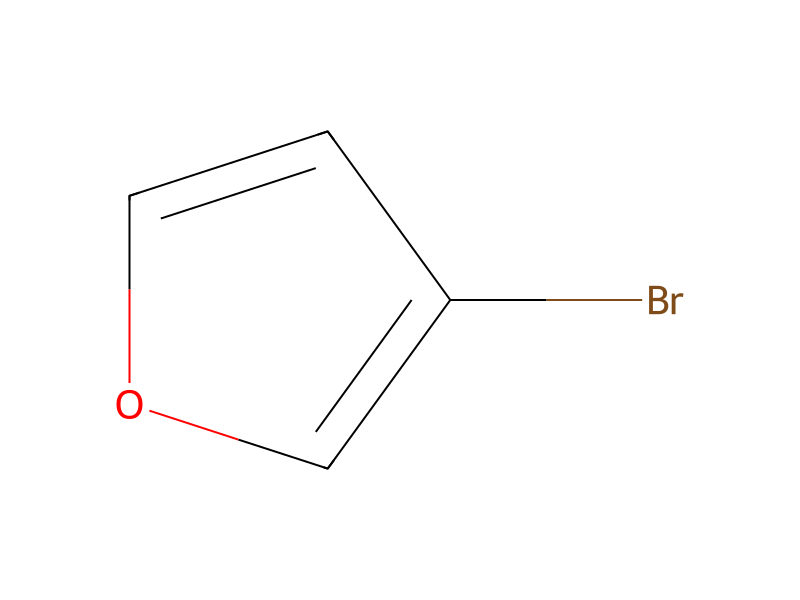
[CH:1]([C:3]1[CH:8]=[CH:7][CH:6]=[CH:5][C:4]=1B(O)O)=[O:2].Br[C:13]1[CH:17]=[CH:16][O:15][CH:14]=1.C(=O)([O-])[O-].[Na+].[Na+]>Cl[Pd](Cl)([P](C1C=CC=CC=1)(C1C=CC=CC=1)C1C=CC=CC=1)[P](C1C=CC=CC=1)(C1C=CC=CC=1)C1C=CC=CC=1.C(#N)C>[O:15]1[CH:16]=[CH:17][C:13]([C:4]2[CH:5]=[CH:6][CH:7]=[CH:8][C:3]=2[CH:1]=[O:2])=[CH:14]1Participants
6





Conditions
- Temperature
- 150 °C
Procedure
A microwave vial (20 ml) was charged with 2-formylphenylboronic acid (298 mg, 2.0 mmol), 3-bromo-furan (350 mg, 2.4 mmol) and 8 ml of acetonitrile. To this mixture was added 4 ml of aqueous sodium carbonate (1M), followed by 100 mg of dichlorobis-(triphenylphosphine)-palladium(II). The reaction vessel was sealed and heated at 150° C. for 5 minutes with microwave irradiation. After cooling, the reaction mixture was extracted with ethylacetate. The organic layer was evaporated to provide crude material which was purified by ISCO to give 110 mg of 2-furan-3-yl-benzaldehyde (30% yield).
Workup
- customThe reaction vessel was sealed
- temperatureAfter cooling
- extractionthe reaction mixture was extracted with ethylacetate
- customThe organic layer was evaporated
- customto provide crude material which
- customwas purified by ISCO
Sources & evidence
- ORD record
- ord-fde8a62991ec4673a1da3365a45ceb42
- Source dataset
- uspto-grants-2009_06
- Patent number
- US07553840B2
Reaction notes
Loading…