Sodium Carbonate → HCID 68524769, compound
Reaction equation

[CH2:1]([O:3][C:4]([C:6]1[S:7][C:8]([CH2:14][CH3:15])=[C:9]([C:12]#[N:13])[C:10]=1I)=[O:5])[CH3:2].[Br:16][C:17]1[CH:22]=[CH:21][C:20](B(O)O)=[CH:19][CH:18]=1.C(=O)([O-])[O-].[Na+].[Na+]>C(#N)C.O.CC1C=CC=CC=1[P](C1C=CC=CC=1C)([Pd](Cl)(Cl)[P](C1=C(C)C=CC=C1)(C1C=CC=CC=1C)C1C=CC=CC=1C)C1C=CC=CC=1C>[CH2:1]([O:3][C:4]([C:6]1[S:7][C:8]([CH2:14][CH3:15])=[C:9]([C:12]#[N:13])[C:10]=1[C:20]1[CH:21]=[CH:22][C:17]([Br:16])=[CH:18][CH:19]=1)=[O:5])[CH3:2]Participants

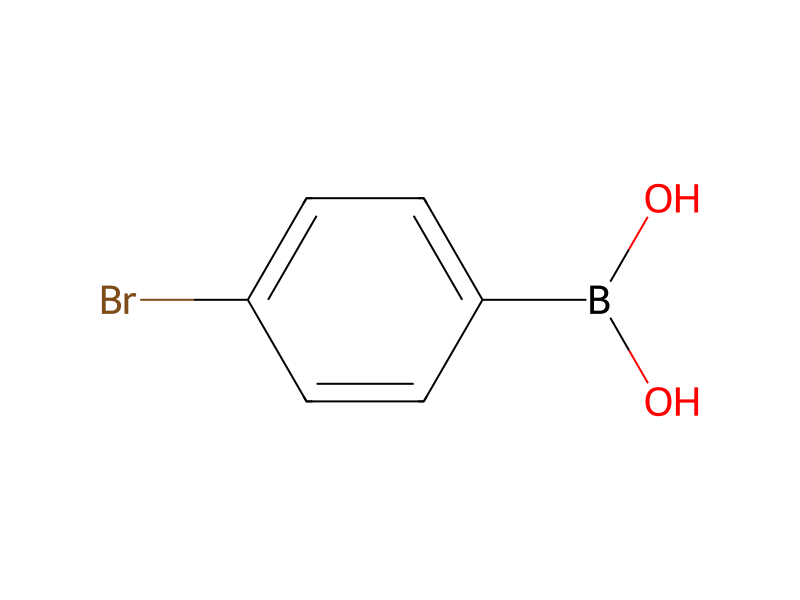




Procedure
Add 4-cyano-5-ethyl-3-iodo-thiophene-2-carboxylic acid ethyl ester (268.1 g, 0.8 mol) and 4-bromophenyl boronic acid (173.5 g, 0.86 mol), to a solution of bis(tri-o-tolylphosphine)palladium (II) diacetate (7.00 g, 0.008 mole) in acetonitrile(1.9 L) within a 5000 mL, 3-neck round-bottom flask equipped with an overhead stirrer, internal temperature probe, heating mantle, and a glycol-cooled condenser fitted with a nitrogen inlet. Add a solution of sodium carbonate (169.6 g, 1.6 mol) in water (1.3 L) and stir the reactor contents at room temperature while sweeping the headspace with nitrogen for 10 min. the reaction apparatus was then set for a nitrogen by-pass and the reaction mixture was heated to 73° C. Observe that HPLC analysis indicates substantial (>98%) consumption of 4-bromophenyl boronic acid and 4-cyano-5-ethyl-3-iodo-thiophene-2-carboxylic acid ethyl ester (flow rate: 1.5 mL/min; detection: 210 nm; mobile phase: isocratic 65/35 (v/v) acetonitrile/0.1% trifluoroacetic acid in water; column: Zorbax® SB-Phenyl; 4.6 mm×25 cm; 5 microns at 35 C). Cool the mixture to 23° C. and separate the phases. Extract the aqueous phase twice with methyl t-butyl ether (300 mL). Combine the organic phases and concentrate under reduced pressure to an oil. Dissolve the oil in a mixture of heptane (500 mL) and methyl t-butyl ether (500 mL). This results in separation of an immiscible water phase which is separated, extracted with methyl t-butyl ether (100 mL) and discarded. The organic phases are combined and concentrated under reduced pressure to an oil. The oil is dissolved in a mixture of heptane (500 mL) and methyl t-butyl ether (300 mL) and the solution is transferred to a flask set for atmospheric distillation at 83° C. The distillation is continued until distillation at 83° C. and atmospheric pressure stops. The resulting solution is cooled to 30° C. and is seeded with 3-(4-Bromo-phenyl)-4-cyano-5-ethyl-thiophene-2-carboxylic acid ethyl ester, then the mixture is further cooled to 18° C. Filter the resulting suspension and wash the filter cake with heptane (3×100 mL). The resulting cake is air-dried and then transferred to a vacuum oven (40° C.) to afford the title compound (263 g, 90.4% yield). The title compound may be additionally purified as follows if desired.
Workup
- temperatureinternal temperature probe, heating mantle
- customfitted with a nitrogen inlet
- customfor 10 min.
- temperaturewas heated to 73° C
- custom(>98%) consumption of 4-bromophenyl boronic acid and 4-cyano-5-ethyl-3-iodo-thiophene-2-carboxylic acid ethyl ester (flow rate: 1.5 mL/min; detection: 210 nm; mobile phase: isocratic 65/35 (v/v) acetonitrile/0.1% trifluoroacetic acid in water; column: Zorbax® SB-Phenyl; 4.6 mm×25 cm; 5 microns at 35 C)
- temperatureCool the mixture to 23° C.
- customseparate the phases
- extractionExtract the aqueous phase twice with methyl t-butyl ether (300 mL)
- concentrationCombine the organic phases and concentrate under reduced pressure to an oil
- dissolutionDissolve the oil
- additionin a mixture of heptane (500 mL) and methyl t-butyl ether (500 mL)
- customThis results in separation of an immiscible water phase which
- customis separated
- extractionextracted with methyl t-butyl ether (100 mL)
- concentrationconcentrated under reduced pressure to an oil
- dissolutionThe oil is dissolved in a mixture of heptane (500 mL) and methyl t-butyl ether (300 mL)
- customthe solution is transferred to a flask
- distillationset for atmospheric distillation at 83° C
- distillationThe distillation
- distillationis continued until distillation at 83° C.
- temperatureThe resulting solution is cooled to 30° C.
- temperaturethe mixture is further cooled to 18° C
- filtrationFilter the resulting suspension
- washwash the filter cake with heptane (3×100 mL)
- customThe resulting cake is air-dried
- customtransferred to a vacuum oven (40° C.)
Sources & evidence
- ORD record
- ord-8761d205146444ac97beace29f2aa22a
- Source dataset
- uspto-grants-2010_01
- Patent number
- US07642361B2
Reaction notes
Loading…