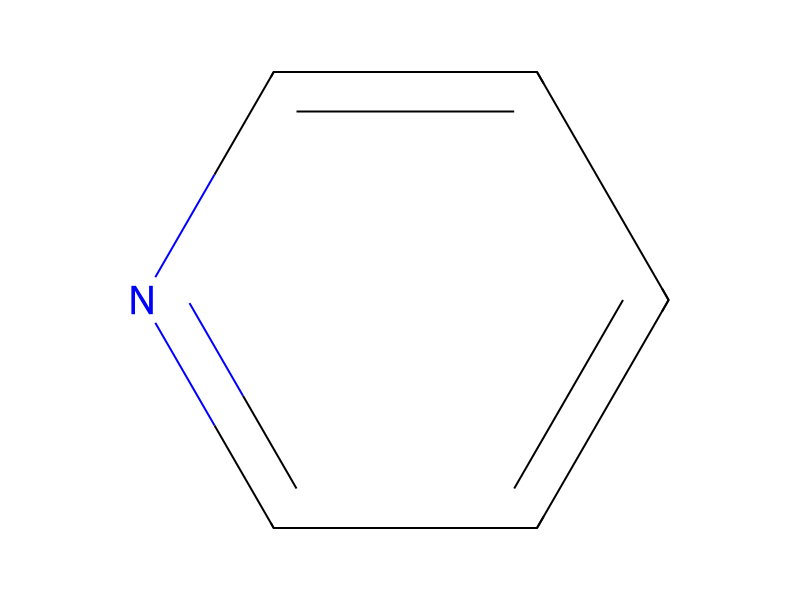
Pyridine → N-benzoyloxy-3-chloro-N-(2-chlorophenyl)methyl-2,2-dimethylpropanamide
Reaction equation

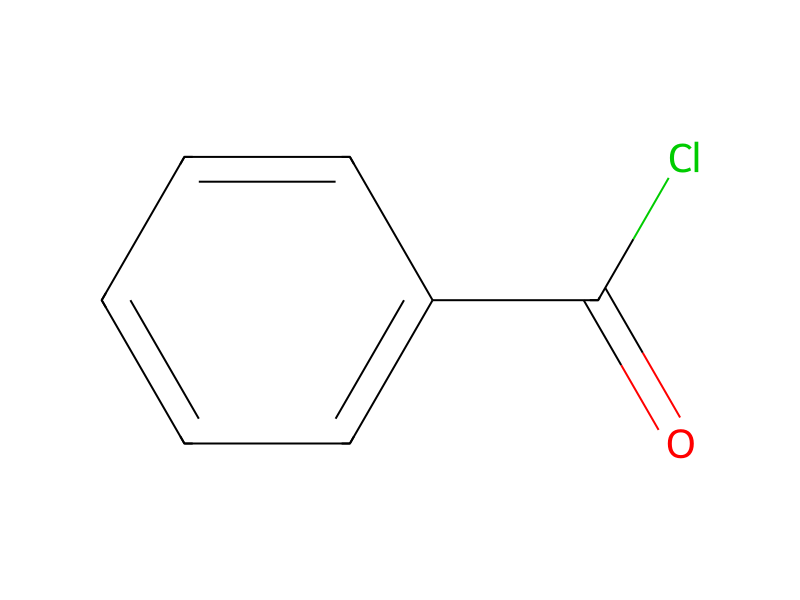
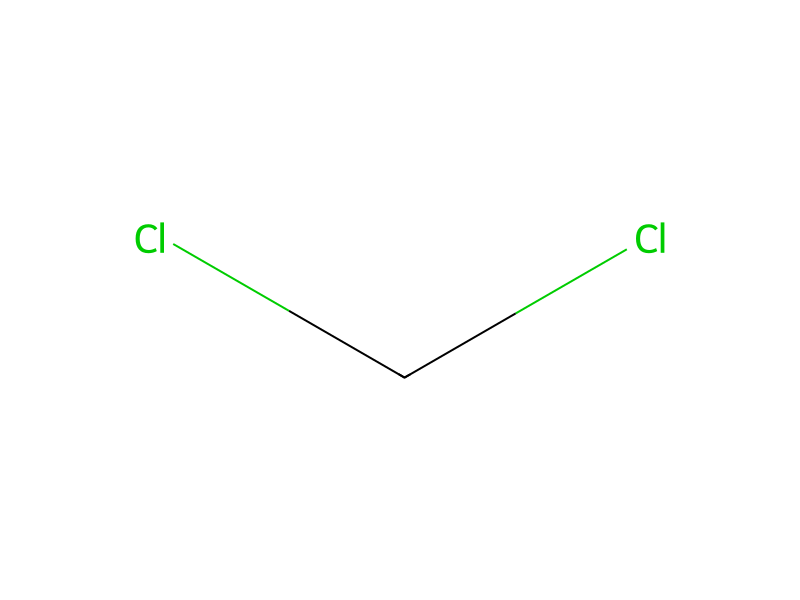
[Cl:1][CH2:2][C:3]([CH3:17])([CH3:16])[C:4]([N:6]([CH2:8][C:9]1[CH:14]=[CH:13][CH:12]=[CH:11][C:10]=1[Cl:15])[OH:7])=[O:5].[C:18](Cl)(=[O:25])[C:19]1[CH:24]=[CH:23][CH:22]=[CH:21][CH:20]=1.N1C=CC=CC=1>C(Cl)Cl>[C:18]([O:7][N:6]([CH2:8][C:9]1[CH:14]=[CH:13][CH:12]=[CH:11][C:10]=1[Cl:15])[C:4](=[O:5])[C:3]([CH3:17])([CH3:16])[CH2:2][Cl:1])(=[O:25])[C:19]1[CH:24]=[CH:23][CH:22]=[CH:21][CH:20]=1Participants


Conditions
- Temperature
- 0 °C
Procedure
A stirred solution of 2.0 grams (0.007 mole) of 3-chloro-N-(2-chlorophenyl)methyl-N-hydroxy-2,2-dimethylpropanamide (prepared in Example 1) in 25 ml of methylene chloride was placed under an argon atmosphere and cooled to 0° C. To this was added 0.98 gram (0.007 mole) of benzoyl chloride in 5 ml of methylene chloride followed by 0.63 gram (0.008 mole) of pyridine. Upon completion of addition the reaction mixture was heated under reflux for 16 hours. The reaction mixture was diluted with methylene chloride and washed with 100 ml of water, 100 ml of aqueous 10% hydrochloric acid and finally 100 ml of an aqueous solution saturated with sodium bicarbonate. The organic layer was dried with magnesium sulfate and filtered. The filtrate was concentrated under reduced pressure to give a residual oil. The oil was subjected to column chromatography on silica gel. The appropriate fraction was concentrated under reduced pressure to give 4.1 grams of solid. The solid was recrystallized from ethyl acetate/cyclohexane. A precipitate was collected by filtration; mp 117°-120°. Nuclear magnetic resonance spectroscopy indicated the precipitate to be benzoic acid. The mother liquor was concentrated under reduced pressure and the residue redissolved in 60 ml of methylene chloride. The solution was washed with five portions of 20 ml each of an aqueous solution saturated with sodium bicarbonate. The organic layer was dried with sodium sulfate and filtered. The filtrate was concentrated under reduced pressure to give an oil residue. Volatiles were removed from the oil under reduced pressure using a short-path distilling system. There remained as a residue 1.0 gram of N-benzoyloxy-3-chloro-N-(2-chlorophenyl)methyl-2,2-dimethylpropanamide.
Workup
- additionUpon completion of addition the reaction mixture
- temperaturewas heated
- temperatureunder reflux for 16 hours
- washwashed with 100 ml of water, 100 ml of aqueous 10% hydrochloric acid and finally 100 ml of an aqueous solution saturated with sodium bicarbonate
- dry with materialThe organic layer was dried with magnesium sulfate
- filtrationfiltered
- concentrationThe filtrate was concentrated under reduced pressure
- customto give a residual oil
- concentrationThe appropriate fraction was concentrated under reduced pressure
Sources & evidence
- ORD record
- ord-838481f3695947f29d5082ce77496b81
- Source dataset
- uspto-grants-1983_09
- Patent number
- US04405357
Reaction notes
Loading…