Azelaic Acid → Bis(2,3-dihydroxypropyl) nonanedioate
Reaction equation

[C:1]([OH:13])(=[O:12])[CH2:2][CH2:3][CH2:4][CH2:5][CH2:6][CH2:7][CH2:8][C:9]([OH:11])=[O:10].[CH2:14]1[O:16][CH:15]1[CH2:17][OH:18]>[Cr]>[OH:16][CH:15]([CH2:17][OH:18])[CH2:14][O:10][C:9](=[O:11])[CH2:8][CH2:7][CH2:6][CH2:5][CH2:4][CH2:3][CH2:2][C:1]([O:13][CH2:14][CH:15]([OH:16])[CH2:17][OH:18])=[O:12]Participants
4
Reactant 2

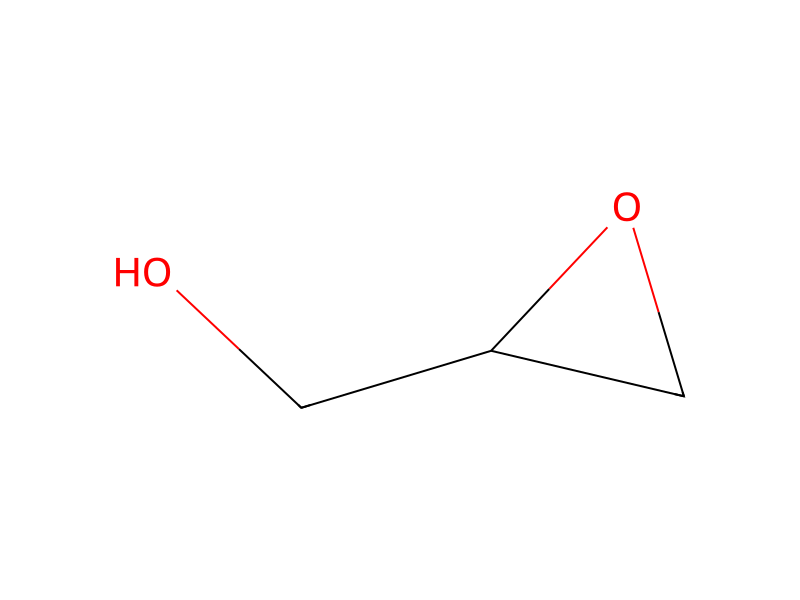
Product 1

Reagents, catalysts & solvents 1

Conditions
- Temperature
- 120 °C
Procedure
Azelaic acid 94 parts, 0.5 mol.) was heated to 120° C. A catalyst, AMC-2 (commercial chromium salt, 0.8 g) was added. Glycidol (81.5 g, 1.1 mol.) was added dropwise with stirring during 1 hour while keeping the temperature within 115° and 125° C. To complete the reaction, heating at 120° C. was continued for another hour. The product was a viscous liquid which crystallized very slowly to a waxy solid. It had residual acid and epoxy contents of 0.03 and 0.07 meq./g, respectively, and a purity of about 95%; 2,3-dihydroxypropyl groups per molecule: 2; molecular weight; 336.
Workup
- customwithin 115°
- custom125° C
- customthe reaction
- temperatureheating at 120° C.
- waitwas continued for another hour
- customcrystallized very slowly to a waxy solid
Sources & evidence
- ORD record
- ord-793b345271974946adabb08c3d5fb666
- Source dataset
- uspto-grants-1983_09
- Patent number
- US04405662
Reaction notes
Loading…