Ammonium Chloride → 8-(4-Propylphenyl)-1,4-dioxaspiro[4.5]decane
Reaction equation

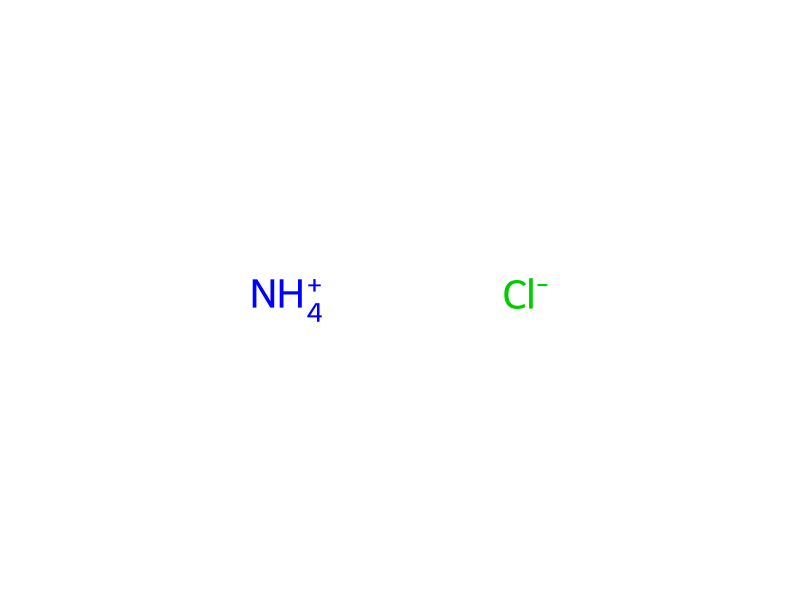
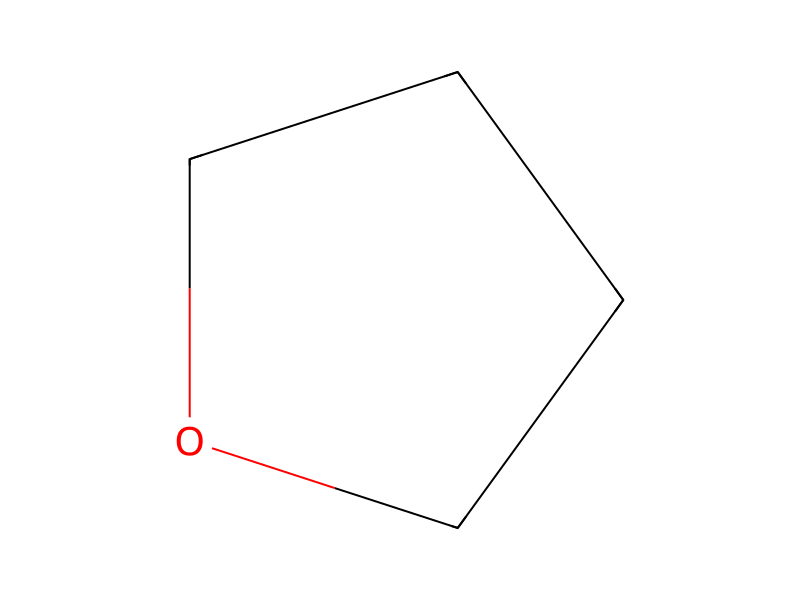
[Mg].Br[C:3]1[CH:8]=[CH:7][C:6]([CH2:9][CH2:10][CH3:11])=[CH:5][CH:4]=1.[O:12]1[C:16]2([CH2:21][CH2:20][C:19](=O)[CH2:18][CH2:17]2)[O:15][CH2:14][CH2:13]1.[Cl-].[NH4+]>C1COCC1>[CH2:9]([C:6]1[CH:7]=[CH:8][C:3]([CH:19]2[CH2:20][CH2:21][C:16]3([O:15][CH2:14][CH2:13][O:12]3)[CH2:17][CH2:18]2)=[CH:4][CH:5]=1)[CH2:10][CH3:11]Participants



Conditions
- Temperature
- 40 °C
Procedure
Well-dried magnesium (14.5 g) and THF (100 ml) were placed in a reaction vessel under an atmosphere of nitrogen, and heated to 40° C. 1-Bromo-4-propylbenzene (s14) (100.0 g) dissolved in THF (300 ml) was added dropwise in the temperature range of 40° C. to 60° C., and the stirring was continued for another 60 minutes. 1,4-Dioxaspiro[4.5]decan-8-one (s7) (78.4 g) dissolved in THF (150 ml) was slowly added dropwise in the temperature range of −5° C. to 0° C., and the stirring was continued for another 60 minutes. After the reaction mixture was allowed to come to room temperature, it was treated with an aqueous solution of ammonium chloride (3%), and the aqueous layer was extracted with toluene. The combined organic layers were washed with water, a saturated aqueous solution of sodium hydrogencarbonate and water, and then dried over anhydrous magnesium sulfate. The solvent was distilled off under reduced pressure. The residue was mixed with p-toluenesulfonic acid (3.9 g) and toluene (300 ml), and the mixture was heated to reflux for 2 hours while distilled water was removed. After the reaction mixture had been cooled to 30° C., it was treated with water, and the aqueous layer was extracted with toluene. The combined organic layers were washed with a saturated aqueous solution of sodium hydrogencarbonate and water, and then dried over anhydrous magnesium sulfate. The solution was concentrated under reduced pressure, and the residue was purified by column chromatography with toluene as an eluent and silica gel as a stationary phase powder. The purified product was dissolved in a mixed solvent of toluene (250 ml) and Solmix A-11 (250 ml), to which Pd/C (5.0 g) was added. The mixture was stirred at room temperature under a hydrogen atmosphere until hydrogen absorption had ceased. After the reaction had been completed, Pd/C was removed, and then solvent was distilled off. The residue was purified by column chromatography with toluene as an eluent and silica gel as a stationary phase powder, and then by recrystallization from heptane to give 8-(4-propylphenyl)-1,4-dioxaspiro[4.5]decane (s15) (68.0 g). The yield based on the compound (s14) was 52.0%.
Workup
- additionwas added dropwise in the temperature range of 40° C. to 60° C.
- additionwas slowly added dropwise in the temperature range of −5° C. to 0° C.
- waitthe stirring was continued for another 60 minutes
- customto come to room temperature
- extractionthe aqueous layer was extracted with toluene
- washThe combined organic layers were washed with water
- dry with materiala saturated aqueous solution of sodium hydrogencarbonate and water, and then dried over anhydrous magnesium sulfate
- distillationThe solvent was distilled off under reduced pressure
- additionThe residue was mixed with p-toluenesulfonic acid (3.9 g) and toluene (300 ml)
- temperaturethe mixture was heated
- temperatureto reflux for 2 hours
- distillationwhile distilled water
- customwas removed
- temperatureAfter the reaction mixture had been cooled to 30° C.
- additionit was treated with water
- extractionthe aqueous layer was extracted with toluene
- washThe combined organic layers were washed with a saturated aqueous solution of sodium hydrogencarbonate and water
- dry with materialdried over anhydrous magnesium sulfate
- concentrationThe solution was concentrated under reduced pressure
- customthe residue was purified by column chromatography with toluene as an eluent
- dissolutionThe purified product was dissolved in a mixed solvent of toluene (250 ml) and Solmix A-11 (250 ml), to which Pd/C (5.0 g)
- additionwas added
- customPd/C was removed
- distillationsolvent was distilled off
- customThe residue was purified by column chromatography with toluene as an eluent
- customsilica gel as a stationary phase powder, and then by recrystallization from heptane
Sources & evidence
- ORD record
- ord-a2c34c25f489492d9ad04703e684c5eb
- Source dataset
- uspto-grants-2013_11
- Patent number
- US08580146B2
Reaction notes
Loading…