Citric Acid → Aspirin potassium
Reaction equation

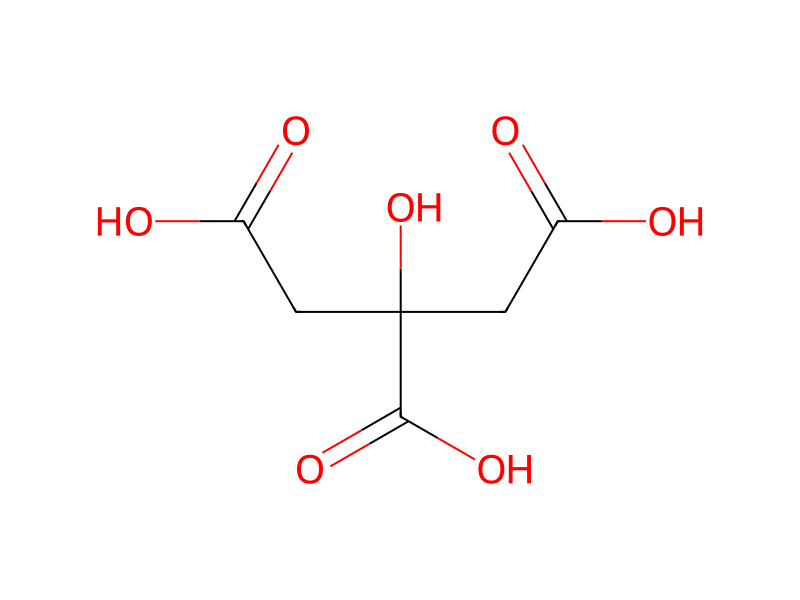
[CH3:1][C:2]([O:4][C:5]1[CH:6]=[CH:7][CH:8]=[CH:9][C:10]=1[C:11]([OH:13])=[O:12])=[O:3].C(=O)(O)[O-].C(O)(=O)CC(CC(O)=O)(C(O)=O)O.C(=O)(O)[O-].[K+:35]>O>[C:2]([O:4][C:5]1[C:10](=[CH:9][CH:8]=[CH:7][CH:6]=1)[C:11]([O-:13])=[O:12])(=[O:3])[CH3:1].[K+:35]Participants
Reactant 4


Product 1

Reagents, catalysts & solvents 1

Procedure
The soluble aspirin composition of the present disclosure is formulated so that all aspirin is bound to particles of bicarbonate, i.e., the composition contains no non-agglomerated aspirin. The granules, containing aspirin, powdered heat-treated bicarbonate salt, resin and surfactant, are in mixture with crystalline particles of pharmaceutically-acceptable acid, such as citric acid, and crystalline particles of heat-treated bicarbonate salt, e.g., potassium bicarbonate. When the soluble aspirin composition is introduced to water or other aqueous medium, the pharmaceutically acceptable acid crystals and the heat-treated bicarbonate salt crystals strongly react with one another to effect effervescence and mixing of the composition in the liquid volume, and the pharmaceutically acceptable acid crystals react with the heat-treated bicarbonate salt in the granules to reactively break up and disperse the granules, with the reaction involving the aspirin in the granules, to yield potassium acetylsalicylate, which immediately dissolves in the aqueous medium without residue.
Workup
- additionmixing of the composition in the liquid volume
- additiondisperse the granules
Sources & evidence
- ORD record
- ord-ea1fe9dfe4e047fc9024ac3390ce7fe0
- Source dataset
- uspto-grants-2013_11
- Patent number
- US08580853B2
Reaction notes
Loading…