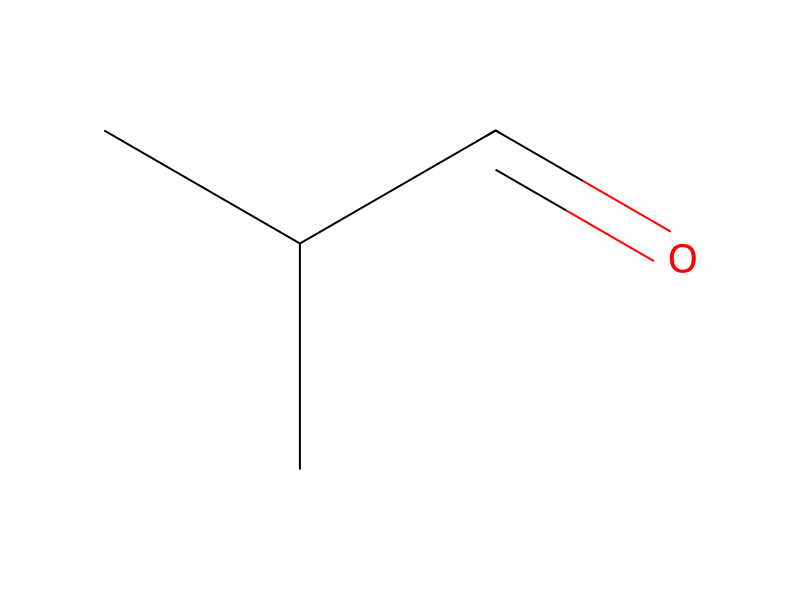
Isobutyraldehyde → HCID 53840005, compound
Reaction equation

[Cl:1][C:2]1[CH:9]=[C:8]([F:10])[CH:7]=[CH:6][C:3]=1[CH2:4]Cl.[CH:11](=[O:15])[CH:12]([CH3:14])[CH3:13].[OH-].[Na+]>C1(C)C=CC=CC=1.[I-].C([N+](CCCC)(CCCC)CCCC)CCC>[Cl:1][C:2]1[CH:9]=[C:8]([F:10])[CH:7]=[CH:6][C:3]=1[CH2:4][C:12]([CH3:14])([CH3:13])[CH:11]=[O:15]Participants
6




Procedure
65.0 g of 2-chloro-4-fluorobenzyl chloride in 90 ml of toluene and 28.8 g of isobutyraldehyde are added dropwise, simultaneously but separately, with thorough mixing at 80° C. in the course of 30 minutes to a mixture of 1.9 g of tetrabutylammonium iodide, 155 g of 30% strength sodium hydroxide solution and 115 ml of toluene, and stirring is continued for 3 hours at 80° C. The organic phase is separated off, washed with three times 50 ml of water, dried, and concentrated (58.5 g) by short-path distillation (bp.=70°-90° C./0.3). Distillation gives 45.1 g of (2-chloro-4-fluorophenyl)-pivalaldehyde (bp.: 53°-55° C./0.1).
Workup
- customThe organic phase is separated off
- washwashed with three times 50 ml of water
- customdried
- concentrationconcentrated (58.5 g)
- distillationby short-path distillation (bp.=70°-90° C./0.3)
- distillationDistillation
Sources & evidence
- ORD record
- ord-2addd1b5522a467699a2191e4079b320
- Source dataset
- uspto-grants-1991_05
- Patent number
- US05013354
Reaction notes
Loading…