Acetic Acid → Anthraquinone
Reaction equation

[CH2:1]([C:8]1[CH:13]=[CH:12][CH:11]=[CH:10][C:9]=1C)[C:2]1C=[CH:6][CH:5]=[CH:4][CH:3]=1.[O:15]=O.[C:17]([OH:20])(=O)[CH3:18]>C([O-])(=O)C.[Co+2].C([O-])(=O)C.C([O-])(=O)C.[Mn+2].C([O-])(=O)C.[Co](Br)Br>[CH:6]1[C:18]2[C:17](=[O:20])[C:13]3[C:8](=[CH:9][CH:10]=[CH:11][CH:12]=3)[C:1](=[O:15])[C:2]=2[CH:3]=[CH:4][CH:5]=1Participants
7



Reagents, catalysts & solvents 3


Procedure
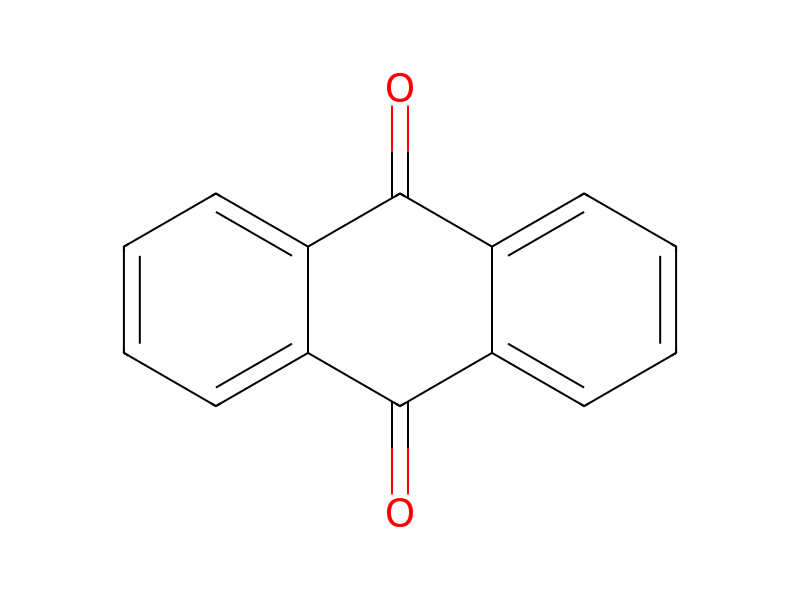
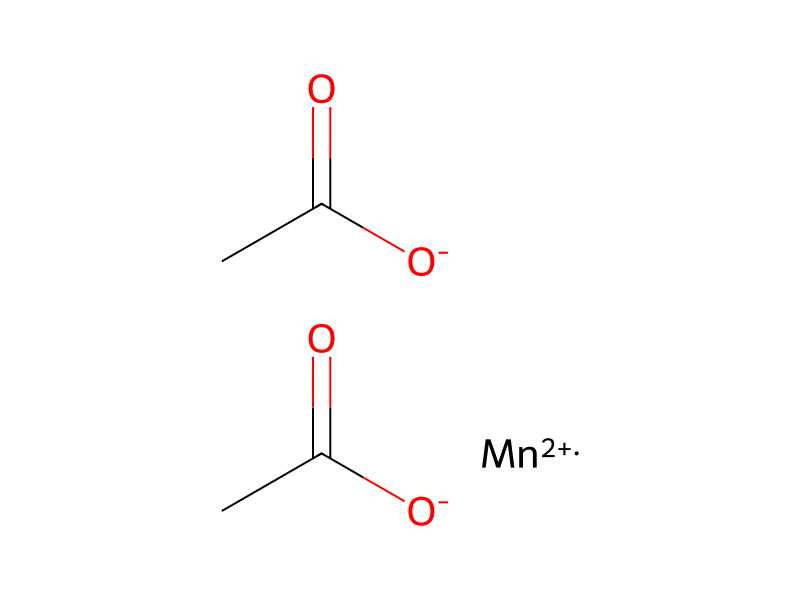
The reactor described in Example 1 is charged with a mixture of 60.7 g o-benzyl-toluene (5/8 Mol), 607 ml dry acetic acid, 3 g cobalt (II) acetate.4H2O, 0.5 g manganese (II) acetate.4H2O and 3.0 g cobalt (II) bromide.6H2O. The reaction is carried out as described above. The uptake of oxygen is completed after about 3 hours. After the analogous work up 2.2 g anthraquinone (3.2% of theory) and 68.1 g crude o-benzoyl-benzoic acid (90.4% of theory) are recovered; the acid number approaches 226, and the color is medium brown. Heating of a small sample with concentrated sulfuric acid yields a darkly-colored anthraquinone.
Workup
- customAfter the analogous work up 2.2 g anthraquinone (3.2% of theory) and 68.1 g crude o-benzoyl-benzoic acid (90.4% of theory) are recovered
- temperatureHeating of a small sample with concentrated sulfuric acid
Sources & evidence
- ORD record
- ord-7aa3c5defc4d4509a66317727b452ac5
- Source dataset
- uspto-grants-1980_01
- Patent number
- US04185023
Reaction notes
Loading…