Ethyl 3-phenylprop-2-enoate → HCID 69288434, compound
Reaction equation

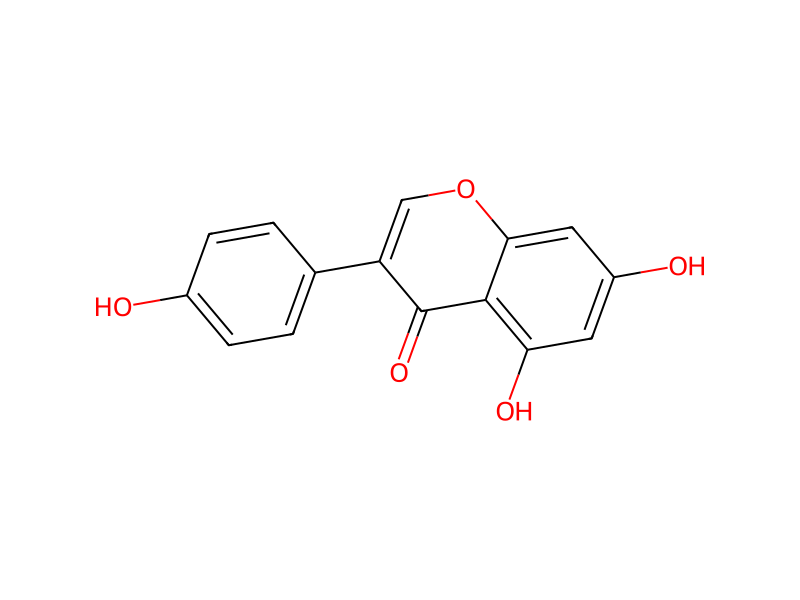
[CH:1]1[C:6]([C:7]2[C:16](=O)[C:15]3C(O)=CC(O)=CC=3OC=2)=[CH:5][CH:4]=[C:3](O)[CH:2]=1.[OH:21][C:22]1[CH:27]=[CH:26][CH:25]=[CH:24][C:23]=1[C:28]([CH2:30][C:31]1[CH:36]=[CH:35][CH:34]=[CH:33][CH:32]=1)=[O:29].C(OCC)(=O)C=CC1C=CC=CC=1>>[C:6]1([CH:7]=[CH:16][C:15]2[O:21][C:22]3[C:23]([C:28](=[O:29])[C:30]=2[C:31]2[CH:32]=[CH:33][CH:34]=[CH:35][CH:36]=2)=[CH:24][CH:25]=[CH:26][CH:27]=3)[CH:1]=[CH:2][CH:3]=[CH:4][CH:5]=1Participants



Procedure
In the earlier years, from about 1928 to about 1952, two synthetic routes to genistein and related isoflavones were predominantly available. The first route involved the reaction of a 2-hydroxydeoxybenzoin with a cinnamic acid ester, e.g. ethyl cinnamate, to afford the corresponding 2-(2-phenylethenyl)-isoflavone, followed by oxidation with potassium permanganate and thermal decarboxylation to the isoflavanone compound: see W. Baker et al., J. Chem. Soc. 1926, 2713; ibid. 1928, 3115; and ibid. 1933, 274. The second route involved the reaction of a 2-hydroxydeoxybenzoin with sodium and ethyl formate to produce the appropriate 2H-isoflavone compound directly: see H. S. Mahal et al., J. Chem. Soc. 1934, 1769; F. Wessely et al., Chem. Ber. 66, 685 (1933); and R. L. Shriner, J. Org. Chem. 10, 288 (1945). Both routes in whatever variation led to inadequate yields of the desired isoflavone compound.
Sources & evidence
- ORD record
- ord-bd45aa9d94434eeaad5a5bfa0c0af5dd
- Source dataset
- uspto-grants-2008_02
- Patent number
- US07326797B2
Reaction notes
Loading…