Benzoyl Peroxide → 2-(4-Bromo-3-fluorophenyl)acetonitrile
Reaction equation

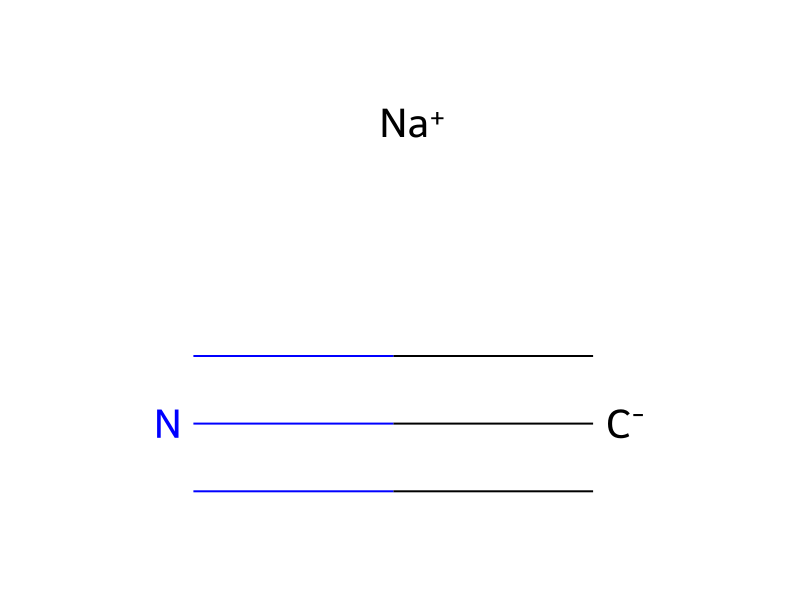
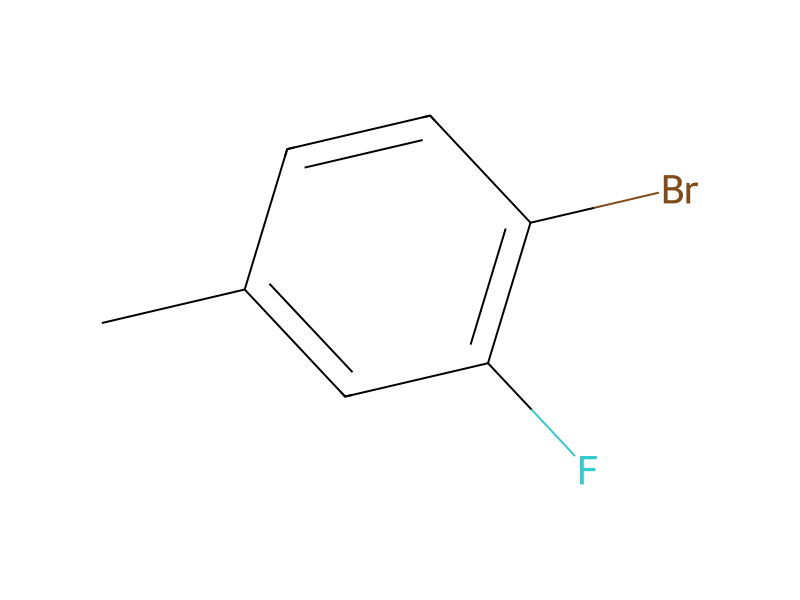
[Br:1][C:2]1[CH:7]=[CH:6][C:5]([CH3:8])=[CH:4][C:3]=1[F:9].Br[N:11]1C(=O)CC[C:12]1=O.C(OOC(=O)C1C=CC=CC=1)(=O)C1C=CC=CC=1.[C-]#N.[Na+]>C(Cl)(Cl)(Cl)Cl.C(O)C.O>[Br:1][C:2]1[CH:7]=[CH:6][C:5]([CH2:8][C:12]#[N:11])=[CH:4][C:3]=1[F:9]Participants






Procedure
A solution of 1-bromo-2-fluoro-4-methyl-benzene (5.0 g, 26.45 mmol), N-bromosuccinimide (4.94 g, 27.75 mmol) and benzoyl peroxide (100 mg) in carbon tetrachloride (75 mL) was heated under reflux for 3 hrs, allowed to cool, filtered and the residue flashed through a plug of silica gel, eluting with hexanes. The solvent was evaporated to dryness to afford a colorless oil. The crude product (1.73 g, 6.46 mmol) and sodium cyanide (317 mg, 6.46 mmol) was heated to reflux in a mixture of ethanol (17 mL) and water (3 mL) for a period of 4 hrs. After cooling, the solution was evaporated to dryness and the residue purified by column chromatography (0 to 10% EtOAc in hexanes) to afford (4-bromo-3-fluoro-phenyl)-acetonitrile as a pale orange solid. 1H NMR (500 MHz, CDCl3) δ 7.56 (1H, m), 7.12 (1H, d, J=8.9 Hz), 7.02 (1H, d, J=8.9 Hz), 3.73 (3H, s).
Workup
- temperatureunder reflux for 3 hrs
- temperatureto cool
- filtrationfiltered
- washeluting with hexanes
- customThe solvent was evaporated to dryness
- customto afford a colorless oil
- temperatureAfter cooling
- customthe solution was evaporated to dryness
- customthe residue purified by column chromatography (0 to 10% EtOAc in hexanes)
Sources & evidence
- ORD record
- ord-f201803a99584d549434927e202541a9
- Source dataset
- uspto-grants-2008_02
- Patent number
- US07332516B2
Reaction notes
Loading…