Melamine → Melamine cyanurate
Reaction equation

[N:1]1[C:8]([NH2:9])=[N:7][C:5]([NH2:6])=[N:4][C:2]=1[NH2:3].[NH:10]1[C:17](=[O:18])[NH:16][C:14](=[O:15])[NH:13][C:11]1=[O:12]>>[N:1]1[C:8]([NH2:9])=[N:7][C:5]([NH2:6])=[N:4][C:2]=1[NH2:3].[NH:10]1[C:17](=[O:18])[NH:16][C:14](=[O:15])[NH:13][C:11]1=[O:12]Participants
Reactant 2

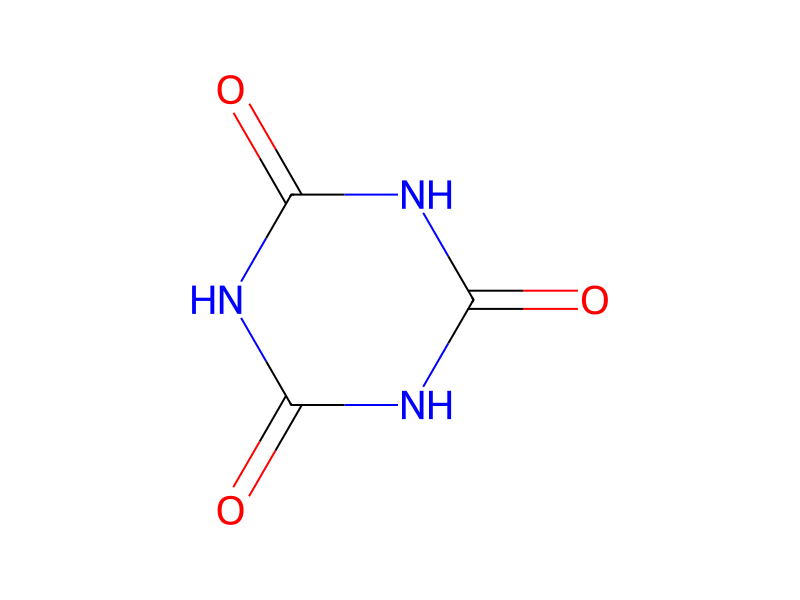
Product 1

Procedure
Mixtures of melamine and cyanuric acid in molar ratios of 2.0:1.0 (Example 17), 1.5:1.0 (Example 18), 1.2:1.0 (Example 19), and 1.0:1.3 (Example 20) were prepared. Each mixture was added to an aqueous monomer solution for forming a polyamide Ny 66/6=90/10 so that the weight of melamine-cyanuric acid mixture may become 6% by weight based on the polyamide composition to be formed. Polymerization of the resulting mixture was carried out in a manner similar to that in Example 1. As shown in Table 6, if the melamine-cyanuric acid mixture is not an equimolar one, the formed polyamide could not reach a polymerization degree suitable for practical use of the composition. The composition of Example 17 was evaluated as a plastic molding material.
Workup
- additionEach mixture was added to an aqueous monomer solution
Sources & evidence
- ORD record
- ord-3c7df36cef4448bda8b904badee5d916
- Source dataset
- uspto-grants-1982_03
- Patent number
- US04317766
Reaction notes
Loading…