N,N,N',N'-Tetramethylethylenediamine → HCID 13037520, compound
Reaction equation

C([Li])CCC.CN(C)CCN(C)C.[CH2:14]([NH:21][C:22]1[CH:27]=[CH:26][CH:25]=[CH:24][CH:23]=1)[C:15]1[CH:20]=[CH:19][CH:18]=[CH:17][CH:16]=1.[C:28]1([P:34](Cl)(Cl)=[O:35])[CH:33]=[CH:32][CH:31]=[CH:30][CH:29]=1>CCCCCC.C1CCCCC1>[C:28]1([P:34]2(=[O:35])[C:16]3[CH:17]=[CH:18][CH:19]=[CH:20][C:15]=3[CH2:14][N:21]2[C:22]2[CH:27]=[CH:26][CH:25]=[CH:24][CH:23]=2)[CH:33]=[CH:32][CH:31]=[CH:30][CH:29]=1Participants
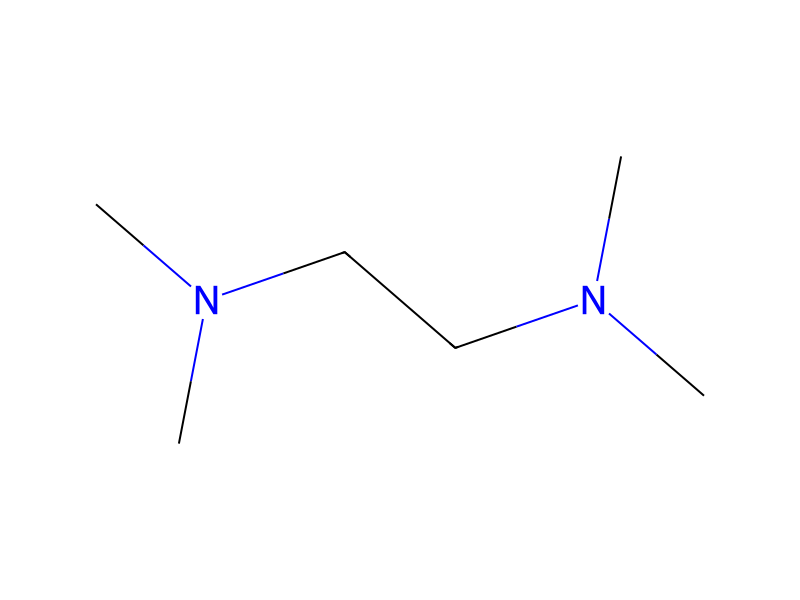






Conditions
- Temperature
- 26 °C
Procedure
Under a static nitrogen atmosphere at 0° C., a solution of n-butyllithium (3.90 g, 0.061 mol) in hexane was added to a solution of tetramethylethylenediamine (1.8 g, 0.0155 mol) in 30 ml. of anhydrous cyclohexane with constant stirring. While maintaining the temperature of the reaction at 0° C., a solution of N-benzylaniline (5.5 g, 0.03 mol) in 30 ml. of anhydrous cyclohexane was added to the reaction mixture to produce a suspension containing a dilithio compound. This suspension was stirred for 2 hours at 26° C. and then cooled to 0° C. A solution of phenylphosphonic dichloride (6.25 g, 0.032 mol) in 30 ml. of anhydrous cyclohexane was added dropwise to the suspension over a period of 15 minutes and the resulting mixture was stirred for 0.5 hours at 0° C., then for 2.5 hours at 26° C. The reaction was quenched with the rapid addition of 6 ml. of acetic acid. The reaction mixture was concentrated in vacuo and the residue partitioned in methylene chloride and water. The layers were separated and the methylene chloride layer was washed with 5% hydrochloric acid, sodium bicarbonate, then water. The methylene chloride layer was dried over magnesium sulfate, concentrated in vacuo and the resulting residue was slurried in anhydrous diethyl ether and allowed to stand at 0° C. for 40 hours. The slurry was filtered and the resulting yellow precipitate was dissolved in a minimal amount of hot ethyl alcohol. The ethyl alcohol solution was diluted with petroleum ether to yield 1,2-diphenyl-2,3-dihydro-1H-2,1-benzazaphosphole-1-oxide as white fluffy crystals. A second crop was obtained and the combined product yield was recrystallized from ethanol to yield 1,2-diphenyl-2,3-dihydro-1H-2,1-benzazaphosphole-1-oxide (3.0 g, 33% yield) as fluffy needles having a melting point of 227°-229° C. and the following analysis:
Workup
- temperatureWhile maintaining
- customthe temperature of the reaction at 0° C.
- customto produce a suspension
- temperaturecooled to 0° C
- stirringthe resulting mixture was stirred for 0.5 hours at 0° C.
- waitfor 2.5 hours at 26° C
- customThe reaction was quenched with the rapid addition of 6 ml
- concentrationThe reaction mixture was concentrated in vacuo
- customthe residue partitioned in methylene chloride
- customThe layers were separated
- washthe methylene chloride layer was washed with 5% hydrochloric acid, sodium bicarbonate
- dry with materialThe methylene chloride layer was dried over magnesium sulfate
- concentrationconcentrated in vacuo
- waitto stand at 0° C. for 40 hours
- filtrationThe slurry was filtered
- dissolutionthe resulting yellow precipitate was dissolved in a minimal amount of hot ethyl alcohol
- additionThe ethyl alcohol solution was diluted with petroleum ether
Sources & evidence
- ORD record
- ord-44ca12f8eaa94c9386c76771839154b7
- Source dataset
- uspto-grants-1982_03
- Patent number
- US04319913
Reaction notes
Loading…