p-Amino-DL-phenylalanine hydrate → HCID 45255379, compound
Reaction equation

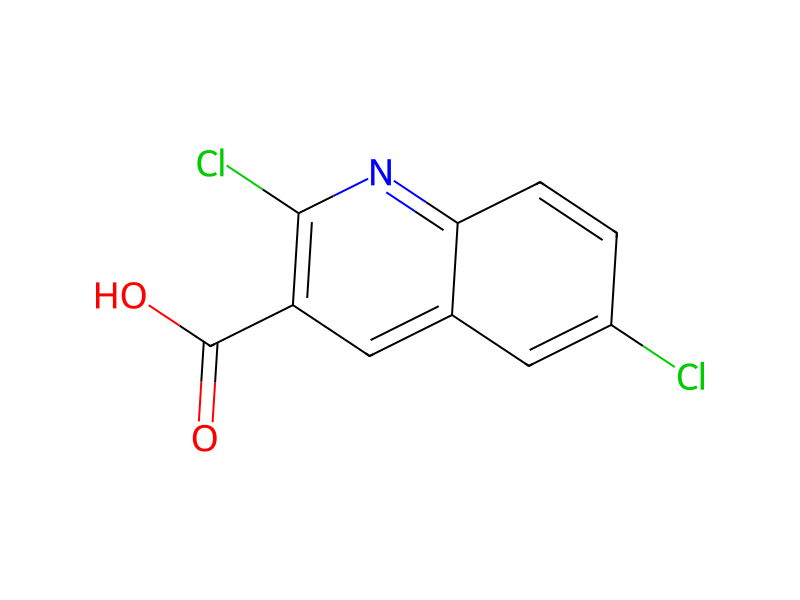
Cl[C:2]1[C:11]([C:12]([OH:14])=[O:13])=[CH:10][C:9]2[C:4](=[CH:5][CH:6]=[C:7]([Cl:15])[CH:8]=2)[N:3]=1.[NH2:16][C:17]1[CH:28]=[CH:27][C:20]([CH2:21][CH:22]([C:24]([OH:26])=[O:25])[NH2:23])=[CH:19][CH:18]=1>>[NH2:16][C:17]1[CH:18]=[CH:19][C:20]([CH2:21][CH:22]([NH:23][C:2]2[C:11]([C:12]([OH:14])=[O:13])=[CH:10][C:9]3[C:4](=[CH:5][CH:6]=[C:7]([Cl:15])[CH:8]=3)[N:3]=2)[C:24]([OH:26])=[O:25])=[CH:27][CH:28]=1Participants
3


Procedure
In close analogy to the procedure described in Example 1, 2,6-dichloroquinoline-3-carboxylic acid is reacted with 4-amino-DL-phenylalanine and crude product is separated by flash chromatography on SiO2 to provide the title compound in good yield.
Workup
- customis separated by flash chromatography on SiO2
Sources & evidence
- ORD record
- ord-9dd03d4f84d741e39846ea0112be159e
- Source dataset
- uspto-grants-2012_10
- Patent number
- US08288549B2
Reaction notes
Loading…