Sodium Hydroxide → HCID 86625747, compound
Reaction equation

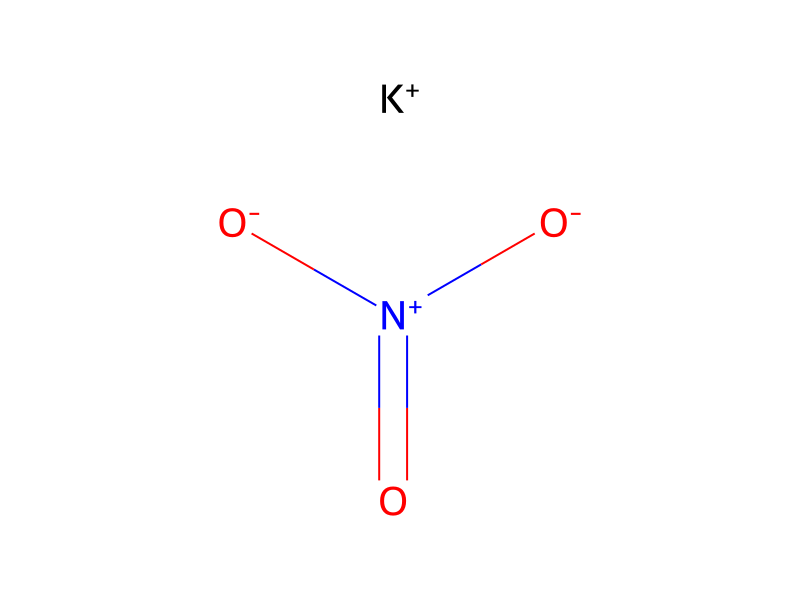
[Cl:1][C:2]1[CH:7]=[C:6]([Cl:8])[N:5]=[C:4]([N:9]2[CH2:14][CH2:13][O:12][CH2:11][CH2:10]2)[CH:3]=1.[N+:15]([O-])([O-:17])=[O:16].[K+].[OH-].[Na+]>S(=O)(=O)(O)O>[Cl:1][C:2]1[C:7]([N+:15]([O-:17])=[O:16])=[C:6]([Cl:8])[N:5]=[C:4]([N:9]2[CH2:10][CH2:11][O:12][CH2:13][CH2:14]2)[CH:3]=1Participants
Reactant 3


Product 1

Reagents, catalysts & solvents 1

Procedure
To a solution of 4-(4,6-dichloropyridin-2-yl)-morpholine (3.90 g) in concentrated sulfuric acid (40 mL) was added potassium nitrate (1.80 g) over 10 minutes. The reaction mixture was stirred for 16 hours at ambient temperature and then poured in to chrushed ice (500 g). The reaction mixture was made alkaline with concentrated sodium hydroxide and extracted with ethyl acetate (2×100 mL). The combined organic phases were dried over magnesium sulfate and concentrated in vacuo. The crude product was subjected to flash chromatography (SiO2, heptane/ethylacetate 3:1) to furnish 2.26 g (49% yield) of the title compound as a yellow solid. LC-MS (n/z) 278.0 (M+); tR=3.10, (UV, ELSD) 96.5%, 98.8%. 1H NMR (500 MHz, CDCl3): 3.62 (m, 4H), 3.80 (m, 4H), 6.50 (s, 1H).
Workup
- extractionextracted with ethyl acetate (2×100 mL)
- dry with materialThe combined organic phases were dried over magnesium sulfate
- concentrationconcentrated in vacuo
Sources & evidence
- ORD record
- ord-a48a88eac04340689e7397d36e889113
- Source dataset
- uspto-grants-2012_10
- Patent number
- US08299071B2
Reaction notes
Loading…