Nitroethane → HCID 22759464, compound
Reaction equation

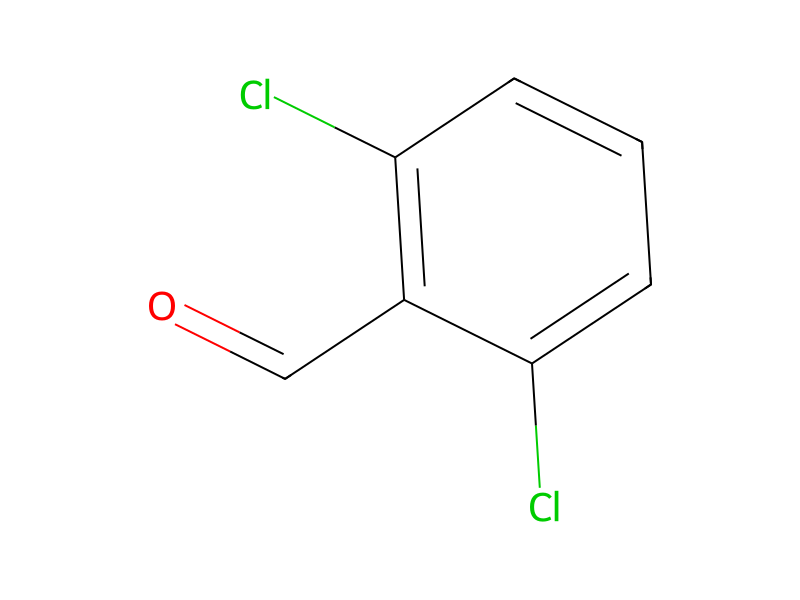
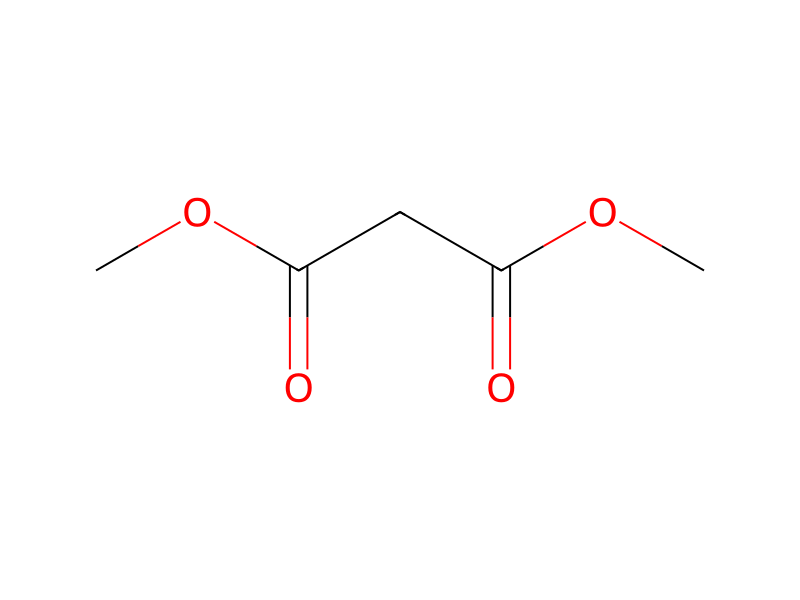
[Cl:1][C:2]1[CH:7]=[CH:6][CH:5]=[C:4]([Cl:8])[C:3]=1[CH:9]=[C:10]([N+:12]([O-])=O)[CH3:11].[N+](CC)([O-])=O.ClC1C=CC=C(Cl)C=1C=O.[C:30](OC)(=[O:36])[CH2:31][C:32]([O:34][CH3:35])=[O:33]>>[Cl:1][C:2]1[CH:7]=[CH:6][CH:5]=[C:4]([Cl:8])[C:3]=1[CH:9]1[CH:10]([CH3:11])[NH:12][C:30](=[O:36])[CH:31]1[C:32]([O:34][CH3:35])=[O:33]Participants



Procedure
1-(2,6-Dichlorophenyl)-2-nitropropylene (m.p. 49°-50° C., b.p. 90°-102° C./0.33 mm. Hg.)is prepared from nitroethane and 2,6-dichlorobenzaldehyde by a similar process to that described in the second and third parts of Example 4. This compound is reacted with dimethyl malonate and the product hydrogenated by a similar process to that described in the fourth and fifth parts of Example 4, and the 4-(2,6-dichlorophenyl)-3-methoxycarbonyl-5-methylpyrrolidin-2-one thus obtained is separated into two geometrical isomers thereof by repeated chromatography on a silica gel column, using a 2:1 v/v mixture of toluene and ethyl acetate as eluant. The two isomers have m.p. 157°-158° C. (first isomer) and 143°-144° C. (second isomer). These two esters are separately hydrolysed and decarboxylated by a similar process to that described in the sixth part of Example 4, and there are thus obtained a first isomer, m.p. 182°-184° C., and a second isomer, m.p. 173.5°-175° C., of 4-(2,6-dichlorophenyl)-5-methylpyrrolidin-2-one, the isomers differing by cis- and trans- relationship of the 4-(2,6-dichlorophenyl)- and 5-methyl-substituents.
Sources & evidence
- ORD record
- ord-9aeff3e3914a47e9a2bf99799c5c58fd
- Source dataset
- uspto-grants-1977_09
- Patent number
- US04046898
Reaction notes
Loading…