3-(Trifluoromethyl)phenyl isocyanate → 1-(1-Benzyl-2-pyrrolidylidene)-3-(m-trifluoromethylphenyl)urea
Reaction equation

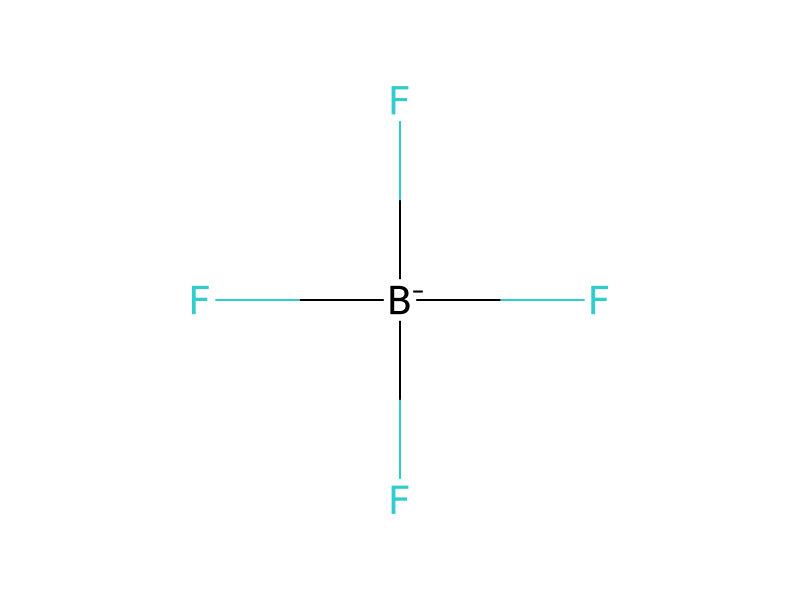
F[B-](F)(F)F.[CH2:6]([N:13]1[CH2:17][CH2:16][CH2:15][C:14]1=[NH:18])[C:7]1[CH:12]=[CH:11][CH:10]=[CH:9][CH:8]=1.[F:19][C:20]([F:31])([F:30])[C:21]1[CH:22]=[C:23]([N:27]=[C:28]=[O:29])[CH:24]=[CH:25][CH:26]=1>>[CH2:6]([N:13]1[CH2:17][CH2:16][CH2:15][C:14]1=[N:18][C:28]([NH:27][C:23]1[CH:24]=[CH:25][CH:26]=[C:21]([C:20]([F:19])([F:30])[F:31])[CH:22]=1)=[O:29])[C:7]1[CH:12]=[CH:11][CH:10]=[CH:9][CH:8]=1Participants
4



Procedure
The fluoroborate salt of 1-benzyl-2-iminopyrrolidine (6.55 g.; 0.025 mole) is converted to free base (4.36 g; 0.025 mole) in the usual manner. After drying over K2CO3, the benzene solution is filtered through diatomaceous earth and 4.68 g. (0.025 mole) of m-trifluoromethylphenylisocyanate is added. The reaction mixture is stirred at room temperature for 1 hour and then evaporated to dryness in vacuo to give an oily residue of 1-(1-benzyl-2-pyrrolidylidene)-3-(m-trifluoromethylphenyl)urea which is dissolved in ether and converted to the hydrochloride salt. Recrystallizations from acetone-ether yields the pure product, 1-(1-benzyl-2-pyrrolidylidene)-3-(m-trifluoromethylphenyl)urea HCl, m.p. = 164°-165° C.
Workup
- dry with materialAfter drying over K2CO3
- filtrationthe benzene solution is filtered through diatomaceous earth and 4.68 g
- customevaporated to dryness in vacuo
Sources & evidence
- ORD record
- ord-4144107f883249b39c01b77792af62e8
- Source dataset
- uspto-grants-1977_09
- Patent number
- US04046909
Reaction notes
Loading…