1-Propanol → N,N'-bis(4,4,4-trinitrobutyryl)hydrazine
Reaction equation

[N+:1]([C:4]([N+:13]([O-:15])=[O:14])([N+:10]([O-:12])=[O:11])[CH2:5][CH2:6][C:7](Cl)=[O:8])([O-:3])=[O:2].C(O)[CH2:17][CH3:18].C[CH:21]([OH:23])[CH3:22].[NH2:24][NH2:25]>CO.C(OCC)C.C(O)C.CC(C)CO.CC(O)CC.C(O)CCC>[N+:1]([C:4]([N+:13]([O-:15])=[O:14])([N+:10]([O-:12])=[O:11])[CH2:5][CH2:6][C:7]([NH:24][NH:25][C:21](=[O:23])[CH2:22][CH2:18][C:17]([N+:13]([O-:15])=[O:14])([N+:10]([O-:12])=[O:11])[N+:1]([O-:3])=[O:2])=[O:8])([O-:3])=[O:2]Participants
Reactant 4


Product 1

Reagents, catalysts & solvents 6


Procedure
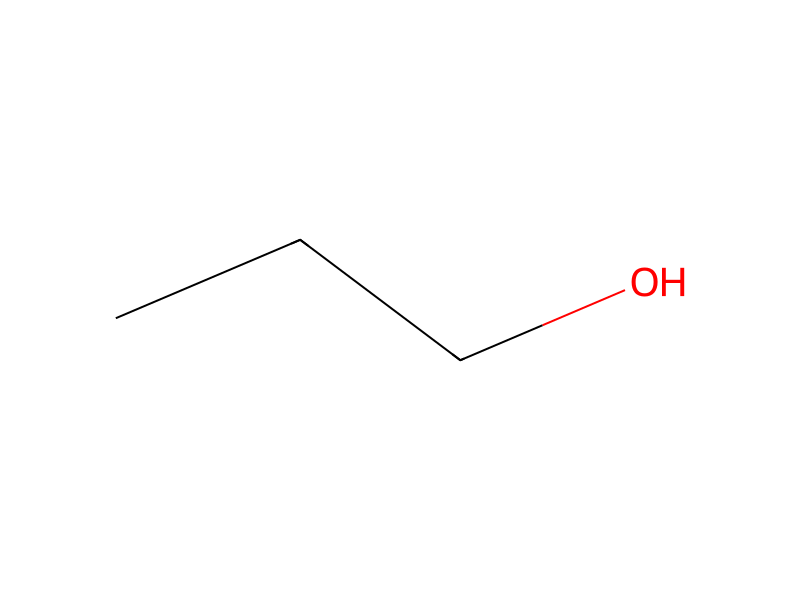
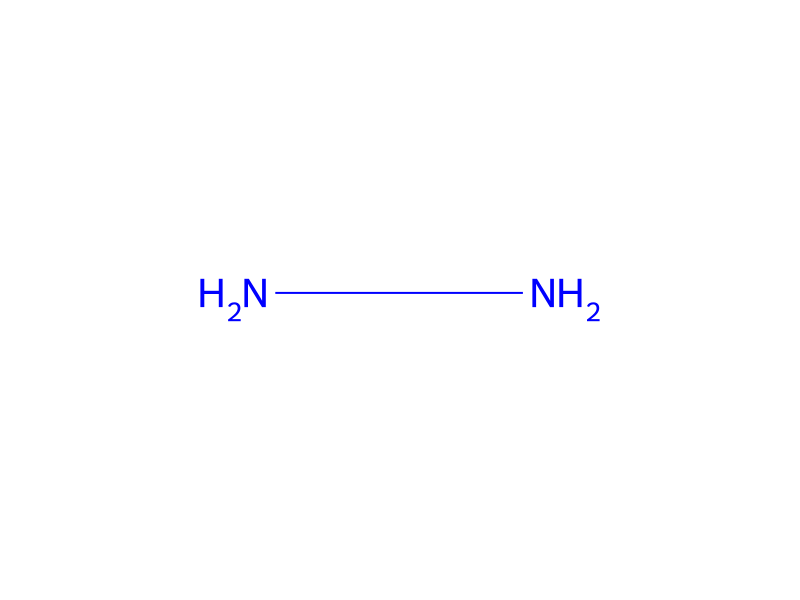
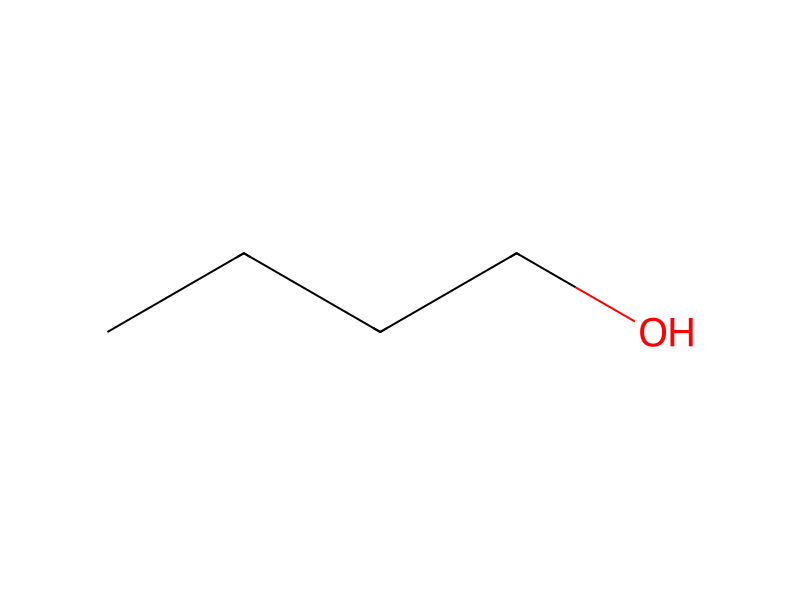
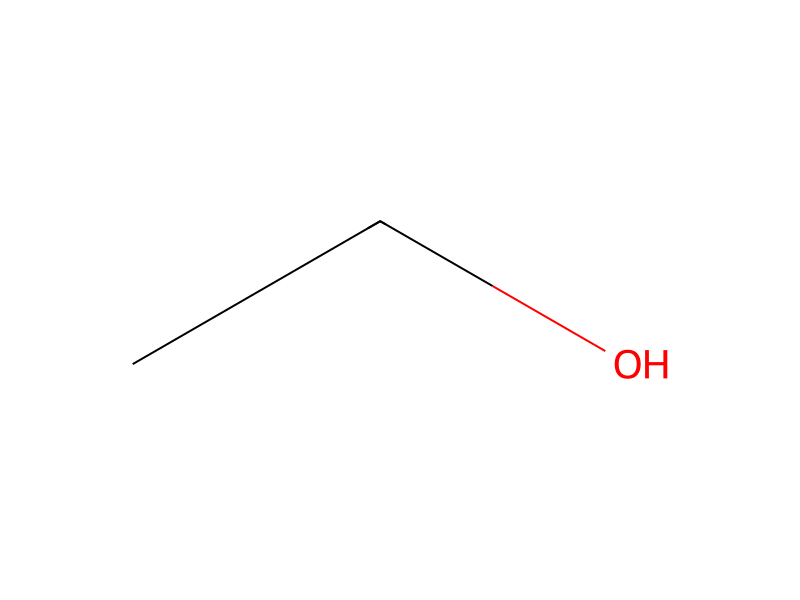
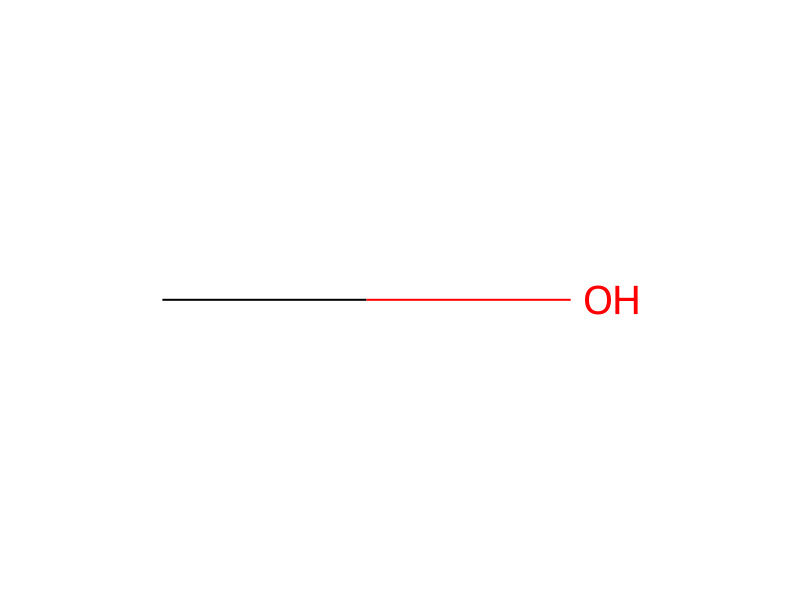
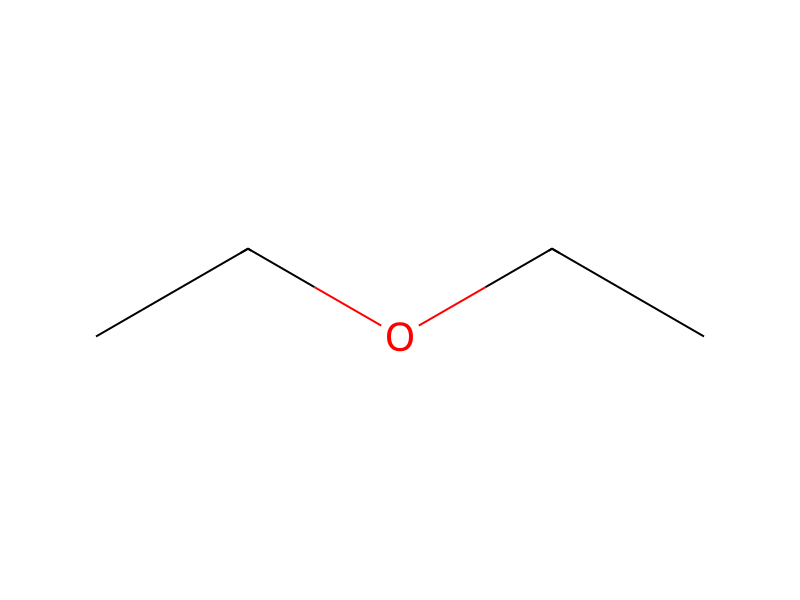
The N,N'-bis(4,4,4-trinitrobutyryl)hydrazine (I) is prepared by reacting two moles of 4,4,4-trinitrobutyryl chloride (II), C(NO2)3CH2CH2C(=0)Cl, with one mole of hydrazine, NH2NH2. Trinitromethyl compounds are readily destroyed by hydrazine due to the strongly nucleophilic and reducing properties of this reagent. However, it was found that I (mp 201° C, dec.) can be prepared in high yield (84%) by the addition of a solution of hydrazine in methanol to 4,4,4-trinitrobutyryl chloride (II) in ethyl ether at low temperature: ##STR1## The methanol hydrogen bonds with hydrazine to suppress its destructive properties toward trinitromethyl compounds. In general, the hydrazine is dissolved in a suitable solvent that forms hydrogen bonds with hydrazine, has a low melting point, and will not interfer with the reaction. Preferred solvents for the hydrazine include lower molecular weight alcohols such as methanol, ethanol, 1-propanol, 2-propanol, 1-butanol, 2-butanol, 2-methyl-1-propanol, or mixtures thereof, with methanol and ethanol being more preferred, and methanol being most preferred. The solvent used to form the initial 4,4,4-trinitrobutyryl solution must (1) be capable of providing at least some solubility for 4,4,4-trinitrobutyryl chloride, (2) remain a liquid at the process temperatures, and (3) be inert (not interfer with the process reactions). As demonstrated by the example, diethyl ether is an excellent solvent for this purpose. Other common solvents having these properties, such as dichloromethane, may also be used.
Workup
- customTrinitromethyl compounds are readily destroyed by hydrazine due to the strongly nucleophilic and
- customcan be prepared
- customin high yield (84%)
- customwill not interfer with the reaction
Sources & evidence
- ORD record
- ord-bc7df8fe6af64d2694aa35112bcbe2f2
- Source dataset
- uspto-grants-1993_02
- Patent number
- US05183938
Reaction notes
Loading…