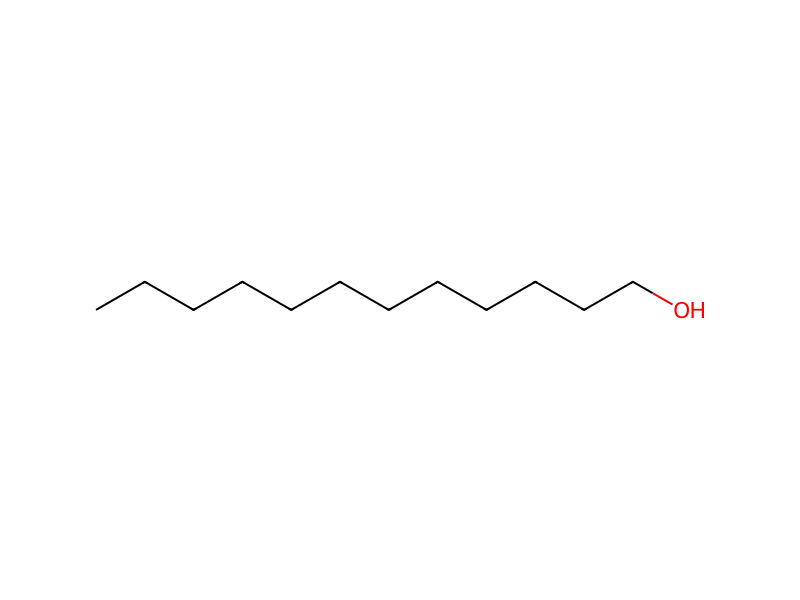
1-Dodecanol → HCID 178443312, compound
Reaction equation

[CH2:1]([O:3][P:4]([O-:6])[O-:5])[CH3:2].[CH2:7]([Sn+2:11]([CH2:16][CH2:17][CH2:18][CH3:19])[CH2:12][CH2:13][CH2:14][CH3:15])[CH2:8][CH2:9][CH3:10].[CH2:20](O)[CH2:21][CH2:22][CH2:23][CH2:24][CH2:25][CH2:26][CH2:27][CH2:28][CH2:29]CC>>[CH2:1]([O:3][P:4]([O-:6])[O-:5])[CH2:2][CH2:20][CH2:21][CH2:22][CH2:23][CH2:24][CH2:25][CH2:26][CH2:27][CH2:28][CH3:29].[CH2:16]([Sn+2:11]([CH2:7][CH2:8][CH2:9][CH3:10])[CH2:12][CH2:13][CH2:14][CH3:15])[CH2:17][CH2:18][CH3:19]Participants
3


Conditions
- Temperature
- 140 °C
Procedure
In a 500 ml four-neck round-bottom flask equipped with a stirrer, thermometer, standard taper glass stopper, stillhead with condenser, cooled distillate receiver and cold trap, 133 g of tributyltin ethyl phosphite and 68.7 g of lauryl alcohol are heated with stirring for about 5 hours at 140° C, a vacuum of about 30 - 5 mm Hg being applied for 1 hour. Ethanol is initially distilled off and then the excess lauryl alcohol is distilled. 178 g tributyltin lauryl phosphite are obtained.
Workup
- customIn a 500 ml four-neck round-bottom flask equipped with a stirrer
- temperatureare heated
- waita vacuum of about 30 - 5 mm Hg being applied for 1 hour
- distillationEthanol is initially distilled off
- distillationthe excess lauryl alcohol is distilled
Sources & evidence
- ORD record
- ord-355620dddb104b28866844c57831ee1c
- Source dataset
- uspto-grants-1978_04
- Patent number
- US04083860
Reaction notes
Loading…