Cyclododecanone → Cyclopentadecanone
Reaction equation

O=[C:2]([CH2:8][CH2:9][CH2:10][CH2:11][CH2:12][CH2:13][CH2:14][CH2:15][CH2:16][CH2:17][C:18](O)=O)[CH2:3][CH2:4][C:5]([OH:7])=O.[C:21]1(=[O:33])[CH2:32][CH2:31][CH2:30][CH2:29][CH2:28][CH2:27][CH2:26][CH2:25][CH2:24][CH2:23][CH2:22]1>>[C:5]1(=[O:7])[CH2:4][CH2:3][CH2:2][CH2:8][CH2:9][CH2:10][CH2:11][CH2:12][CH2:13][CH2:14][CH2:15][CH2:16][CH2:17][CH2:18]1.[C:21]1(=[O:33])[CH2:32][CH2:31][CH2:30][CH2:29][CH2:28][CH2:27][CH2:26][CH2:25][CH2:24][CH2:23][CH2:22]1Participants
4
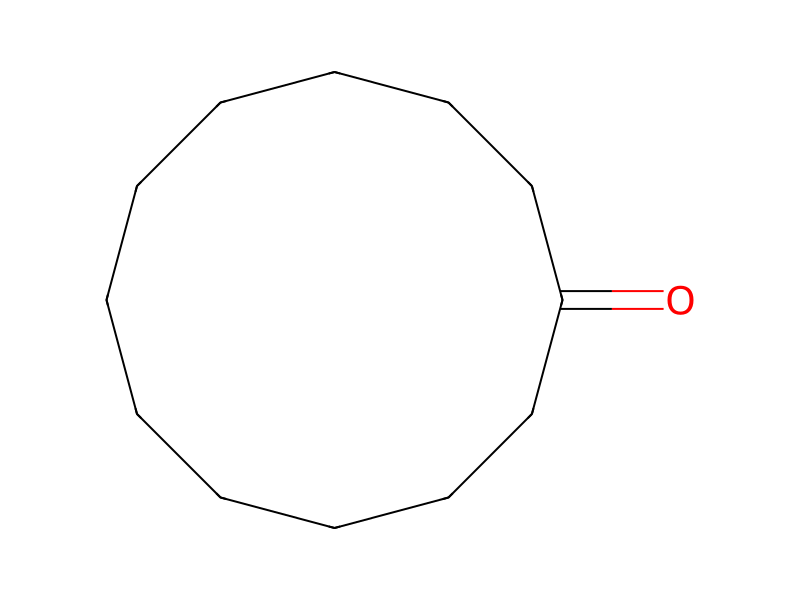


Procedure
4-oxo-pentadecanedioic acid IV is obtainable at the yield of 66.2% based on the moles of cyclododecanone through the referential examples 1 and 2 and Example 1 as mentioned later. Alternatively, the compound IV is obtainable at the yield of 60.8% based on the moles of cyclododecanone through Examples 5 and 7. Further combined with the Referential Example 3, the overall yields of cyclopentadecanone from cyclododecanone are 39.7% and 36.4%, respectively. This fact shows that this invention provides increased yield as another improved advantage in addition to the before-mentioned advantage of avoiding employment of polyphosphoric acid for conversion to ketone.
Sources & evidence
- ORD record
- ord-ee0def43c6dd418581c6e0752d1e001c
- Source dataset
- uspto-grants-1978_04
- Patent number
- US04085274
Reaction notes
Loading…