1,2-Dibromoethane → 1-(2-Bromoethoxy)-2,4-dichlorobenzene
Reaction equation

[Cl:1][C:2]1[CH:7]=[C:6]([Cl:8])[CH:5]=[CH:4][C:3]=1[OH:9].[Br:10][CH2:11][CH2:12]Br.[OH-].[Na+]>O>[Br:10][CH2:11][CH2:12][O:9][C:3]1[CH:4]=[CH:5][C:6]([Cl:8])=[CH:7][C:2]=1[Cl:1]Participants
Reactant 3

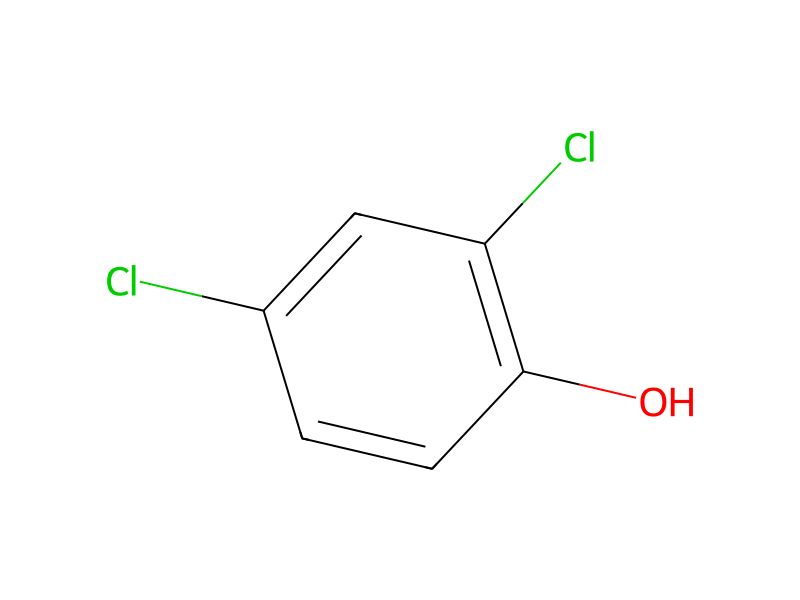

Product 1

Reagents, catalysts & solvents 1

Procedure
A mixture of 160.0 g (1.0 mole) 2,4-dichlorophenol, 235.0 g (1.26 mole) 1,2-dibromoethane, and 500 ml water were heated at reflux, during which time a solution of 42 g (1.05 mole) sodium hydroxide in 125 ml water was added to the mixture over a period of one hour. The solution was allowed to reflux for 10 hours, cooled and the organic layer distilled to give 176.0 g of 1-bromo-2-(2,4-dichlorophenoxy)ethane (b.p. 157°-160° C at 10 mm). A 15.0 g (0.055 mole) portion of this material was dissolved in 200 ml toluene and to this solution was added 7.8 g (0.055 mole) hexamethylene tetramine. The mixture was allowed to reflux for 24 hours. The precipitate was filtered, further purified by washing with ether, and air dried to give 18.1 g of a white powder identified as 3,5,7-triaza-1-azoniatricyclo(3.3.1.13,7)decane:1-(2-(2,4-dichlorophenoxy)ethyl)-, bromide (hereinafter referred to as Compound 1) m.p. 165°-169° C. The yield was calculated to be 79% from the phenoxyethyl bromide.
Workup
- temperaturewere heated
- additionwas added to the mixture over a period of one hour
- temperatureto reflux for 10 hours
- temperaturecooled
- distillationthe organic layer distilled
Sources & evidence
- ORD record
- ord-cafc836a711e4e36a56532bbb5850ec0
- Source dataset
- uspto-grants-1978_04
- Patent number
- US04085281
Reaction notes
Loading…