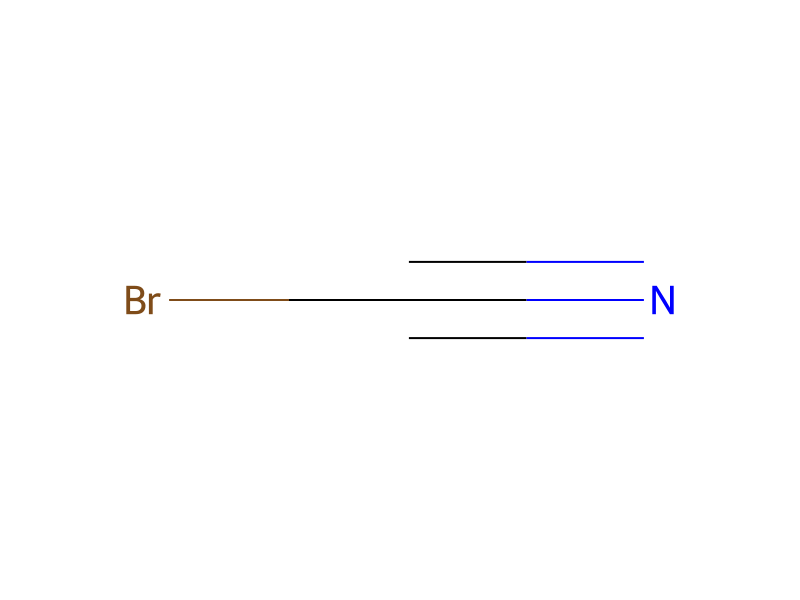
Cyanogen Bromide → 4-(2-Chloro-9H-xanthen-9-ylidene)piperidine-1-carbonitrile
Reaction equation

[N:1]#[C:2]Br.[Cl:4][C:5]1[CH:18]=[CH:17][C:16]2[O:15][C:14]3[C:9](=[CH:10][CH:11]=[CH:12][CH:13]=3)[C:8](=[C:19]3[CH2:24][CH2:23][N:22](C)[CH2:21][CH2:20]3)[C:7]=2[CH:6]=1>C1C=CC=CC=1>[Cl:4][C:5]1[CH:18]=[CH:17][C:16]2[O:15][C:14]3[C:9](=[CH:10][CH:11]=[CH:12][CH:13]=3)[C:8](=[C:19]3[CH2:24][CH2:23][N:22]([C:2]#[N:1])[CH2:21][CH2:20]3)[C:7]=2[CH:6]=1Participants
Reactant 2

Product 1

Reagents, catalysts & solvents 1

Conditions
- Temperature
- 55 °C
Procedure
A solution of cyanogen bromide (14.1 g., 0.133 mol) in benzene (200 ml) at 35° C. is treated with a solution of 4-(2-chloro-9-xanthenylidene)-1-methylpiperidine (31.2 g., 0.10 mol) in benzene (250 ml.) over 15 minutes. The solution is heated to 55° C. for four hours. The solvent is evaporated and the residue is recrystallized from ethanol to give 4-(2-chloro-9-xanthenylidene)-1-cyanopiperidine, m.p. 148°-150° C. A solution of the latter (27.2 g., 0.084 mol) in glacial acetic acid (450 ml.), water (250 ml.) and concentrated hydrochloric acid is refluxed for 18 hours, and the major portion of the solvent is evaporated. The residue is basified and extracted with ethylacetate. The extracts are washed with water and the solvent evaporated. The residue is triturated with ethanol, filtered and the filtrate is evaporated to leave 4-(2-chloro-9-xanthenylidene)piperidine. The free base is dissolved in acetonitrile and treated with one equivalent of methanesulfonic acid to yield 4-(2-chloro-9-xanthenylidene)piperidine methanesulfonate, m.p. 256°-260° C.
Workup
- customThe solvent is evaporated
- customthe residue is recrystallized from ethanol
Sources & evidence
- ORD record
- ord-1afdf3b92f10416bbf1ee480bc73e3bb
- Source dataset
- uspto-grants-1978_04
- Patent number
- US04086350
Reaction notes
Loading…