Sodium Hydroxide → HCID 22381862, compound
Reaction equation

[OH-].[Na+].S(Cl)(Cl)=O.[Cl:7][S:8]([OH:11])(=O)=[O:9].[CH2:12]([O:15][C:16]1[CH:24]=[CH:23][CH:22]=[CH:21][C:17]=1[C:18]([OH:20])=[O:19])[CH2:13][CH3:14]>ClCCl>[Cl:7][S:8]([C:22]1[CH:23]=[CH:24][C:16]([O:15][CH2:12][CH2:13][CH3:14])=[C:17]([CH:21]=1)[C:18]([OH:20])=[O:19])(=[O:11])=[O:9]Participants
Reactant 4


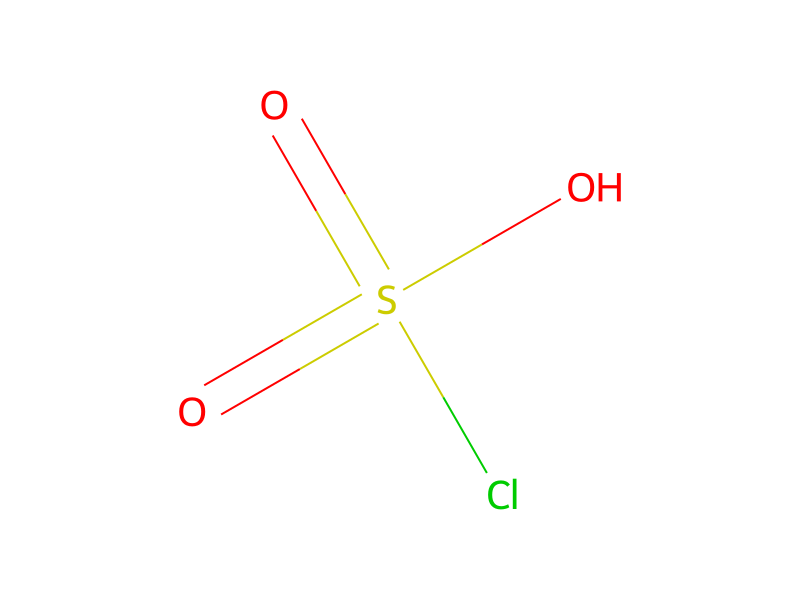

Product 1

Reagents, catalysts & solvents 1

Conditions
- Temperature
- -10 °C
Procedure
A three-neck flask, equipped with a 5M aqueous sodium hydroxide scrub (550 ml), was charged with thionyl chloride (40 ml, 0.55 mol) and chlorosulphonic acid (150 ml, 2.26 mol) and the stirred mixture cooled to about −10° C. A solution of 2-n-propoxybenzoic acid (100 g, 0.55 mol) in dichloromethane (200 ml) was added over 20 minutes, ensuring that the reaction temperature was maintained below 5° C., then the reaction mixture was allowed to warm to room temperature. The resulting solution was added over 1 hour to stirred, ice-cold water, whilst maintaining the temperature at about 0° C., and stirring continued for a further 30 minutes. The mixture was filtered and the solid thus obtained was washed with cold water (100 ml) and dried under vacuum to give the title compound (122.2 g, 80%) as a white solid. δ (DMSOd6): 1.13 (3H, t), 2.00 (2H, m), 4.32 (2H, t), 7.23 (1H, d), 8.21 (1H m), 8.82 (1H, d).
Workup
- temperaturewas maintained below 5° C.
- temperatureto warm to room temperature
- additionThe resulting solution was added over 1 hour
- temperatureice-cold water, whilst maintaining the temperature at about 0° C.
- stirringstirring
- filtrationThe mixture was filtered
- customthe solid thus obtained
- washwas washed with cold water (100 ml)
- customdried under vacuum
Sources & evidence
- ORD record
- ord-04c8cfb653ce4d199eec5ba3818eb8cb
- Source dataset
- uspto-grants-2004_04
- Patent number
- US06723719B1
Reaction notes
Loading…