Ethylene Oxide → Phenol
Reaction equation

[K].[OH:2][C:3]1[CH:8]=[CH:7][C:6](C(C2[CH:23]=[CH:22][C:21]([OH:24])=CC=2)(C2C=CC(O)=CC=2)C)=[CH:5][CH:4]=1.C1[O:27]C1>>[C:21]([OH:24])(=[O:27])[CH:22]=[CH2:23].[C:21]([OH:24])(=[O:27])[CH:22]=[CH2:23].[C:21]([OH:24])(=[O:27])[CH:22]=[CH2:23].[CH3:3][CH3:4].[C:3]1([OH:2])[CH:8]=[CH:7][CH:6]=[CH:5][CH:4]=1Participants
4
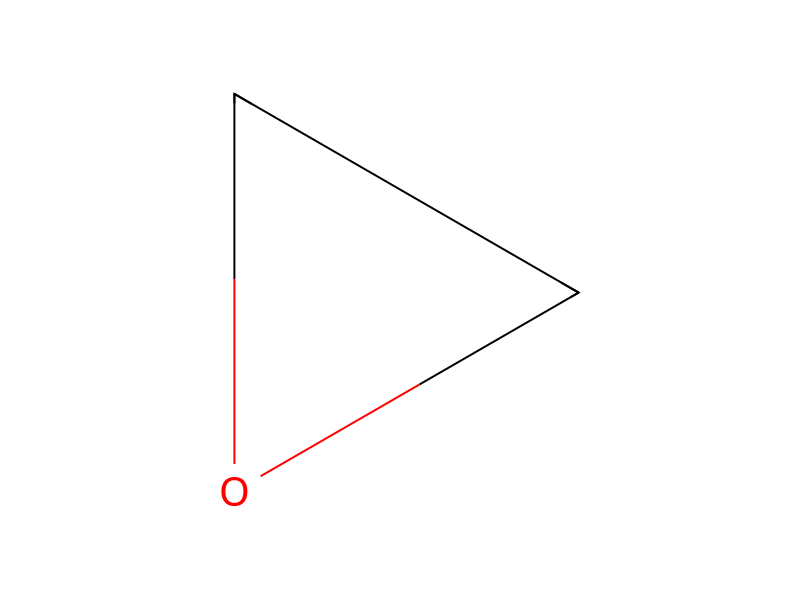


Procedure
1,1,1-tris(4-polyethoxylate phenyl)ethane (EO/phenol=10; TEPTA 10EO) was synthesized as in the preparation example 2 by using 1 g of 1,1,1-tris(4-hydroxyphenyl)ethane potassium salt (3) and 3.14 g of ethylene oxide. 1,1,1-tris(4-polyethoxylatephenyl) ethane triacrylate(EO/phenol=10; TEPTA 10EO) was obtained by acrylation of thus synthesized 1,1,1-tris(4-polypropoxylate phenyl)ethane (PO/phenol=5). The yield was 71%.
Workup
- custom1,1,1-tris(4-polyethoxylate phenyl)ethane (EO/phenol=10; TEPTA 10EO) was synthesized as in the preparation example 2
Sources & evidence
- ORD record
- ord-444710fffbdf4500a5c3eb62dcb9a511
- Source dataset
- uspto-grants-2004_04
- Patent number
- US06727024B2
Reaction notes
Loading…