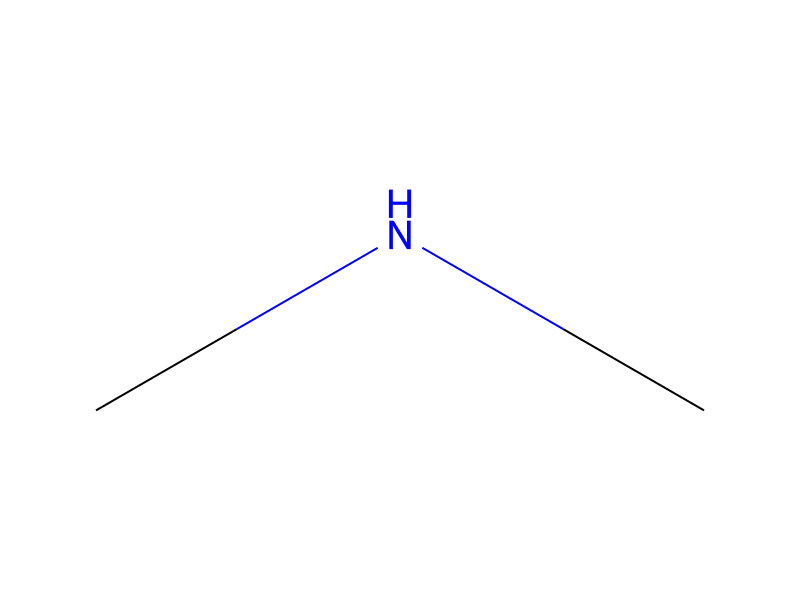
Dimethylamine → 3-Sulfolene
Reaction equation

CNC.[S:4]1([CH2:10][CH:9]=[CH:8][CH2:7]1)(=[O:6])=[O:5]>>[S:4]1([CH2:10][CH:9]=[CH:8][CH2:7]1)(=[O:6])=[O:5].[CH2:7]=[CH:8][CH:9]=[CH2:10]Participants


Procedure
Except that 0.045 g (1.0 mmol) of dimethylamine was used instead of 0.186 g (1.0 mmol) of ferrocene used in manufacturing of sulfolene, a 3-sulfolene aqueous solution was prepared in the same manner as in Example 1. The amount of 3-sulfolene in the obtained aqueous solution was 100 g (0.85 mol) and the yield from 1,3-butadiene was 85%. An amount of 0.1 g of polymers was found on the filter paper after filtering the 3-sulfolene aqueous solution. Next, the obtained 3-sulfolene aqueous solution was hydrogenated in the same manner as in Example 1. The hydrogen pressure did not stop lowering in 340 minutes of the reaction time. At that time, the reaction rate was 75%. Table 1 shows the measurements of the amount of generated polymers and the reaction time of hydrogenation.
Sources & evidence
- ORD record
- ord-3ddbb39b39a04bd8b8cce87dce326b69
- Source dataset
- uspto-grants-2013_05
- Patent number
- US08436193B2
Reaction notes
Loading…