Pyridine → HCID 13412531, compound
Reaction equation

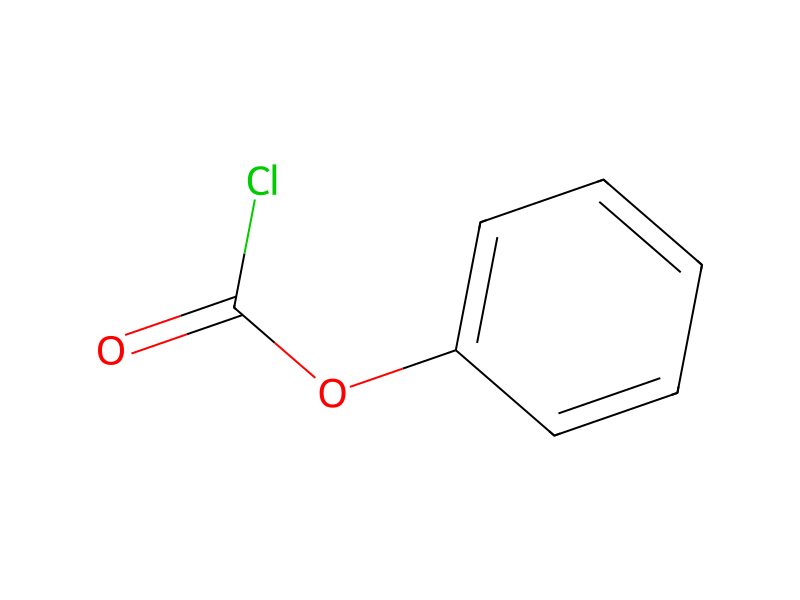
[F:1][C:2]([F:12])([F:11])[C:3]1[CH:4]=[C:5]([CH:7]=[CH:8][C:9]=1[Cl:10])[NH2:6].N1C=CC=CC=1.Cl[C:20]([O:22][C:23]1[CH:28]=[CH:27][CH:26]=[CH:25][CH:24]=1)=[O:21].CCCCCC>ClCCl>[Cl:10][C:9]1[CH:8]=[CH:7][C:5]([NH:6][C:20](=[O:21])[O:22][C:23]2[CH:28]=[CH:27][CH:26]=[CH:25][CH:24]=2)=[CH:4][C:3]=1[C:2]([F:1])([F:11])[F:12]Participants
Reactant 4



Product 1

Reagents, catalysts & solvents 1

Procedure
3-trifluoromethyl-4-chloroaniline (25 g, 0.1278 mol) and pyridine (26 ml, 0.3195 mol) were dissolved in dichloromethane (250 ml). The reaction mass was cooled to 0° C. to −5° C. and a solution of phenyl chloroformate (22 ml, 0.1661 mol) in dichloromethane (100 ml) was added drop wise maintaining the temperature of the reaction mass below 0° C. The reaction mass was stirred at 0° C. to 5° C. for 1-2 hours and quenched with water (200 ml) below 10° C. The organic phase was separated and washed with water followed by 1N HCl. It was then dried over sodium sulfate and concentrated to obtain solid. This solid was agitated with hexane (350 ml) at ambient temperature for 2-3 hours and filtered. The obtained product was vacuum dried at 50° C. to give phenyl 4-chloro-3-(trifluoromethyl)phenylcarbamate (36 g) as white solid.
Workup
- temperatureThe reaction mass was cooled to 0° C. to −5° C.
- temperaturewise maintaining the temperature of the reaction mass below 0° C
- customquenched with water (200 ml) below 10° C
- customThe organic phase was separated
- washwashed with water
- dry with materialIt was then dried over sodium sulfate
- concentrationconcentrated
- customto obtain solid
- filtrationfiltered
- customdried at 50° C.
Sources & evidence
- ORD record
- ord-e12a0e1fc125493baa1fc4fb18121c96
- Source dataset
- uspto-grants-2013_05
- Patent number
- US08445687B2
Reaction notes
Loading…