Ethylene Glycol → 2-Bromo-5,8-dioxaspiro[3.4]octane
Reaction equation

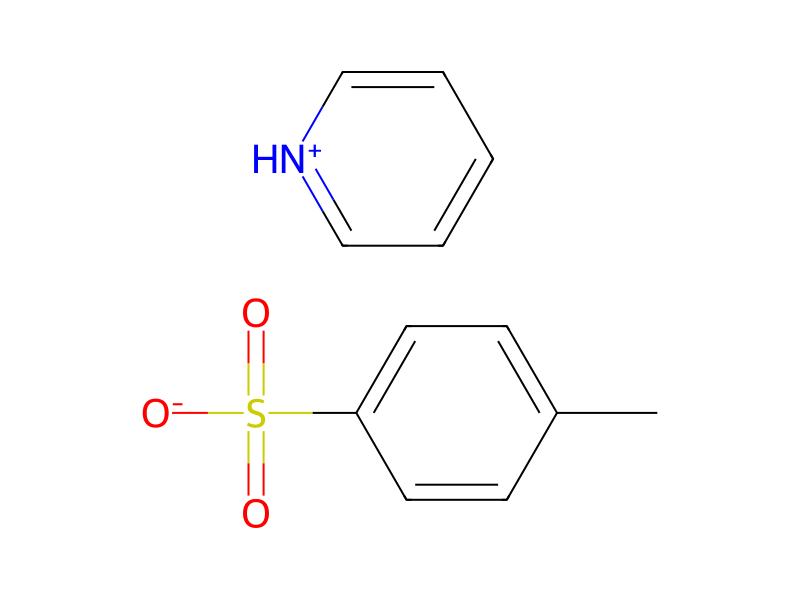
[Br:1][CH:2]1[CH2:5][C:4](=[O:6])[CH2:3]1.[CH2:7](O)[CH2:8][OH:9].CC1C=CC(S([O-])(=O)=O)=CC=1.C1C=C[NH+]=CC=1>C1C=CC=CC=1>[Br:1][CH:2]1[CH2:5][C:4]2([O:9][CH2:8][CH2:7][O:6]2)[CH2:3]1Participants
5
Reactant 3


Product 1

Reagents, catalysts & solvents 1

Procedure
A mixture of 3-bromocyclobutanone (5.90 g, 39.6 mmol), 1,2-ethanediol (8.6 mL, 158 mmol, 4 eq.) and PPTS (1.90 g, 7.92 mmol) in benzene (40 mL) was heated to reflux using Dean-Stark assembly. After 12 h, the reaction mixture was allowed to cool and washed with water (2×30 mL). The organic phase was dried (Na2SO4) and concentrated. The residue was purified using column chromatography (ethyl acetate/hexanes 1:5) to give the title compound (51% yield starting from 3-oxocyclobutanecarboxylic acid). 1H NMR (300 MHz, CDCl3): δ=2.77-2.82 (m, 4H), 2.95-3.00 (m, 4H), 4.19-4.23 (m, 1H).
Workup
- temperaturewas heated
- temperatureto reflux
- temperatureto cool
- washwashed with water (2×30 mL)
- dry with materialThe organic phase was dried (Na2SO4)
- concentrationconcentrated
- customThe residue was purified
Sources & evidence
- ORD record
- ord-5977d33cd24b4290b3e8d1882c7c5e02
- Source dataset
- uspto-grants-2013_05
- Patent number
- US08445510B2
Reaction notes
Loading…