4-Fluorophenylboronic acid → HCID 23633939, compound
Reaction equation

Cl[C:2]1[C:11]2[C:6](=[CH:7][C:8]([O:12][CH3:13])=[CH:9][CH:10]=2)[CH:5]=[C:4]([NH:14][C:15]2[CH:19]=[C:18]([CH3:20])[NH:17][N:16]=2)[N:3]=1.[F:21][C:22]1[CH:27]=[CH:26][C:25](B(O)O)=[CH:24][CH:23]=1>>[F:21][C:22]1[CH:27]=[CH:26][C:25]([C:2]2[C:11]3[C:6](=[CH:7][C:8]([O:12][CH3:13])=[CH:9][CH:10]=3)[CH:5]=[C:4]([NH:14][C:15]3[CH:19]=[C:18]([CH3:20])[NH:17][N:16]=3)[N:3]=2)=[CH:24][CH:23]=1Participants
3
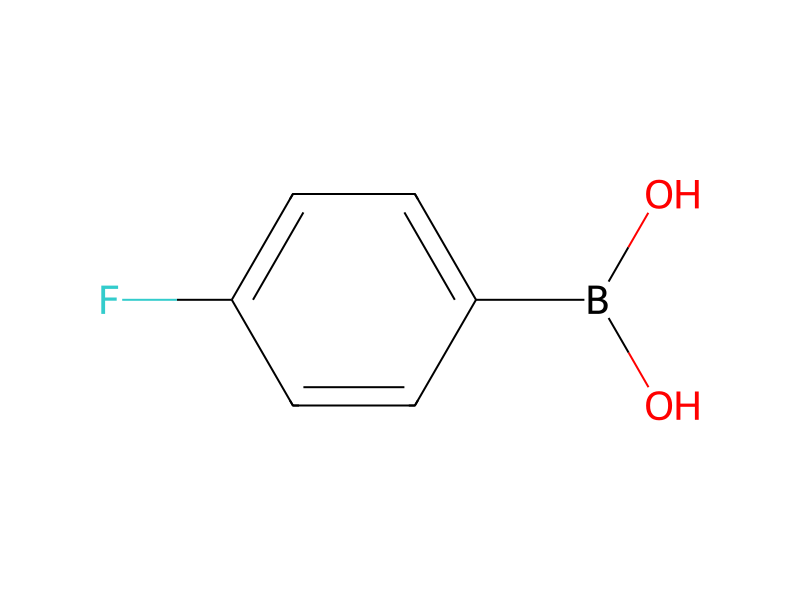


Procedure
Similar procedure as described in example 131 was used, starting from (1-chloro-6-methoxy-isoquinolin-3-yl)-(5-methyl-1H-pyrazol-3-yl)-amine and 4-fluoro-phenylboronic acid to give [1-(4-fluoro-phenyl)-6-methoxy-isoquinolin-3-yl]-(5-methyl-1H-pyrazol-3-yl)-amine.). LC-MS m/e 349(MH+).
Sources & evidence
- ORD record
- ord-a1555dcbd87e454ca88447aa88eb3b9c
- Source dataset
- uspto-grants-2009_08
- Patent number
- US07572809B2
Reaction notes
Loading…