Water → HCID 10006587, compound
Reaction equation

[C:1]1([C:7]2([C:20]3[CH:25]=[CH:24][CH:23]=[CH:22][CH:21]=3)[O:11][C:10]3[CH:12]=[CH:13][C:14]([S:16](Cl)(=[O:18])=[O:17])=[CH:15][C:9]=3[O:8]2)[CH:6]=[CH:5][CH:4]=[CH:3][CH:2]=1.O.[C:27](#[N:29])[CH3:28].O>N1C=CC=CC=1>[CH2:7]([CH:20]1[CH2:21][CH2:22][N:29]([S:16]([C:14]2[CH:13]=[CH:12][C:10]3[O:11][C:7]([C:20]4[CH:25]=[CH:24][CH:23]=[CH:22][CH:21]=4)([C:1]4[CH:6]=[CH:5][CH:4]=[CH:3][CH:2]=4)[O:8][C:9]=3[CH:15]=2)(=[O:18])=[O:17])[CH2:27][CH2:28]1)[C:1]1[CH:6]=[CH:5][CH:4]=[CH:3][CH:2]=1Participants
5
Reactant 3

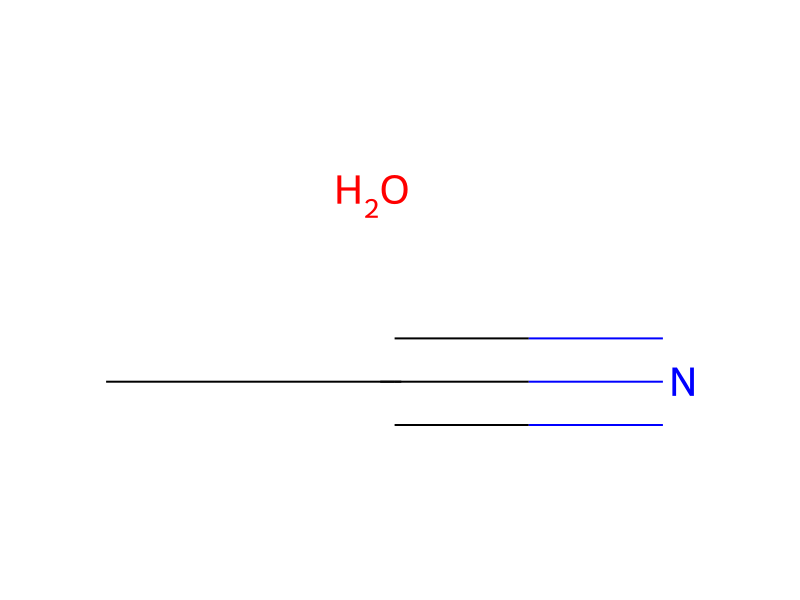

Product 1

Reagents, catalysts & solvents 1

Conditions
- Temperature
- 60 °C
Procedure
2,2-Diphenyl-benzo[1,3]dioxole-5-sulfonyl chloride (93 mg, 0.25 mmol) was dissolved in pyridine (1 ml). The appropriate amine (0.25 mmol) was added and the reaction was heated to 60° C. overnight. Water was added and solids respectively oils separated. The aqueous phase was decanted and the residue was stirred with acetonitrile. A solution was obtained, which was subjected to preparative reversed phase chromatography (gradient of acetonitrile/water containing 0.1% formic acid as the eluant) to yield the product after evaporation of the eluant and drying.
Workup
- customsolids respectively oils separated
- customThe aqueous phase was decanted
- customA solution was obtained
- customto yield the product
- customafter evaporation of the eluant
- customdrying
Sources & evidence
- ORD record
- ord-b0d780daf39c494cafc28b501f14a6f8
- Source dataset
- uspto-grants-2009_08
- Patent number
- US07576088B2
Reaction notes
Loading…