Dichloromethane → HCID 289908, compound
Reaction equation

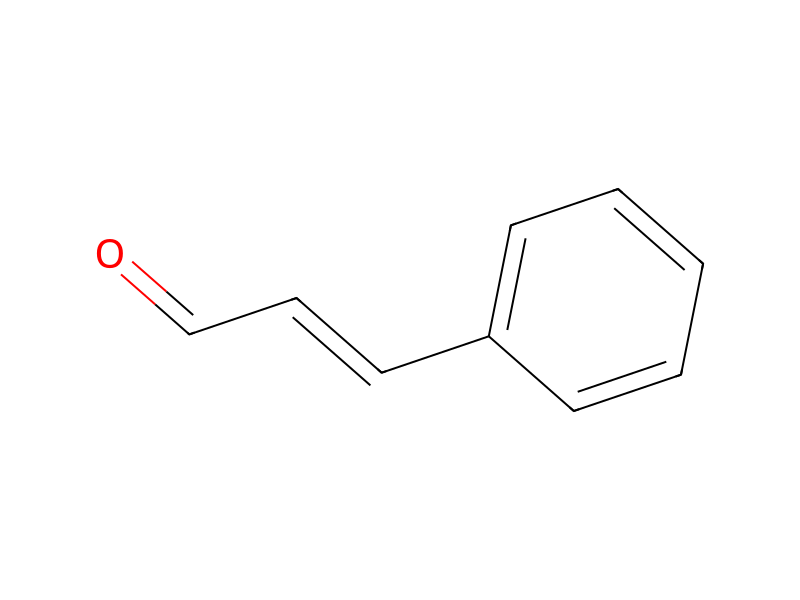
Cl.[CH:2]([NH:5][OH:6])([CH3:4])[CH3:3].[CH:7](=O)/[CH:8]=[CH:9]/[C:10]1[CH:15]=[CH:14][CH:13]=[CH:12][CH:11]=1.C(Cl)Cl.C(=O)([O-])[O-].[Na+].[Na+]>O>[CH:8]([CH:7]=[N+:5]([CH:2]([CH3:4])[CH3:3])[O-:6])=[CH:9][C:10]1[CH:15]=[CH:14][CH:13]=[CH:12][CH:11]=1Participants
Reactant 4



Product 1

Reagents, catalysts & solvents 1

Procedure
N-Isopropylhydroxylamine hydrochloride (5.04 grams, 45.2 millimoles, 1 molar equivalent; available from Acros Organics) was combined with trans-cinnamaldehyde (5.66 grams, 42.9 millimoles, 0.95 molar equivalent; available from Aldrich Chemical Company) in 16 milliliters of water. Initially, the mixture was an emulsion due to the low solubility of the trans-cinnamaldehyde. After being stirred rapidly for about one hour, the emulsion disappeared, and a homogeneous light yellow solution resulted. After being stirred for four hours, the reaction mixture was poured into methylene chloride and treated with 26 milliliters of saturated aqueous sodium carbonate solution until the pH was about 10.5. The phases were separated and the aqueous phase was extracted with additional methylene chloride. The combined organic phases were separated, dried over anhydrous magnesium sulfate, concentrated in vacuo, and the residue dried under vacuum overnight to produce 7.4 grams (91 percent of theory) of the desired product nitrone that was determined to be pure by liquid chromatography and further characterized by NMR spectroscopy. UV-visible spectrum of the product in absolute ethanol revealed an absorption maximum (λmax) at 330 nanometers. Exposure of this dilute solution to a 390 nanometer light source converted the nitrone to the corresponding oxaziridine with a shift of the absorption maximum to 256 nanometers. All sample manipulations were done in a dark room containing only red light to insure the stability of the nitrone product.
Workup
- customa homogeneous light yellow solution resulted
- stirringAfter being stirred for four hours
- customThe phases were separated
- extractionthe aqueous phase was extracted with additional methylene chloride
- customThe combined organic phases were separated
- dry with materialdried over anhydrous magnesium sulfate
- concentrationconcentrated in vacuo
- customthe residue dried under vacuum overnight
Sources & evidence
- ORD record
- ord-2b0596a926fb4532ba47685748d4ee7a
- Source dataset
- uspto-grants-2009_04
- Patent number
- US07524590B2
Reaction notes
Loading…