1,3-Dichloroacetone → 4-Chloromethyl-2-[2-(4-trifluoromethylsulfanyl-phenyl)-vinyl]-oxazole
Reaction equation

[F:1][C:2]([S:5][C:6]1[CH:11]=[CH:10][C:9]([CH:12]=[CH:13][C:14]([NH2:16])=[O:15])=[CH:8][CH:7]=1)([F:4])[F:3].[Cl:17][CH2:18][C:19]([CH2:21]Cl)=O>C1(C)C=CC=CC=1>[Cl:17][CH2:18][C:19]1[N:16]=[C:14]([CH:13]=[CH:12][C:9]2[CH:8]=[CH:7][C:6]([S:5][C:2]([F:4])([F:3])[F:1])=[CH:11][CH:10]=2)[O:15][CH:21]=1Participants
4
Reactant 2
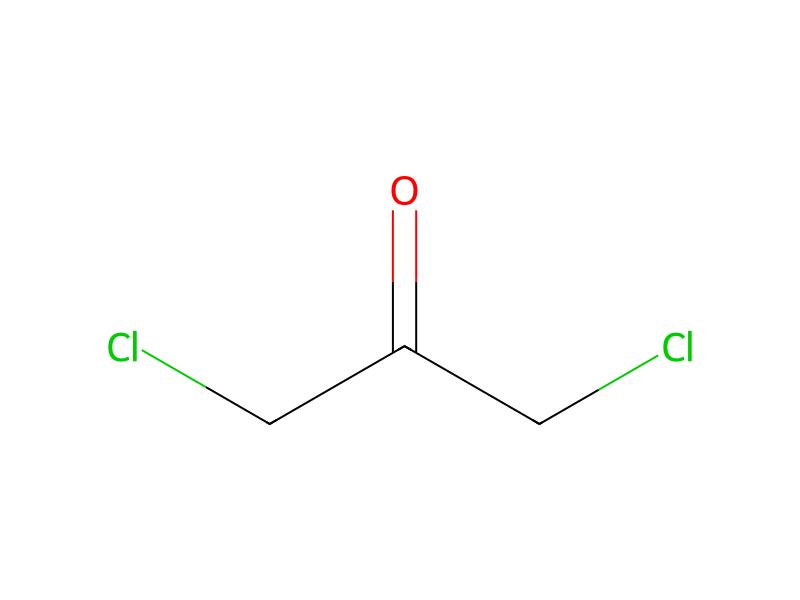

Product 1

Reagents, catalysts & solvents 1

Procedure
4.45 g (18.0 mmol) 3-(4-Trifluoromethylsulfanyl-phenyl)-acrylamide, 2.80 g (22.2 mmol) 1,3-dichloroacetone and 50.0 ml toluene were kept at reflux temperature for 40 h with continuous removal of water by use of a Dean-Stark trap. After removal of solvents in vacuo, the residue was purified by chromatography on silica gel (eluent: heptane/ethyl acetate 1:1). All fractions containing the product were concentrated to a volume of 10 ml and the crystallized material isolated by filtration, washed with cold heptane and dried. Yield 2.02 g (35%) 4-Chloromethyl-2-[2-(4-trifluoromethylsulfanyl-phenyl)-vinyl]-oxazole.
Workup
- temperatureat reflux temperature for 40 h
- customwith continuous removal of water by use of a Dean-Stark trap
- customAfter removal of solvents in vacuo
- customthe residue was purified by chromatography on silica gel (eluent: heptane/ethyl acetate 1:1)
- additionAll fractions containing the product
- concentrationwere concentrated to a volume of 10 ml
- customthe crystallized material isolated by filtration
- washwashed with cold heptane
- customdried
Sources & evidence
- ORD record
- ord-c6ff5fece9704a71bacc897f95a8a1b0
- Source dataset
- uspto-grants-2008_10
- Patent number
- US07432291B2
Reaction notes
Loading…