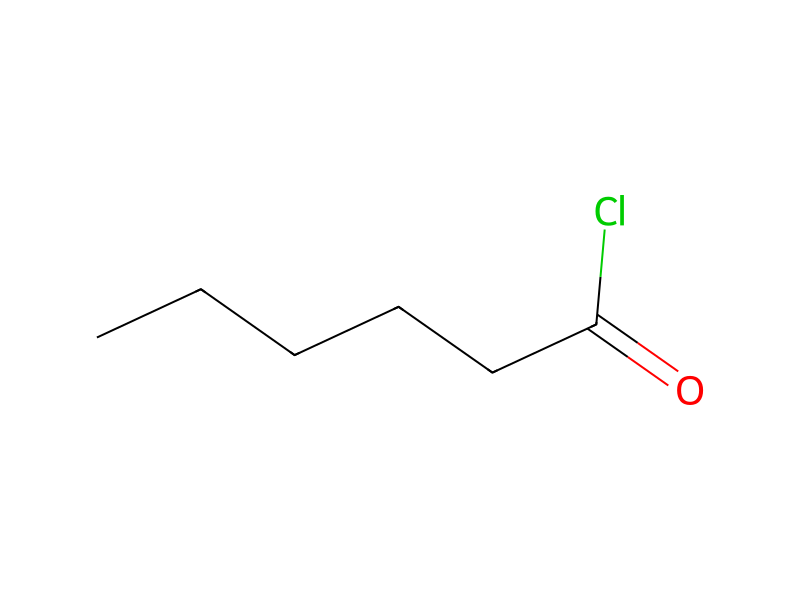
Hexanoyl chloride → HCID 13912741, compound
Reaction equation

[K].[CH3:2][CH:3]([CH:5]1[CH2:10][C:9](=[O:11])[CH:8]([C:12]2[C:17]([CH3:18])=[N:16][C:15]([CH3:19])=[C:14]([CH3:20])[N:13]=2)[C:7](=[O:21])[CH2:6]1)[CH3:4].[C:22](Cl)(=[O:28])[CH2:23][CH2:24][CH2:25][CH2:26][CH3:27]>C(OCC)(=O)C.CCCCCC>[C:22]([O:21][C:7]1[CH2:6][CH:5]([CH:3]([CH3:2])[CH3:4])[CH2:10][C:9](=[O:11])[C:8]=1[C:12]1[C:17]([CH3:18])=[N:16][C:15]([CH3:19])=[C:14]([CH3:20])[N:13]=1)(=[O:28])[CH2:23][CH2:24][CH2:25][CH2:26][CH3:27]Participants
4
Reactant 2

Product 1

Reagents, catalysts & solvents 1

Procedure
The subject compound was prepared by reaction of 5-(1-methylethyl)-2-(3,5,6-trimethyl-2-pyrazinyl)-1,3-cyclohexanedione potassium salt (Example 8) with hexanoyl chloride employing the general procedure described in Example 3, but allowing the reaction mixture to stir at room temperature over the weekend. Following the reaction, the ether solution of crude product was extracted quickly with ice-cold 0.25N NaOH, dried (MgSO4), filtered and evaporated to give a residue product showing some acid chloride contamination by IR examination. Dry-column chromatography using 1:1 ethyl acetate/hexane gave analytically pure material as shown by the elemental analysis of Table II.
Workup
- customthe reaction
- extractionthe ether solution of crude product was extracted quickly with ice-cold 0.25N NaOH
- dry with materialdried (MgSO4)
- filtrationfiltered
- customevaporated
- customto give a residue product
- customgave analytically pure material
Sources & evidence
- ORD record
- ord-3c4e68c39c7e40ea8c15f66945e4c1d8
- Source dataset
- uspto-grants-1987_07
- Patent number
- US04678501
Reaction notes
Loading…