2,3-Dichloropyridine → HCID 23035490, compound
Reaction equation
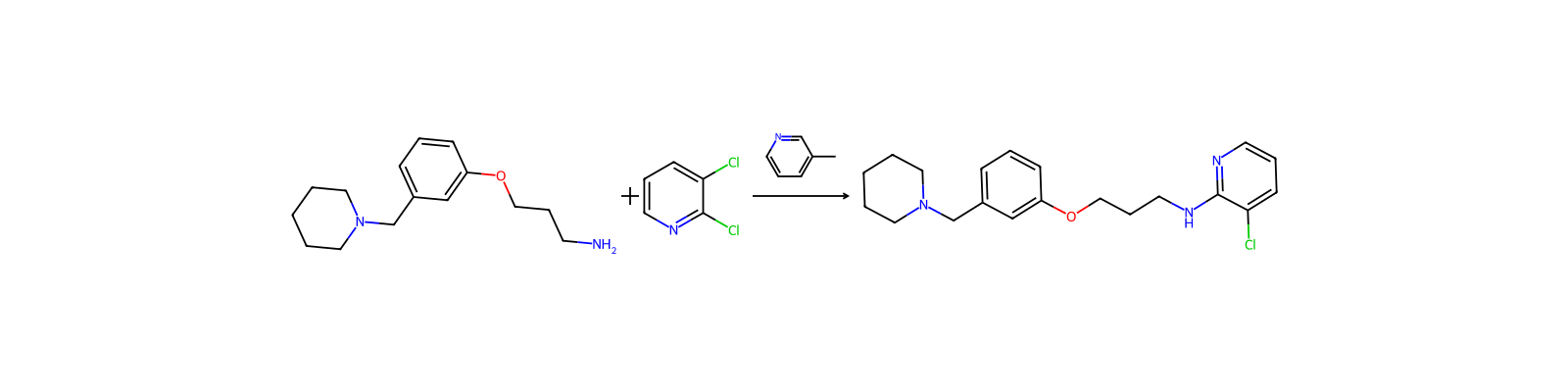
[N:1]1([CH2:7][C:8]2[CH:9]=[C:10]([CH:16]=[CH:17][CH:18]=2)[O:11][CH2:12][CH2:13][CH2:14][NH2:15])[CH2:6][CH2:5][CH2:4][CH2:3][CH2:2]1.Cl[C:20]1[C:25]([Cl:26])=[CH:24][CH:23]=[CH:22][N:21]=1>CC1C=NC=CC=1>[N:1]1([CH2:7][C:8]2[CH:9]=[C:10]([CH:16]=[CH:17][CH:18]=2)[O:11][CH2:12][CH2:13][CH2:14][NH:15][C:20]2[C:25]([Cl:26])=[CH:24][CH:23]=[CH:22][N:21]=2)[CH2:6][CH2:5][CH2:4][CH2:3][CH2:2]1Participants
4
Reactant 2


Product 1

Reagents, catalysts & solvents 1
Procedure
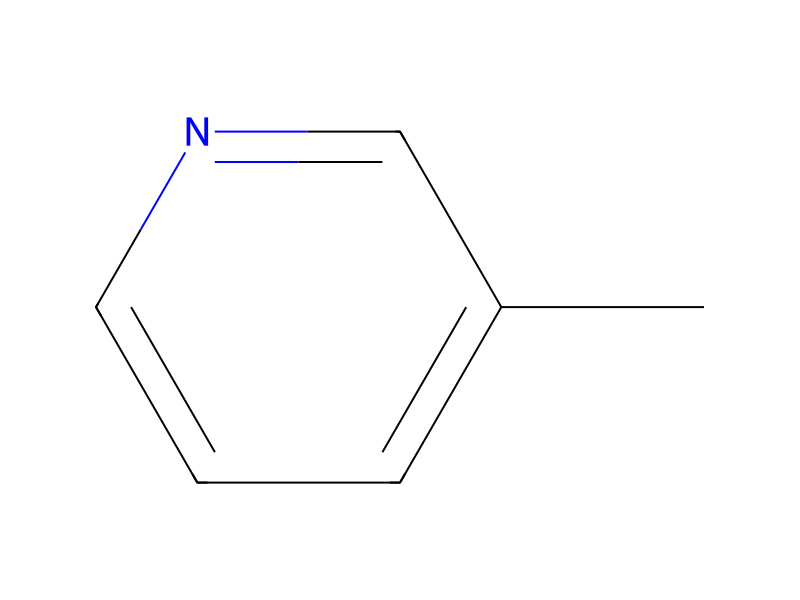
3-[3-(Piperidinomethyl)phenoxy]propylamine (2.17 g) and 2,3-dichloropyridine (1.27 g) were dissolved in 3-methylpyridine (6 ml) and stirred under reflux for 16 hours. The majority of the reaction solvent was removed by vacuum distillation (120 torr, 70°-80° C.) and the residue was neutralised with aqueous potassium carbonate (5%; 40 ml), washed with water (2×100 ml) and extracted into chloroform (40 ml). The chloroform extract was evaporated under reduced pressure and subjected to column chromatography (chloroform:methanol 25:1) to give the title compound as an oil (1.15 g). This was treated with oxalic acid as in Example 1 to give 2-[3-[3-(piperidinomethyl)phenoxy]propylamino]-3-chloropyridine dioxalate (1.1 g), m.p. 154°-155° C.
Workup
- temperatureunder reflux for 16 hours
- customThe majority of the reaction solvent was removed by vacuum distillation (120 torr, 70°-80° C.)
- washwashed with water (2×100 ml)
- extractionextracted into chloroform (40 ml)
- extractionThe chloroform extract
- customwas evaporated under reduced pressure
Sources & evidence
- ORD record
- ord-13331dcc44064ab0b913af41985907d4
- Source dataset
- uspto-grants-1987_07
- Patent number
- US04681883
Reaction notes
Loading…