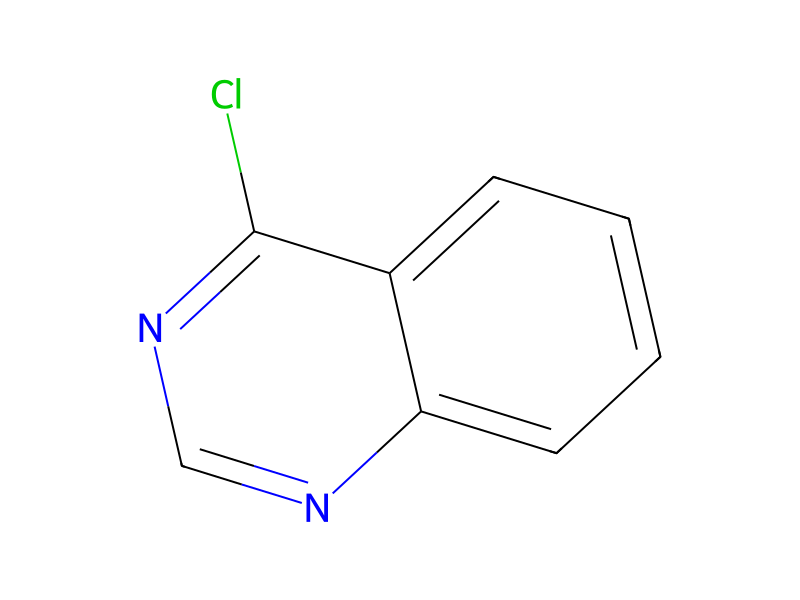
4-Chloroquinazoline → HCID 10407202, compound
Reaction equation
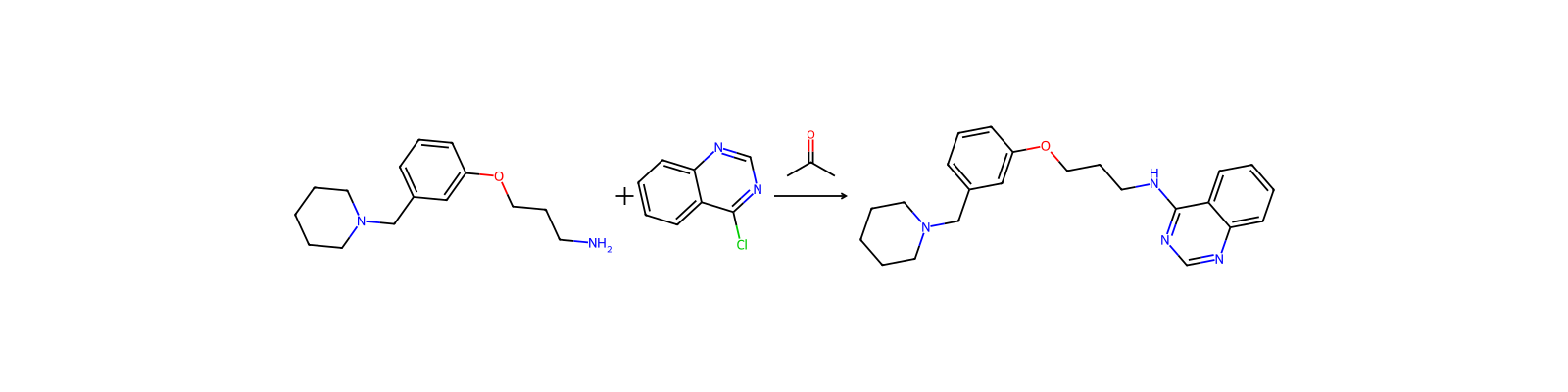
[N:1]1([CH2:7][C:8]2[CH:9]=[C:10]([CH:16]=[CH:17][CH:18]=2)[O:11][CH2:12][CH2:13][CH2:14][NH2:15])[CH2:6][CH2:5][CH2:4][CH2:3][CH2:2]1.Cl[C:20]1[C:29]2[C:24](=[CH:25][CH:26]=[CH:27][CH:28]=2)[N:23]=[CH:22][N:21]=1>CC(C)=O>[N:1]1([CH2:7][C:8]2[CH:9]=[C:10]([CH:16]=[CH:17][CH:18]=2)[O:11][CH2:12][CH2:13][CH2:14][NH:15][C:20]2[C:29]3[C:24](=[CH:25][CH:26]=[CH:27][CH:28]=3)[N:23]=[CH:22][N:21]=2)[CH2:6][CH2:5][CH2:4][CH2:3][CH2:2]1Participants
4
Reactant 2

Product 1

Reagents, catalysts & solvents 1

Procedure
3-[3-(Piperidinomethyl)phenoxy]propylamine (2.48 g) and 4-chloroquinazoline (1.64 g) were stirred in acetone (30 ml) at room temperature for 7 days. The acetone was evaporated and the oily residue was dissolved in 2 Normal hydrochloric acid. The acidic solution was extracted with ethyl acetate. The aqueous solution was then basified to pH 9 and was extracted with ethyl acetate. A solid crystallised from the basic ethyl acetate extract and was collected and dissolved in chloroform. The chloroform solution was washed with water, dried and evaporated to dryness. The residue was recrystallised from ethyl acetate to yield the title compound (0.6 g), m.p. 111° C.
Workup
- customThe acetone was evaporated
- dissolutionthe oily residue was dissolved in 2 Normal hydrochloric acid
- extractionThe acidic solution was extracted with ethyl acetate
- extractionwas extracted with ethyl acetate
- customA solid crystallised from the basic ethyl acetate
- extractionextract
- customwas collected
- dissolutiondissolved in chloroform
- washThe chloroform solution was washed with water
- customdried
- customevaporated to dryness
- customThe residue was recrystallised from ethyl acetate
Sources & evidence
- ORD record
- ord-2ad690010f1746ce9acb85b7a75a526d
- Source dataset
- uspto-grants-1987_07
- Patent number
- US04681883
Reaction notes
Loading…