Formaldehyde → 3-tert-Butyl-2-hydroxybenzaldehyde
Reaction equation

[CH2:1]=[O:2].[C:3]([C:7]1[CH:12]=[CH:11][CH:10]=[CH:9][C:8]=1[OH:13])([CH3:6])([CH3:5])[CH3:4].CC1C=CN=CC=1.[Sn](Cl)Cl>C1(C)C=CC=CC=1.C(OCC)C>[C:3]([C:7]1[C:8]([OH:13])=[C:9]([CH:10]=[CH:11][CH:12]=1)[CH:1]=[O:2])([CH3:6])([CH3:4])[CH3:5]Participants
7



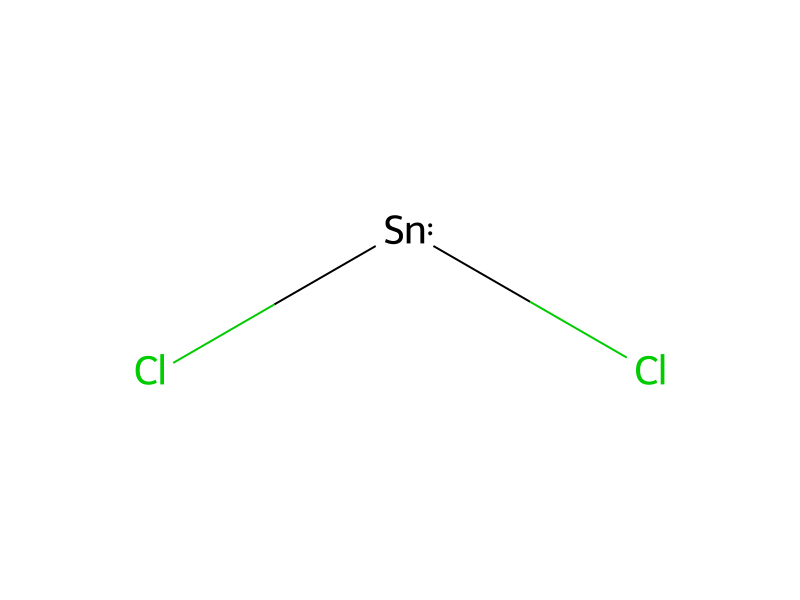



Conditions
- Temperature
- 95 °C
Procedure
9.0 g (300 mmol) of para-formaldehyde in 200 ml of toluene were introduced into a 500 ml three-necked flask fitted with magnetic stirrer, reflux condenser and nitrogen/vacuum connection, and 15.4 ml (100 mmol) of 2-tert-butylphenol (Aldrich), 3.9 ml (40 mmol) of 4-methylpyridine and 1.89 g (10 mmol) of tin(II) chloride were added. The batch was subsequently allowed to stir at 95° C. for six hours. The isolated product was taken up in diethyl ether, and the solution was washed with sodium chloride solution, dried over sodium sulfate and evaporated in a rotary evaporator, giving the product in a yield of 39.5%.
Workup
- customfitted with magnetic stirrer
- temperaturereflux condenser
- washthe solution was washed with sodium chloride solution
- dry with materialdried over sodium sulfate
- customevaporated in a rotary evaporator
- customgiving the product in a yield of 39.5%
Sources & evidence
- ORD record
- ord-352846b8ee1d4fa9aa415c575c4c7ad6
- Source dataset
- uspto-grants-2004_02
- Patent number
- US06695977B2
Reaction notes
Loading…