Sodium Hydroxide → 6-bromo-4'-aminoflavone
Reaction equation

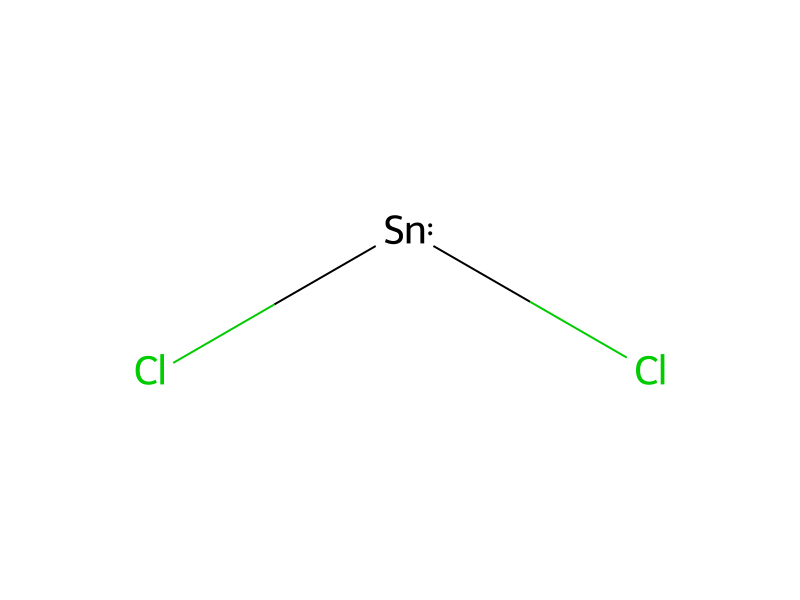
[Sn](Cl)Cl.[Br:4][C:5]1[CH:6]=[C:7]2[C:12](=[CH:13][CH:14]=1)[O:11][C:10]([C:15]1[CH:20]=[CH:19][C:18]([N+:21]([O-])=O)=[CH:17][CH:16]=1)=[CH:9][C:8]2=[O:24].[OH-].[Na+]>C(O)C>[Br:4][C:5]1[CH:6]=[C:7]2[C:12](=[CH:13][CH:14]=1)[O:11][C:10]([C:15]1[CH:20]=[CH:19][C:18]([NH2:21])=[CH:17][CH:16]=1)=[CH:9][C:8]2=[O:24]Participants
Reactant 3


Product 1

Reagents, catalysts & solvents 1

Procedure
Tin(II) chloride (275 mg, 1.45 mmol) was slowly added to an ethanol solution (7 ml) that contained compound 4 (100 mg, 0.289 mmol), while stirring. The obtained mixture was heated to reflux for 1 hour. After completion of the reaction, a 1 N sodium hydroxide aqueous solution (50 ml) was added to the reaction solution, and the obtained mixture was then extracted with 50 ml (25 ml×2) of ethyl acetate. The extract was dried over anhydrous sodium sulfate, and the solvent was then distilled away under reduced pressure, so as to obtain a product of interest, 6-bromo-4′-aminoflavone (compound 5) in the form of a yellow crystal. Yield: 77 mg (yield constant: 84.3%) 1H NMR (300 MHz, CDCl3) δ8.36 (s, 1H), 7.72-7.76 (m, 3H), 7.44 (d, J=9.0 Hz, 1H), 6.72 (d, J=8.7 Hz, 2H), 6.70 (s, 1H), 4.15 (s, 2H). MS m/z 317 (MH+).
Workup
- temperatureThe obtained mixture was heated
- temperatureto reflux for 1 hour
- customAfter completion of the reaction
- extractionthe obtained mixture was then extracted with 50 ml (25 ml×2) of ethyl acetate
- dry with materialThe extract was dried over anhydrous sodium sulfate
- distillationthe solvent was then distilled away under reduced pressure
Sources & evidence
- ORD record
- ord-a9fc321af3234c989e02d762ecf9932e
- Source dataset
- uspto-grants-2012_06
- Patent number
- US08192717B2
Reaction notes
Loading…