beta-Maltose → Cellobionic acid
Reaction equation

[OH:1][CH:2]1[O:21][C@H:20]([CH2:22][OH:23])[C@@H:7]([O:8][C@@H:9]2[O:17][C@H:16]([CH2:18][OH:19])[C@H:14]([OH:15])[C@H:12]([OH:13])[C@H:10]2[OH:11])[C@H:5]([OH:6])[C@H:3]1[OH:4].C(O)[C@H]1[O:30][C@H](O[C@H]2[C@H](O)[C@@H](O)[C@H](O)O[C@@H]2CO)[C@H](O)[C@@H](O)[C@@H]1O>>[CH2:18]([OH:19])[C@H:16]1[O:17][C@@H:9]([O:8][C@@H:7]([C@H:5]([OH:6])[C@@H:3]([OH:4])[C:2]([OH:21])=[O:1])[C@H:20]([OH:30])[CH2:22][OH:23])[C@H:10]([OH:11])[C@@H:12]([OH:13])[C@@H:14]1[OH:15]Participants
3
Reactant 2
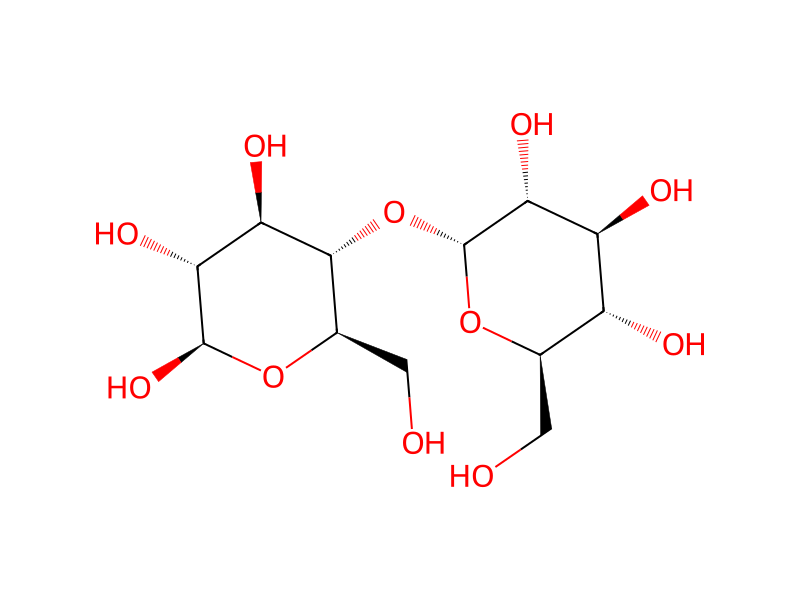

Product 1

Procedure
An aldobiose such as lactose or maltose, is electrolytically oxidised in the presence of the alkali metal carbonates/bicarbonates and alkali bromides to obtain the solution of alkali metal lactobionate, maltobionate, etc. The resulting solution is concentrated under reduced pressure to a thin syrup from which the salt is precipitated by adding 95% ethyl alcohol or isopropyl alcohol. The crude salt is dissolved in a minimum amount of hot water and then filtered through decolorizing carbon and the salt recrystallized by adding a suitable amount of the desired alcohol. The process is repeated 3-4 times to get the desired alkali salt in the pure state.
Sources & evidence
- ORD record
- ord-5daaadd59d95473097e49cb857785d2f
- Source dataset
- uspto-grants-1979_01
- Patent number
- US04137397
Reaction notes
Loading…