Hydrazobenzene → Azobenzene
Reaction equation

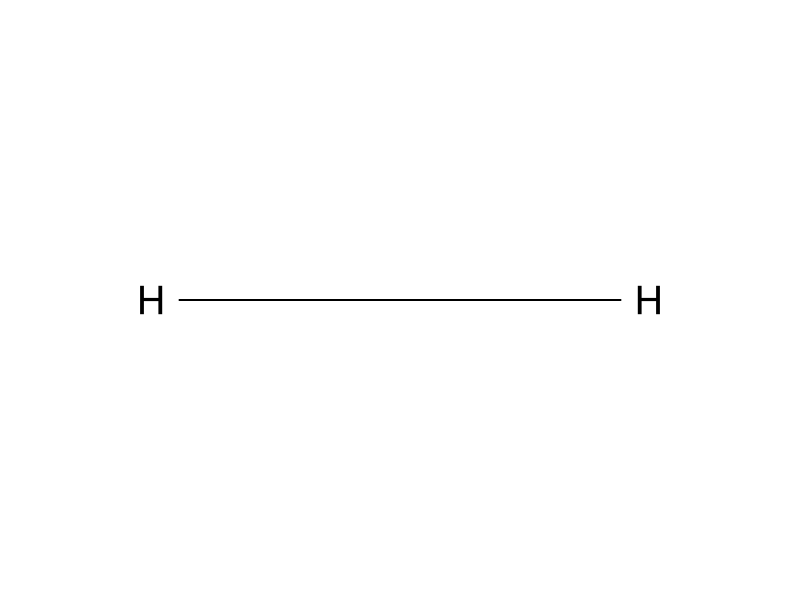
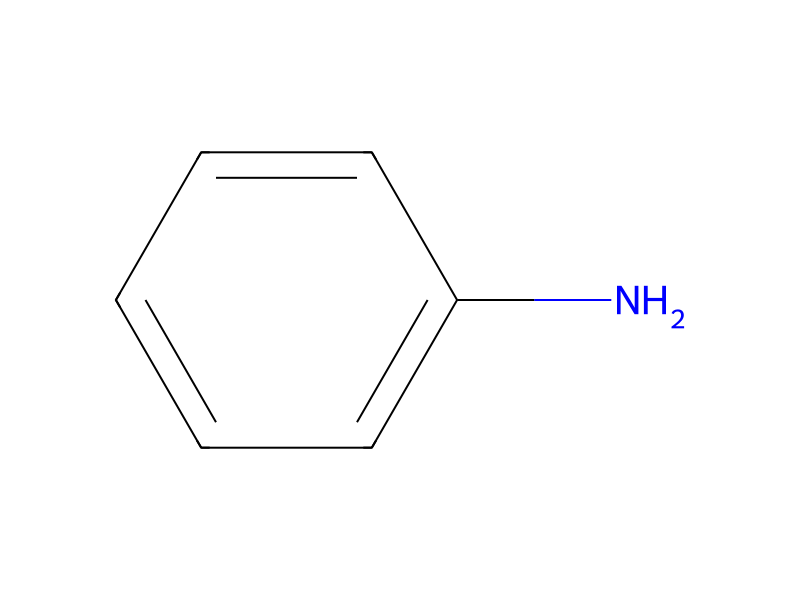
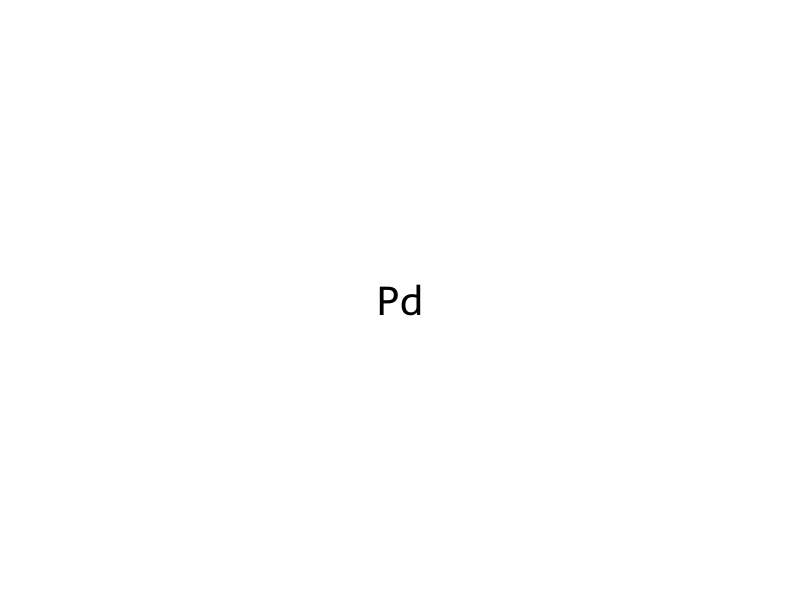
[NH:1]([C:9]1[CH:14]=[CH:13][CH:12]=[CH:11][CH:10]=1)[NH:2][C:3]1[CH:8]=[CH:7][CH:6]=[CH:5][CH:4]=1.[H][H]>[Pd]>[NH2:1][C:9]1[CH:14]=[CH:13][CH:12]=[CH:11][CH:10]=1.[N:1]([C:9]1[CH:10]=[CH:11][CH:12]=[CH:13][CH:14]=1)=[N:2][C:3]1[CH:8]=[CH:7][CH:6]=[CH:5][CH:4]=1Participants
Reactant 2

Product 2

Reagents, catalysts & solvents 1
Procedure
It has now been found that the abovementioned disadvantages are avoided when the aryldiazosulfonates are catalytically hydrogenated. There is apparently a prejudice against this means of reduction, since even though a large number of reducing agents have been proposed for this purpose (Houben-Weyl, loc. cit. 180 to 223), catalytic hydrogenation has not been considered, presumably because reducing agents which can convert a nitro group into the amino group cleave aromatic hydrazo compounds to give the amines (Houben-Weyl, 11/1, 522). Thus hydrazobenzene in the presence of palladium black, even in the absence of hydrogen, disproportionates to give aniline and azobenzene. Hydrogenation in the presence of nickel produces aniline in virtually quantitative yield. Under the same conditions, phenylhydrazine readily decomposes to give aniline and ammonia (Houben-Weyl, loc.cit. 538).
Sources & evidence
- ORD record
- ord-c6b0097aa71142f58cba5d8b4ccfa66e
- Source dataset
- uspto-grants-1985_03
- Patent number
- US04504424
Reaction notes
Loading…