Cyanuric acid → Lead cyanurate
Reaction equation

[Pb:1]=[O:2].[NH:3]1[C:10](=[O:11])[NH:9][C:7](=[O:8])[NH:6][C:4]1=[O:5]>O>[C:4]1([O-:5])[N:6]=[C:7]([O-:8])[N:9]=[C:10]([O-:11])[N:3]=1.[C:4]1([O-:5])[N:6]=[C:7]([O-:8])[N:9]=[C:10]([O-:11])[N:3]=1.[OH2:2].[OH2:5].[OH2:5].[Pb+2:1].[Pb+2:1].[Pb+2:1]Participants
4
Reactant 2
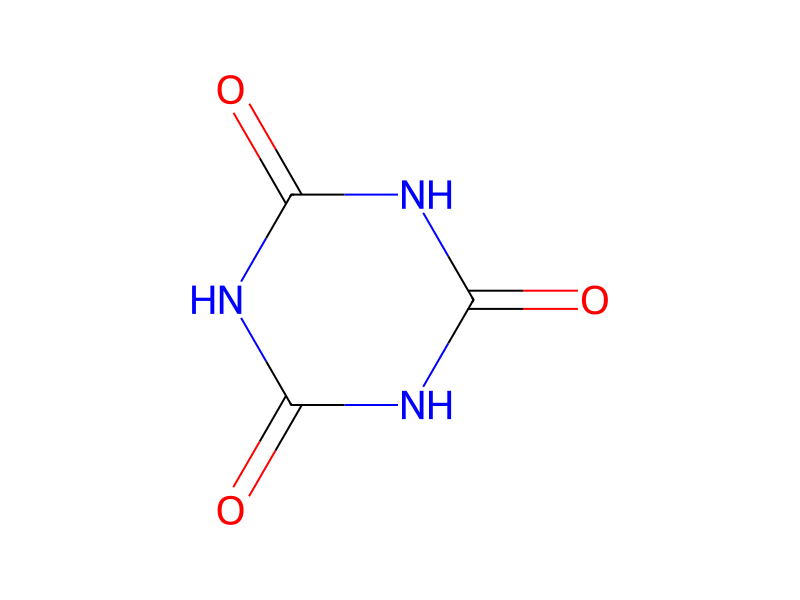

Product 1

Reagents, catalysts & solvents 1

Procedure
A paddle mixer with built-in blade mill was used to mix 50 kg deionized water, 80 kg lead oxide (PbO) and 31.1 kg cyanuric acid. The mixture was heated to between 140° and 150° C., with the consequent rise in pressure to between 5 and 6 bar. The reaction was complete after one hour. The lead cyanurate formed was then dried in the same apparatus at 40 mbar to a residual moisture of less than 1%. 108.1 kg neutral lead cyanurate Pb3 (C3N3O3)2.2H2O was obtained.
Workup
- additionto mix 50 kg
- temperatureThe mixture was heated to between 140° and 150° C., with the consequent rise in pressure to between 5 and 6 bar
Sources & evidence
- ORD record
- ord-a6bf83d3f2914eecb24d815957a4ab1f
- Source dataset
- uspto-grants-1985_03
- Patent number
- US04507270
Reaction notes
Loading…